


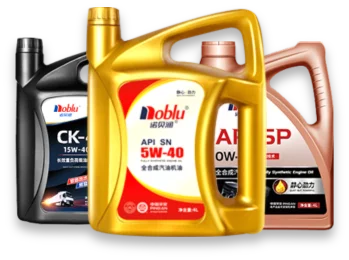



BLUF: Sourcing lubricants isn’t about picking the lowest price. It’s about assessing the total cost of ownership (TCO) and the supplier’s technical competency. This framework gives you a repeatable process to evaluate any supplier, using Zhongtian Petrochemical as a case study for what “good” looks like.
The Core Problem: Treating Lubricant as a Commodity
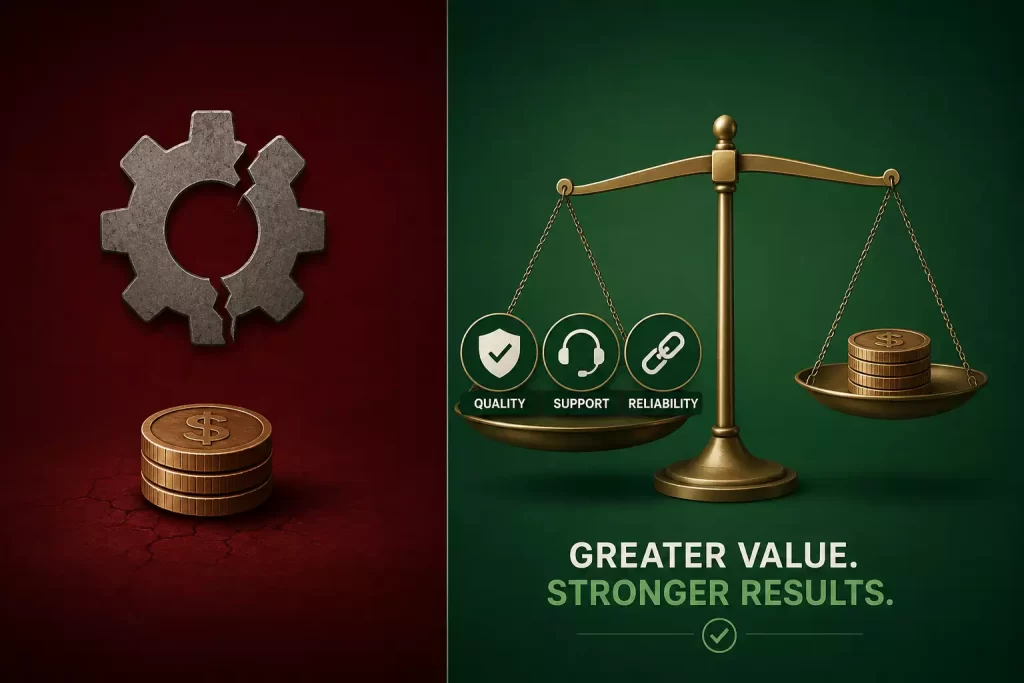
I’ve seen procurement teams make the same mistake. They get a spreadsheet with three quotes. The cheapest one wins. Six months later, the plant is down because the “bargain” grease couldn’t handle the heat, or the supplier couldn’t scale up production for a new line.
The real cost isn’t the price per gallon. It’s the إجمالي تكلفة الملكية (TCO).
500 hours is far more expensive than a premium oil that lasts 2,000 hours. The second mistake is ignoring the supplier’s technical depth. A supplier with no R&D capability can’t help you when your equipment specs change or when a new regulation hits.
You need a partner who can engineer a solution, not just ship a barrel.
The 5-Point Supplier Evaluation Framework
Here’s the checklist I use when vetting a supplier. Score each point from 1 (weak) to 5 (excellent). Any score below 3 is a red flag.Compare the global market leaders
1. Certifications and Compliance (The Non-Negotiable)
This is table stakes. If a supplier can’t prove compliance, walk away.
What to look for:
- ISO 9001: Quality management system. Non-negotiable.
- ISO 14001: Environmental management. Increasingly required by multinational buyers.
- OHSAS 18001 / ISO 45001: Occupational health and safety.
- Specific industry certifications: NSF H1 for food-grade, MIL-SPEC for defense, OEM approvals (e.g., from Caterpillar, Siemens).
Case Study: Zhongtian Petrochemical Zhongtian holds ISO 9001 and ISO 14001 certifications. More importantly, they operate a مختبر رئيسي على مستوى المقاطعة و academician workstation, staffed by a chief scientist from the Chinese Academy of Sciences. This isn’t just a piece of paper; it means their formulations are backed by peer-reviewed research. For a deeper look at how top manufacturers differentiate themselves, see our analysis of the [top 10 lubricants manufacturers in 2025].
2. Production Capacity and Supply Chain Stability
Can they deliver the volume you need, when you need it? A supplier with a single production line is a single point of failure.
What to look for:
- Annual production capacity: Ask for a number in metric tons.
- Number of production lines: Multiple lines mean redundancy.
- Raw material sourcing: Do they have long-term contracts for base oils and additives? Base oil price volatility is a major risk. A supplier with strategic reserves can buffer you from market shocks.
- Geographic reach: Can they ship to your ports? Do they have warehouses near your facilities?
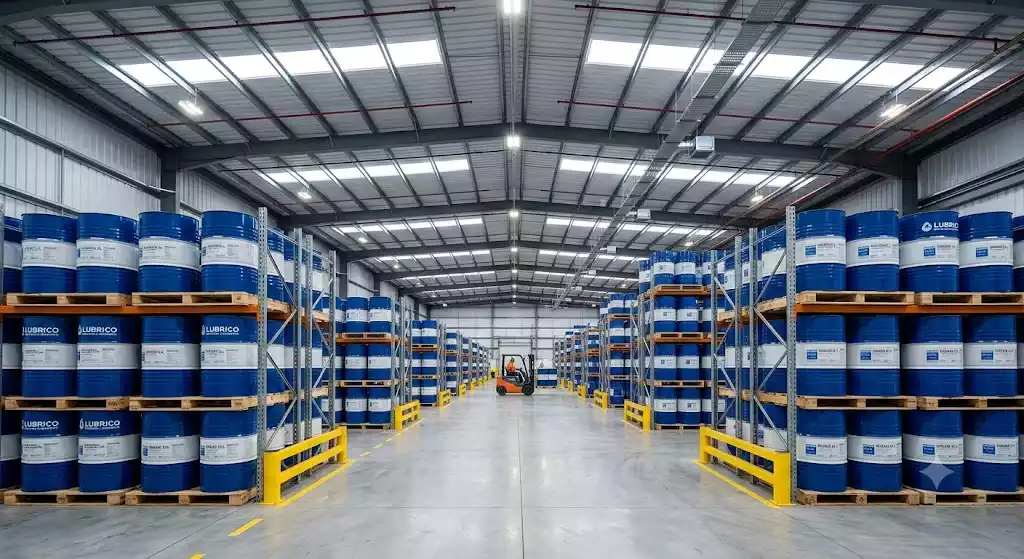
Case Study: Zhongtian Petrochemical Zhongtian boasts an annual grease production capacity of 500,000 metric tons across multiple lines. They have been in the industry for 28 years and export to over 100 countries, including Europe, Japan, and the Americas. This scale suggests a robust supply chain and the ability to handle large, recurring orders.
3. R&D and Technical Service (The Differentiator)
This is where most suppliers fail. A true partner can help you solve problems, not just sell you a product.
What to look for:
- In-house R&D team: Look for PhDs, chemists, and engineers.
- Testing capabilities: Do they have a lab? Can they run ASTM tests? Can they do used oil analysis?
- Custom formulation: Can they tweak a product for your specific operating temperature, speed, or load?
- الدعم الفني: Can they send an engineer to your site for a lubrication audit?
Case Study: Zhongtian Petrochemical Zhongtian has a research institute with a chief scientist from the Chinese Academy of Sciences, plus a team of masters and PhDs. They operate a post-doctoral scientific research workstation و أ provincial engineering technology research center. This isn’t a “me-too” blender. This is a company that can develop a custom grease for your unique application. If you’re curious about the technical differences between common options, our guide on [polyurea vs lithium grease]() explains the trade-offs.
4. Product Portfolio Breadth
A narrow product range is a risk. If they only make one type of oil, what happens when your needs change?
What to look for:
- Number of SKUs: A broad portfolio (e.g., 2,000+ products) indicates deep technical capability.
- Coverage across applications: Do they cover industrial, automotive, marine, and food-grade?
- Types of lubricants: Grease, oil, hydraulic fluid, gear oil, compressor oil, etc.
Case Study: Zhongtian Petrochemical Zhongtian’s catalog lists over 2,000 products across two main categories. They cover four major application areas: industrial machinery, transportation, civil facilities, and defense. This breadth means they can likely consolidate your supplier base, reducing administrative overhead.
5. Financial Stability and Track Record
A cheap supplier who goes bankrupt in six months is the most expensive option.
What to look for:
- Years in business: 10+ years is a good sign of stability.
- Awards and recognition: “National High-tech Enterprise,” “National Intellectual Property Advantage Enterprise,” etc.
- Client list: Do they work with well-known multinationals? This is a proxy for quality.
- Export history: A supplier exporting to strict markets (Europe, Japan) is likely producing to higher standards.
Case Study: Zhongtian Petrochemical Founded in 1998, Zhongtian has been in business for 28 years. They are a National High-tech Enterprise و أ National Intellectual Property Advantage Enterprise. Their chairman was selected for the national “Ten Thousand Talents Plan.” These are not easy accolades to get. They signal a company with strong management and government recognition.

Independent Lubricant Supplier vs. Integrated Energy Company: A Comparison
Many buyers face this choice. Here’s how they stack up.
| ميزة | Independent Supplier (e.g., Zhongtian) | Integrated Energy Company (e.g., Shell, Exxon) |
|---|---|---|
| المرونة | High. Can customize formulations quickly. | Low. Standardized products for global consistency. |
| Minimum Order Quantities (MOQs) | Low. Will work with smaller volumes. | High. Require large bulk orders. |
| دعم فني | High. Direct access to formulators. | Variable. Often channeled through distributors. |
| Price | Competitive. Lower overhead. | Premium. Brand and marketing costs. |
| Brand Recognition | Low to Medium. | Very High. |
| الأفضل لـ | SMEs, niche applications, custom formulations. | Large multinationals with global standardization needs. |
How to Start the Conversation: A Procurement Script
When you call a potential supplier, don’t just ask for a price list. Ask these three questions:
- “Can you send me your technical data sheets (TDS) و material safety data sheets (MSDS) for your top 5 industrial greases?”
- “What is your current lead time for a 20-ton order of lithium complex grease?”
- “Can you provide three references from companies in my industry who have used your custom formulation service?”
Their answers will tell you 80
of what you need to know. A supplier who hesitates or can’t provide these documents is already failing the first test.
Red Flags: When to Walk Away
Not every supplier is worth your time. Here are five clear signs to move on to the next candidate.
Red Flag 1: Vague or Missing Certifications If they claim “ISO certified” but can’t produce a certificate number or a copy of the audit report, that’s a lie. If they say “we follow international standards” but can’t name which ones, they’re hiding something.
Red Flag 2: No Technical Documentation A legitimate supplier has a library of TDS and MSDS documents. If they can’t email you a PDF within 24 hours, their documentation process is broken—and so is their quality control.
Red Flag 3: Unwillingness to Share References Every supplier has happy customers. If they can’t or won’t provide three references, it’s because their customers aren’t happy. Or worse, they don’t have any customers.
Red Flag 4: Price That’s Too Good to Be True A price 30% below market average isn’t a bargain. It’s a warning. They’re cutting corners on base oil quality, additive packages, or testing. The savings will disappear when your equipment fails.
Red Flag 5: No Local Stock or Warehouse If the supplier can only ship from overseas with a 12-week lead time, you’re one shipping crisis away from a plant shutdown. Ask about local warehousing or regional distribution partners.
The Hidden Risk: Base Oil Price Volatility
Base oil prices are the single biggest cost driver in lubricant manufacturing. They fluctuate with crude oil markets, refinery output, and global demand.
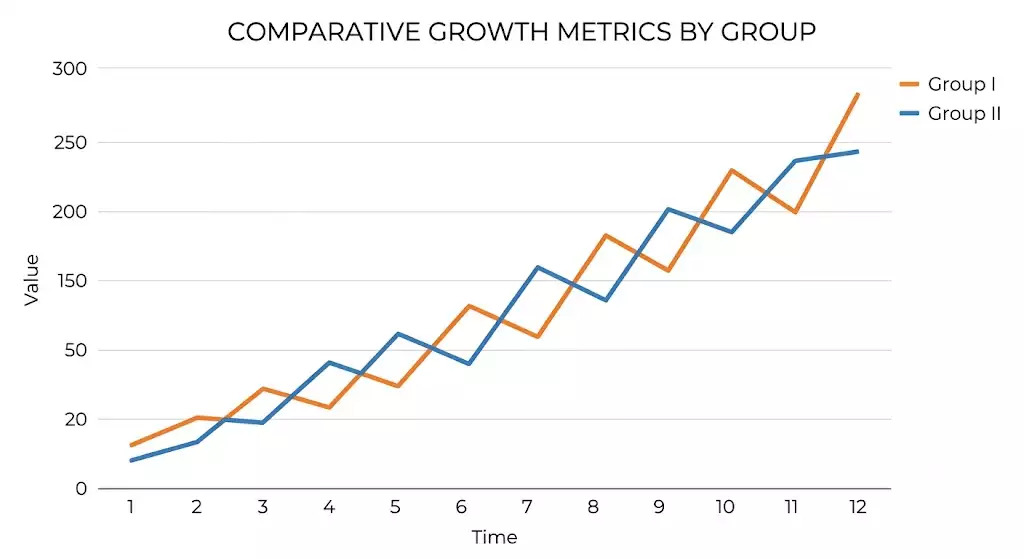
A supplier with strong financial reserves and long-term supply contracts can absorb some of this volatility. A thinly capitalized supplier will pass every price increase to you immediately.
How to mitigate this risk:
- Ask about their base oil sourcing strategy. Do they have multi-year contracts? Do they buy spot?
- Negotiate a price adjustment clause. Agree on a formula tied to a published base oil index (e.g., ICIS pricing). This makes price changes transparent and predictable.
- Consider a volume commitment. A guaranteed annual volume often locks in a more favorable price.
How Zhongtian Petrochemical Handles This
Zhongtian’s 28 years in the industry means they’ve survived multiple crude oil cycles. Their scale—500,000 metric tons of annual grease capacity—gives them purchasing power with base oil refineries. They also maintain strategic reserves to buffer against short-term supply disruptions.
This is the kind of stability you want in a long-term partner. For a more detailed look at their product range and capabilities, you can visit their [Alibaba storefront] or explore their official website at www.ztshoil.com.
Frequently Asked Questions (FAQ)
Q: What is the difference between a lubricant distributor and a manufacturer? A: A distributor buys from manufacturers and resells. A manufacturer formulates and produces the lubricant. Sourcing directly from a manufacturer often gives you better pricing, direct technical support, and the ability to request custom formulations.
Q: How do I verify a supplier’s ISO certification? A: Ask for their certificate number and the certifying body (e.g., SGS, Bureau Veritas, TÜV). You can then verify the certificate on the certifying body’s website. This takes five minutes and eliminates 90% of fakes.
Q: What is the minimum order quantity (MOQ) for custom grease formulations? A: It varies widely. Large integrated companies may require 20 tons or more. Independent manufacturers like Zhongtian are often more flexible, especially for established customers. You’ll need to negotiate this directly.
Q: How long does it take to develop a custom lubricant? A: A typical timeline is 4 to 12 weeks for formulation, testing, and initial production. Complex applications (e.g., food-grade, extreme temperature) can take longer. Always ask for a project timeline before committing.
Q: Should I worry about counterfeit lubricants? A: Yes. Counterfeit lubricants are a real problem, especially in emerging markets. Sourcing directly from the manufacturer or their authorized distributor is the only way to guarantee authenticity. Check for batch codes, holographic labels, and tamper-evident seals.
Q: What is the shelf life of industrial grease? A: Most greases have a shelf life of 2 to 5 years when stored properly (cool, dry, away from direct sunlight). Always check the manufacture date on the drum. Old grease can separate, oxidize, or lose its additives.
Conclusion: Your Next Move
Sourcing lubricants is a strategic decision, not a transactional one. The 5-point framework—Certifications, Capacity, R&D, Portfolio, and Stability—gives you a repeatable process to evaluate any supplier objectively.
Here’s your action plan:
- Score your current supplier against this framework. Where are they weak?
- Identify 2-3 potential new suppliers from the list of top manufacturers.
- Use the procurement script to start a conversation. Ask for TDS, MSDS, lead times, and references.
- Compare the scores. The supplier with the highest total score is your safest bet.
If you want to start with a supplier who scores high on every point, take a closer look at Zhongtian Petrochemical. Their combination of 28 years of experience, 500,000-ton capacity, and a research institute led by an academician is rare in this industry.
Ready to take the next step?
- [Download their product catalog] to see their full range of 2,000+ products.
- [Contact their technical team] for a consultation on your specific application.
- Read our analysis of the [global lubricant market leaders] to see how different suppliers compare.
Your equipment—and your bottom line—will thank you.