





Climate and Grease Performance
Tropical High Heat & Humidity Challenges
Southeast Asia’s industries face a unique mix of temperatures that often exceed 45-50 degrees Celsius on machinery or ambient surfaces, levels of humidity between 70-90%, regular rainfall or exposure to water, and high levels industrial contaminants such as dust, salt spray, or other industrial contaminants. These conditions increase grease breakdown, oil oxidation and water washout. They also reduce the stability of lubrication films. Equipment like bearings or gears can degrade more quickly, resulting in increased maintenance costs and downtime.
In order to overcome these challenges, it is important to select an industrial lubricant high temperature humidity that can withstand thermal stress, resist moisture, maintain consistency, and support long intervals.
Grease must exhibit key properties under these conditions
What properties should you look for?
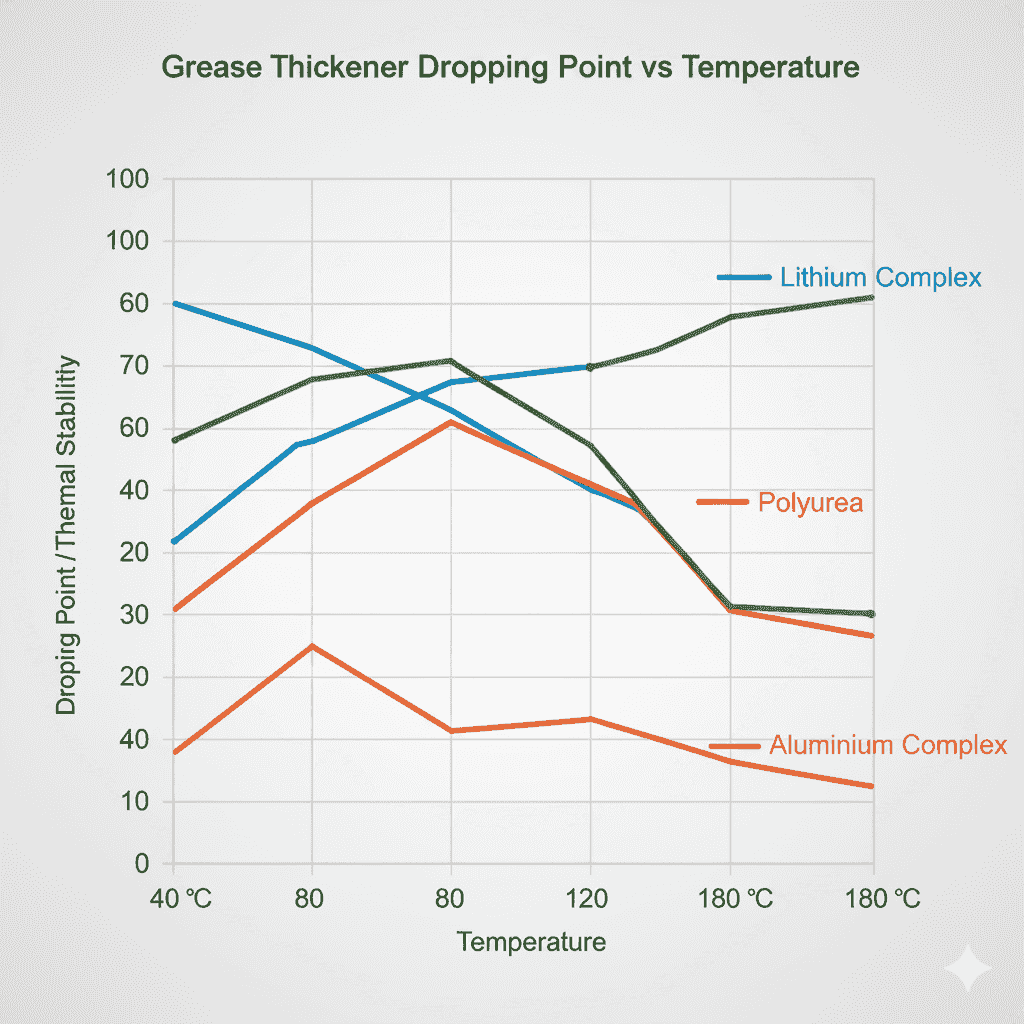
- High melting point and thermal stability : grease which does not melt or drip when heated to high temperatures (e.g. >=200 degC dropping point)
- Oxidation and mechanical stability : ability to resist chemical breakdown when heat and load are applied
- Resistant to water and steam: Ability to resist the loss of lubricating qualities in the presence of either.
- Humidity and corrosion protection : additives, thickeners, or types of thickeners that protect against corrosion, rust, microbial development
- Base oil viscosity and thickener type : synthetic base oils perform better under heat than mineral base oils; certain thickeners, such as calcium sulfonate or polyurea (etc.), are preferred. In humid + high temperature conditions, thickeners (lithium complex, calcium sulfonate, polyurea) are recommended.
What to consider when selecting a grease in Southeast Asia
Grease selection Southeast Asia – Environmental and Operational Factors
Consider these factors when selecting greases for Southeast Asia’s tropical climate.
- Maximum ambient temperature and machinery surface temperature : machines run hotter than ambient
- Humidity, water and exposure
- Contamination : dust, particles, and possibly salt spray along coastal areas
- Loading and speed: heavy load, shock loading or slow, continuous operation
Maintenance infrastructure is also important: automatic lubrication system, high-quality grease availability, cost constraints, and access to relubrication.
Which Base Oils and Thickener Formulas are Better?
Here’s a comparison between the different types of grease under high tropical heat and humidity:
| Grease Formula Type | Benefits of High Temperature and Humid Climate | Weaknesses and Trade-offs |
|---|---|---|
| Lithium (soap), and Lithium Compound | Additives packages offer good water resistance and thermal stability. | Base oil can be lost in extreme humidity or water washout; high temperature oxidation over a long period of time. |
| Calcium Sulfonate Complex | Good thickening stability, good water resistance and corrosion protection. | The cost is higher and the consistency may be harder (firmer) at high temperatures unless you use base oils that are suitable. |
| Hybrids of polyurea and silicone / Synthetic thickeners | Synthetic base oils have superior mechanical stability and resist oxidation. They are often more durable, with better performance at high temperatures. | Costs may be higher; availability may limit; some may not be able to handle very heavy loads without EP additives |
| Aluminum Complex | The grease is able to maintain its cohesion at high temperatures, even when the thickener begins to degrade. It is often used for industrial applications that require over-temperature. | Water washout may be an issue if the additive package is different. |
Viscosity, Additives & Consistency (NLGI Grade).
- Consistency : In humid and hot conditions, a more firm grease (NLGI 2, or 3) is often required to prevent extrusion. If automatic lubrication is required or if the application is remote/slow, a softer grease with flowing base oils (NLGI 1) may be more suitable.
- Viscosity: A higher viscosity base oil helps maintain film thickening at high temperatures; synthetic oils are often better for this than mineral oils.
- Additives : Anti-wear, anti-corrosion, antioxidants, water resistant (hydrophobic additives), solid lubricants for dusty conditions or shock loads.
Formula Comparison – What Formulations Work Best?
Case Study Comparisons
Here are some real-life comparisons of grease performance in tropical Southeast Asia (drawn from industry or hypothetical).
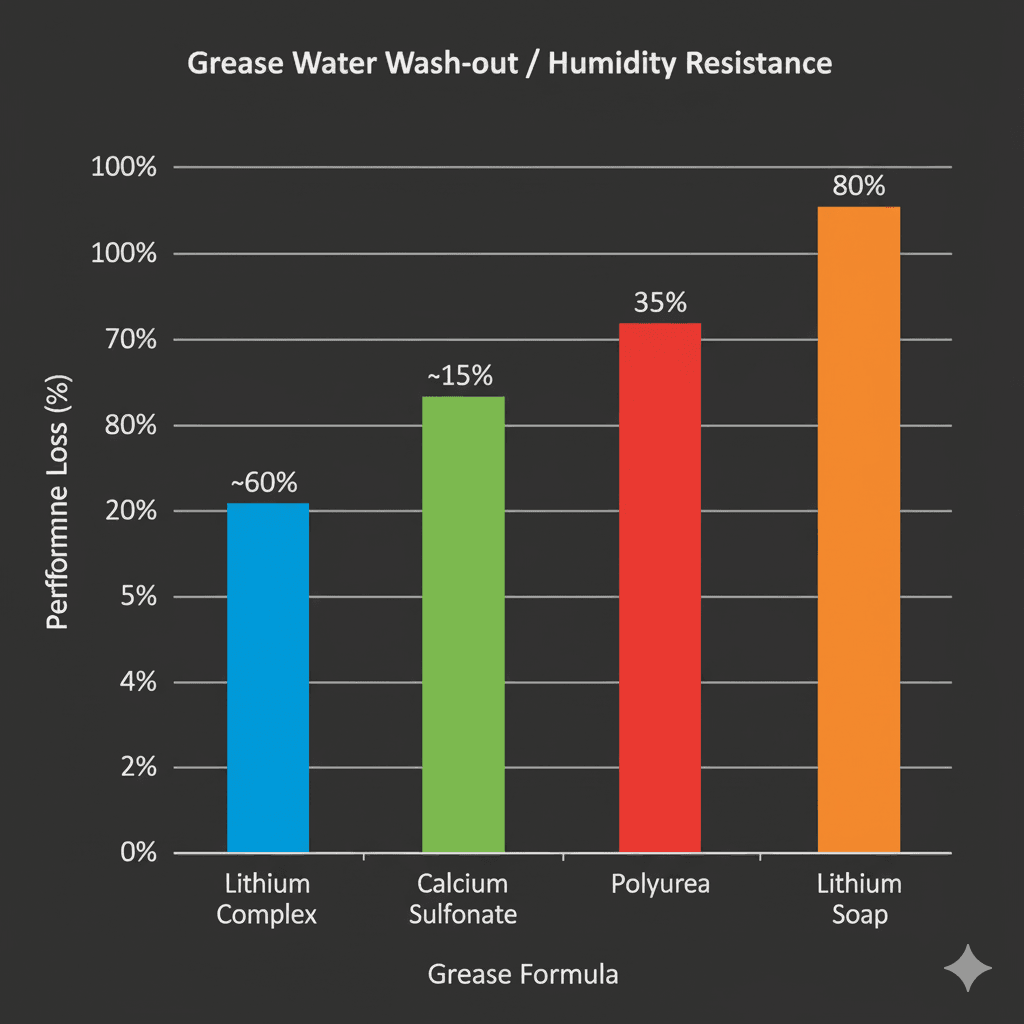
- Formula A: Lithium Complex plus synthetic base oil and water-resistant additives – shows good film strength with a dropping point of 220 degrees Celsius, acceptable grease loss after wash-down ( 10%).
- Formula B: Calcium Sulfonate Complex Grease — Excellent in coastal areas, low water washout, excellent corrosion protection but more expensive and firmer consistency.
- Formula C: Polyurea synthesized grease with solid lubricant, e.g. MoS2 or PTF — Best mechanical stability but can be difficult to pump when remote or cold starting conditions.
Cost & Trade-offs
The higher cost of the grease per kg/per unit is offset by:
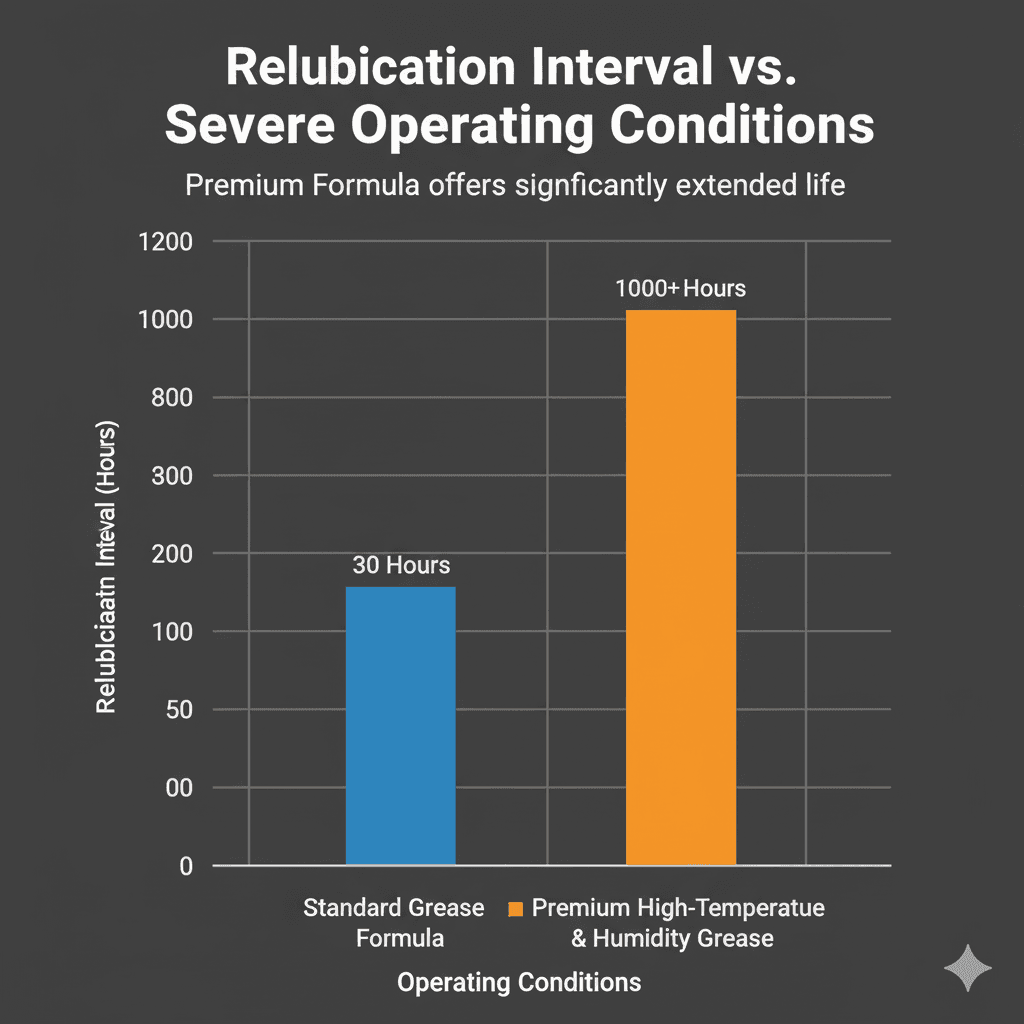
- Longer relubrication intervals
- Fewer failures/downtime
- Reduced replacement and maintenance costs
- Improved protection against extreme heat – less wear and breakdowns
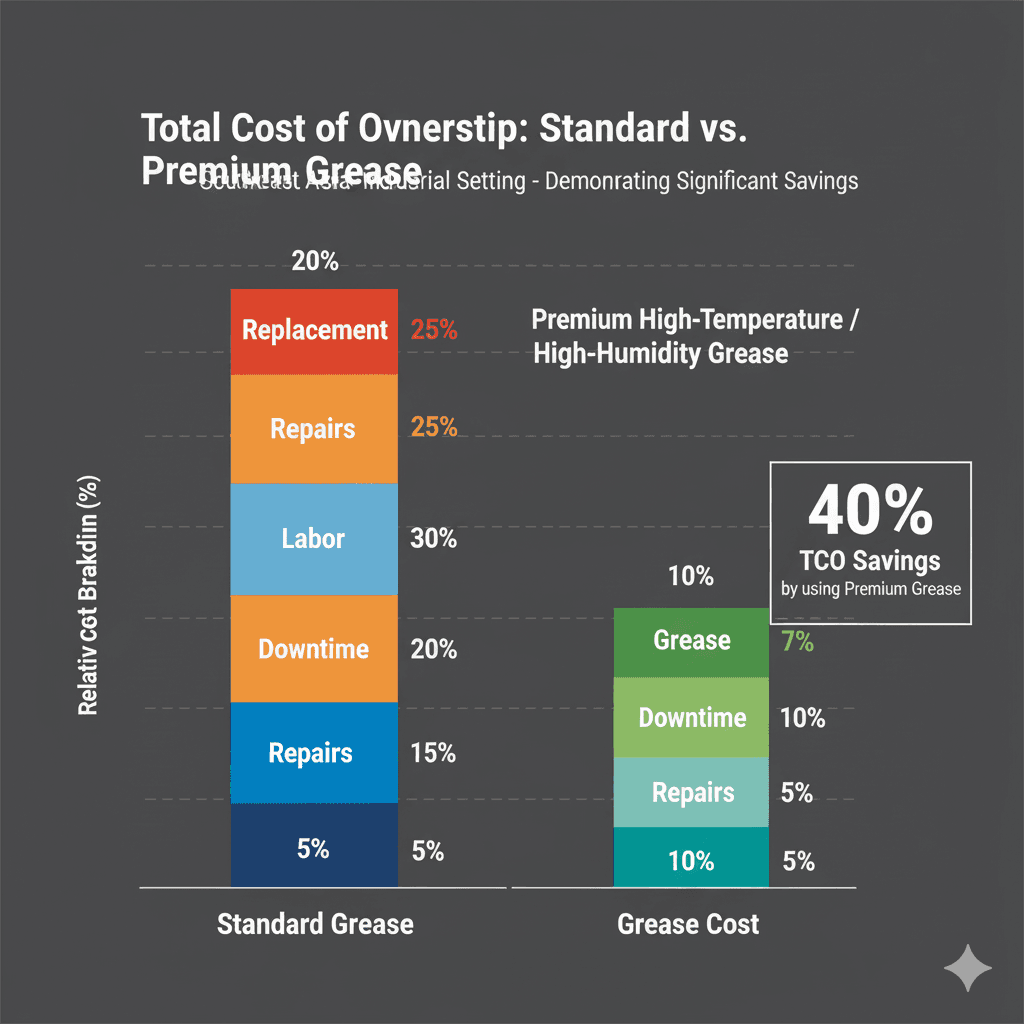
To make a decision, run a Total Ownership Cost (TCO) Analysis: cost of grease plus labor + downtime and impact of failures.
Best Practice Guidelines & Implementation
Maintenance & Installation Practices
- Use automatic grease systems to reduce human error and ensure consistency.
- Train your maintenance staff to check the condition of grease: look for signs such as water ingress, oxidation and separation.
- When switching greases, remove old grease residues. This will prevent interaction or softening.
Matching Grease Types to Equipment
- Grease for bearings should be water resistant and have good mechanical stability.
- Gears and open joints: thicker grease with EP additives. Protection from contaminants.
- Pumps and motors: lubricant flowability is important for remote lubrication, but it’s also necessary to make sure grease remains in place when heated.
Certification & Supplier Verification
- Look for suppliers who have international certifications, e.g. ISO 9001 / 14001. Also, look for product data sheets that show the results of tests on oxidation, water washout, and dropping point.
- Test grease candidates in the field if possible.
Formulations and Recommendations for Example
Below are some suggested grease formulations and types for Southeast Asia:
| Scenario | Recommended Grease Formula | Features on Request |
|---|---|---|
| Ports, marine) ports, marine) | Calcium Sulfonate Complex + synthetic base oil + corrosion inhibitors, drop point >=230 degrees Celsius, EP additives. Water wash-out is 10% even after multiple washdowns. | Water resistance, corrosion protection and mechanical stability |
| High ambient temperature plus heavy shock loads (mining, Crushers) | Polyurea synthetic lubricant with antioxidant additives and firm NLGI grades (2-3), dropping temperature >=250 degC | Thickener stability, high drop point, and high load bearing |
| General industrial plant with temperature and load variations | Lithium Complex synthetic lubricant formula with a mid-firm consistency. Water-resistant thickener and base oil with a wide viscosity. | Cost-effective performance with good all-round performance |
Summary and Key Takeaways
- Industrial grease high temperature humidities is affected by the base oil type, thickener chemical composition, additive package and grease consistency in tropical climates Southeast Asia.
- The selection of grease must take into account heat, humidity, contaminants and maintenance available.
- Although premium grease formulations are more expensive up front, they can lead to reduced overall maintenance costs, less downtime and longer equipment life.
- Use proven suppliers, request technical data and compare formulas in real conditions.
FAQ
Q1 What is an “industrial grease” high temperature humidity rated grease?
It means that the grease has been formulated using base oils and thickeners which can withstand high temperatures without melting or thinning; it also contains additives to resist oxidation; it’s resistant to water and humidity; and, maintains stability when under thermal stress. These greases perform well in Southeast Asia’s humid and hot environment.
Q2 – How can I choose grease in Southeast Asia?
a: Assess your operating temperatures and humidity, assess contamination, analyze the load, compare formula types, such as calcium sulfonate or lithium complex, then select the best one. Request technical specs (dropping-point, water washout, oxidation stabilty); or, test several greases.
Q3 – Is synthetic grease better than conventional grease in humid high temperatures? A – Synthetic base oils are better at resisting oxidation and heat, but a good thickener package and additive package is equally important. Grease with poor additives is likely to fail sooner. Synthetic helps, but the formula is important.
Q4 : In such climates, how often should greases or oils be replaced?
Depends on use, load and exposure. Relubrication intervals may be shortened in hot, humid and heavily contaminated environments unless the grease formulation supports longer service. Automatic lubrication is helpful. Monitoring the condition of grease is important.
Q5 – What certifications or test should I ask my grease supplier? HTML2_ A: Request ISO 9001 / 14001, product data sheets with drop point, oxidation, water washout / corrosion, mechanical stability, independent test reports, confirmation of thickener types, and sometimes field trial reference.
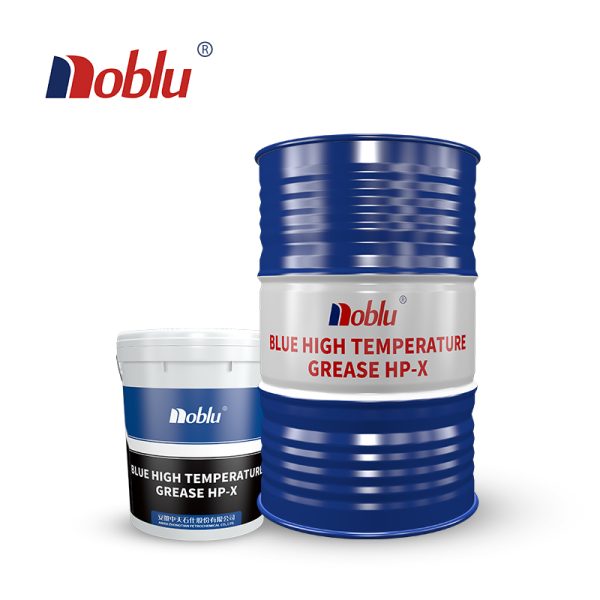
Blue High Temperature Grease HP-X
This product is made of refined mineral oil thickened by composite metal soap, with high efficiency extreme pressure anti-wear agent, anti-rust agent, antioxidant and so on.
Drop point ≥270℃
Advantage:
- Crafted from refined mineral oil thickened with composite metal soap;
- Features high-efficiency extreme pressure anti-wear agents;
- Drop point exceeds 270℃ for reliable performance;
- Complies with Q/SHZT0501 executive standards for excellence;
- Provides excellent high-temperature adhesion for durability;
- Delivers outstanding extreme pressure and wear resistance;
- Ensures good colloidal and mechanical stability for consistent performance;
- Offers superior water resistance and protection against corrosion.
At Anhui Zhongtian Petrochemical, we strive to create high-quality lubricants that enhance machinery efficiency and extend equipment lifespan.