



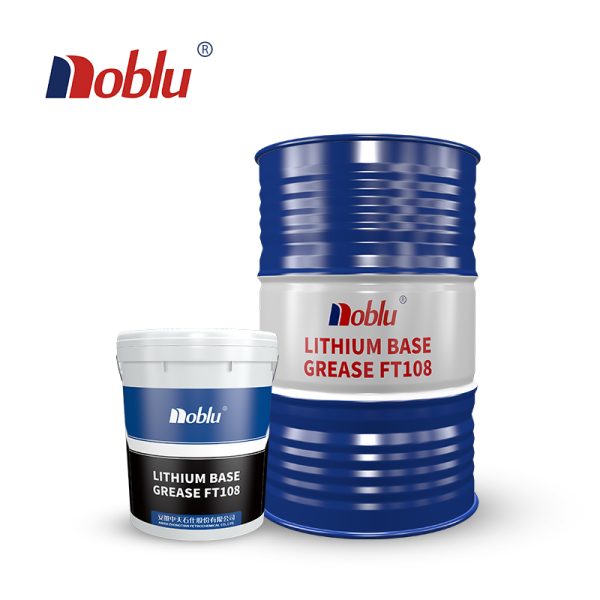
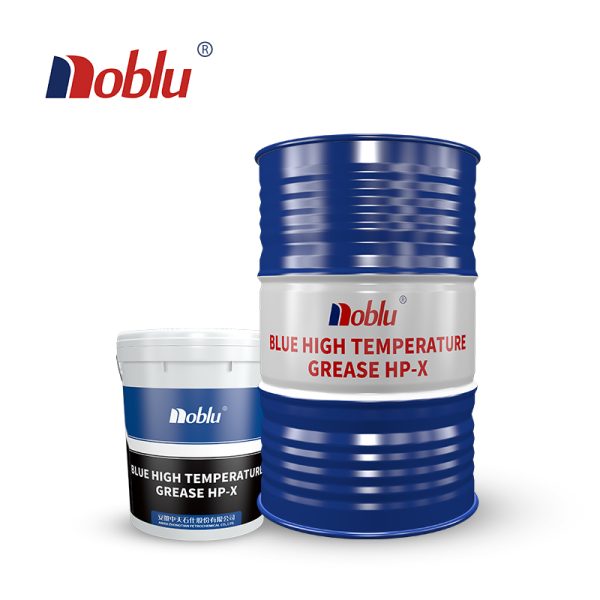
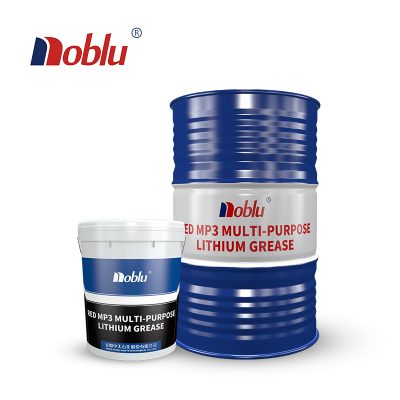

You’ve seen lithium grease quoted at $0.65 per kilogram on Alibaba. You’ve also heard about drums that arrive contaminated, mislabeled, or simply never arrive at all. Both stories are completely real.
The difference between a $40,000 order that permanently transforms your procurement cost structure and a $40,000 mistake that shuts down your production line comes down to one thing: knowing exactly how to read the market before you wire money.
📋 Table of Contents
- The Honest Answer to “Is Chinese Grease Any Good?”
- What “Cheap” Actually Means — A Price Tier Reality Map
- The Four Supplier Types — The Most Important Section
- Import Tariffs & Landed Cost Analysis (US & EU)
- How to Vet a Factory: 5 Green Flags + 5 Disqualifiers
- The Sample-to-Bulk Process: Your 4-Week Playbook
- 8 Verified Chinese Grease Manufacturers
- Objections, Answered Directly
- Frequently Asked Questions
1. The Honest Answer to “Is Chinese Grease Any Good?”
Let’s address the elephant in the room first.
You may have seen J.D. Power’s 2025 China Initial Quality Study, which reported a rise in vehicle quality issues. You may have read headlines about Chinese products failing EU safety standards. These concerns are real — and relevant for consumer goods.
Industrial lubricating grease is a fundamentally different story. Here’s why:
| Factor | Consumer Goods (Your Concern) | Industrial Grease (The Reality) |
|---|---|---|
| Quality measurement | Subjective (feel, fit, finish) | Objective — NLGI spec either passes or fails |
| Verification method | Hard to test without equipment | Lab-testable for $150–400 before bulk order |
| International standard | Variable by product | Universal: ASTM, NLGI, DIN, ISO |
| Fraud detection | Difficult | Dropping point test reveals 90% of fraud |
| Supply chain | Consumer retail, multiple middlemen | B2B direct factory, documented audit trail |
Industrial buyers have one enormous advantage over retail consumers: you can test the product before committing to scale. A $200 lab test eliminates virtually all quality risk. This guide tells you exactly how to use that advantage.
2. What “Cheap” Actually Means — A Price Tier Reality Map
Buyers searching for “cheap Chinese grease manufacturers” are really asking a more sophisticated question: Can I achieve 60–70% cost savings vs. European suppliers while maintaining specifications suitable for my application?
The answer is yes — if you understand the three market tiers.
Tier 1 — True Low-End: $0.50–0.80/kg FOB
These products exist and work — for the right applications. Standard calcium or basic lithium soap thickeners, mineral base oil, minimal additive packages. Appropriate for agricultural equipment, low-duty chassis lubrication, and ambient-temperature conveyor bearings.
Tier 2 — The Danger Zone: Same Price, Wrong Supplier
Tier 3 — The Real Value Zone: $0.90–2.50/kg FOB
This is where Chinese manufacturing genuinely delivers exceptional, verifiable value. ISO-certified mid-to-large factories at this price point use Group I or II virgin base oils and certified EP additive systems from global suppliers including Lubrizol and Afton Chemical. The product meets NLGI specifications and performs equivalently to Western-brand alternatives costing 60–75% more.
Application Selector: Which Grease Type Do You Need?
Not sure which NLGI grade applies to your equipment? Use this decision table:
| Your Application | Recommended Type | NLGI Grade | Why |
|---|---|---|---|
| Excavator pins, bucket links | Lithium EP2 or Calcium-Sulfonate | NLGI 2 | High load, wet conditions |
| Electric motor bearings | Polyurea grease | NLGI 2–3 | High-speed, long regreasing interval |
| Kiln / steel mill bearings | Lithium Complex or Bentonite | NLGI 1–2 | High temperature above 150°C |
| Automotive wheel bearings | Lithium EP2 | NLGI 2 | Water resistance, moderate temp |
| Food processing equipment | NSF H1 Calcium or Polyurea | NLGI 1–2 | Food-contact compliance mandatory |
| Agricultural machinery | General Calcium or Lithium | NLGI 2 | Cost-driven, ambient temperature |
| Gear reducer, enclosed gears | Gear Reducer Grease (CKC/CKD) | NLGI 00–0 | Semi-fluid, splash lubrication |
| Open gears, large spur gears | Open Gear Compound | NLGI 1 | High adhesion, extreme pressure |
3. The Four Supplier Types — The Most Important Section in This Guide
The single biggest mistake importers make is treating all “Chinese grease manufacturers” as one category. There are four entirely distinct supplier types. Your risk profile, pricing, and quality outcome depend entirely on which type you engage.
Type A — Large National / State-Linked Factories
Examples: Sinopec Lubricants Co., CNOOC Lubricants. Annual capacities of 500,000–1,000,000+ metric tons. Full API, ISO, and OEM approvals. Rigorous quality systems.
Best for: Buyers with 10+ MT per order who prioritize zero supplier risk above price. Less flexible pricing, longer lead time for specification changes.
Type B — Established Private Manufacturers (Best Value Tier)
Companies like Zhongtian Petrochemical (Anhui), Puyang Xinye (Henan), and peers in Guangdong. Annual capacities of 10,000–200,000 MT. National-level government certifications. Accept 1-MT MOQs, custom formulations, OEM packaging.
This is where the best value in the Chinese grease market lives.
Type C — Trading Companies Posing as Factories
Type D — Small Workshop Operations (Avoid for Any Serious Application)
Concentrated in parts of Shandong and rural Henan. Re-refined or acid-treated base oils, simplified additive packages, no meaningful QC systems. Output may classify as “grease” but will fail under real industrial load within one-third of expected service life.
Detection: Demand SGS, Intertek, or Bureau Veritas third-party test certificates only. Refuse any supplier who provides only internal data — this is the single most reliable filter in existence.
4. Import Tariffs & Landed Cost Analysis
HS Codes for Grease Import
Correct HS code classification is mandatory and affects your duty rate. Using the wrong code can cause customs holds and penalties.
| Product Type | HS Code | Notes |
|---|---|---|
| Petroleum-based lubricating grease | 2710.19.92 | Most lithium, calcium, polyurea greases |
| Non-petroleum lubricant preparations | 3403.19 | Silicone grease, some synthetics |
| Lubricating oil additives | 3811.29 | Separate code if importing additive packages |
2026 Tariff Reality by Destination
| Destination | Base Duty | Additional Tariff | Total Approx. Rate | Still Worth It? |
|---|---|---|---|---|
| United States | 2.5–5% | ~20% (Section 301) | ~22–25% | ✅ Yes — still 40–50% cheaper than US alternatives |
| European Union | 2.7–5.5% | None (general grease) | ~2.7–5.5% | ✅ Yes — 60–68% savings fully maintained |
| United Kingdom | 2.5–4% | None (post-Brexit MFN) | ~2.5–4% | ✅ Yes — strong value |
| Australia | 0–5% | None | ~0–5% | ✅ Yes — excellent value |
| Middle East (GCC) | 5% | None | ~5% | ✅ Yes — outstanding value |
US Buyer Worked Example — 1 Metric Ton EP2 Lithium Grease, LA Port
| Cost Component | Amount | Notes |
|---|---|---|
| FOB Price (Zhongtian, 1 MT) | $1,250 | $1.25/kg × 1,000 kg |
| Sea Freight (LCL, Shanghai → LA) | $280 | Approx. per ton, 2026 |
| Port & Customs Clearance | $180 | US customs broker fee |
| US Import Duty (~25%) | $313 | On CIF value of ~$1,530 |
| TOTAL Landed Cost | $2,023 | $2.02/kg landed in US |
| US Domestic Equivalent | $3,800–5,200 | Published distributor price, 1 MT |
| Net Saving | $1,777–3,177 | 47–63% cost reduction after full tariffs |
Even after full US tariffs, verified Chinese grease from a legitimate factory delivers substantial savings. The buyer who eliminates Chinese suppliers entirely over tariff concerns is leaving 47–63% of their lubricant budget on the table.
5. How to Vet a Chinese Grease Factory: 5 Green Flags + 5 Instant Disqualifiers
✅ 5 Green Flags — All Five Before Proceeding
Green Flag 1: Independent Business Registration (Verifiable Online)
Every Chinese manufacturer holds a registered business license. Verify at China’s State Administration for Market Regulation: gsxt.samr.gov.cn. Enter the company name or registration number. The page returns registration status and — critically — whether the company’s business scope includes lubricant manufacturing.
Non-Chinese speaker shortcut: Scan the QR code on the supplier’s business license with any smartphone camera. It links directly to the government database entry. If the supplier’s name on the license does not exactly match their bank account name, do not proceed.
Green Flag 2: ISO 9001 with Verifiable Certificate Number
Ask for the certificate number and issuing certification body name. Verify on the certification body’s official website. Legitimate bodies include Bureau Veritas, SGS, TÜV, Lloyd’s Register, and NQA. If the issuing body name is unfamiliar — Google it. There are fraudulent ISO certificate mills.
Green Flag 3: Third-Party Test Reports — Never Internal Data Alone
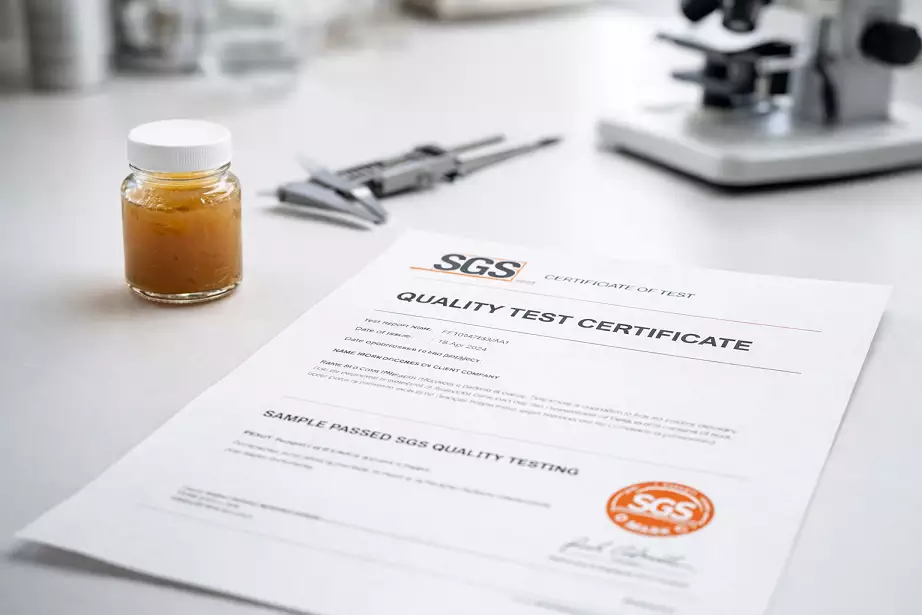
Ask for recent SGS, Intertek, or Bureau Veritas test reports for your specific product. Key parameters to check:
- NLGI cone penetration (ASTM D217) — confirms the grade is what was stated
- Dropping point (ASTM D2265) — confirms heat resistance
- Oil separation (ASTM D1742) — important for storage stability
- Four-ball wear scar (ASTM D2266) — for EP-grade products only
The report must show the testing lab’s letterhead, not just a factory QC form.
Green Flag 4: Live Factory Video Tour Within 48 Hours
Any real factory can arrange a 15-minute live Zoom or WhatsApp tour within two business days. The tour must show: production kettles in operation, raw material storage with visible brand-name additive drums, finished product filling line, and QC laboratory with instruments. If any area is “under maintenance” or the camera “can’t go there” — treat this as a disqualifier.
Green Flag 5: National-Level Government Certification
China’s Ministry of Science and Technology grants “National High-Tech Enterprise” (国家高新技术企业) status through rigorous review. This is a government database entry — verifiable and impossible to fake. “Specialized, Sophisticated, and Novel” (专精特新) MIIT certification carries similar weight. Zhongtian holds both designations, plus National Intellectual Property Demonstration Enterprise and National Green Factory certifications.
❌ 5 Instant Disqualifiers
| Red Flag | What It Signals | Walk Away? |
|---|---|---|
| Refuses live video factory tour | Trading company or ghost factory | Yes — immediately |
| Only provides internal test data | Cannot pass independent testing | Yes — immediately |
| Demands 100% prepayment on first order | Scam or financially distressed operation | Yes — immediately |
| License name ≠ bank account name | Payment fraud setup | Yes — immediately |
| Price is 20%+ below all competitors | Adulterated or re-refined base oil | Test rigorously before any order |
6. The Sample-to-Bulk Process: Your 4-Week Procurement Playbook
Week 1: Sample Request
Request 1–2 kg of the specific product you need. Standard sample fee: $80–150, credited against your first order above 1 MT. Send your exact specifications: operating temperature range, load conditions (EP required?), regreasing interval, NLGI grade required, and compatibility with existing grease.
Week 2: Independent Lab Testing
Send the sample to a certified lab in your country — not back to China. Minimum test panel:
- NLGI cone penetration (ASTM D217)
- Dropping point (ASTM D2265) — a stated 200°C product testing at 140°C is product fraud
- Four-ball wear scar (ASTM D2266) — EP grades only
- Oil separation (ASTM D1742)
Total lab cost: $150–400. This is the single most important money you will spend in the entire procurement process.
Week 3: First Order Terms
Standard first-order payment terms: 30% deposit against Proforma Invoice, 70% against copy of Bill of Lading. Never accept 100% prepayment from any new supplier. Factories with genuine product confidence do not require this.
Packaging & Logistics Options
| Packaging Format | Net Weight | Shipping Mode | Best For |
|---|---|---|---|
| Steel drum (standard) | 180 kg | FCL or LCL sea freight | Industrial bulk, most economical per kg |
| Plastic pail | 15 or 20 kg | Air or LCL sea | Workshop use, retail OEM |
| Cartridge tube | 400 g | Air freight | Automotive OEM, retail resale |
| IBC tote | 1,000 kg | FCL sea freight | Fluid greases, large-scale industrial |
7. 8 Verified Chinese Grease Manufacturers Worth Considering
We list eight factories below. We are in first position because we are the author of this guide — transparency demands we be explicit about that. All other factories are listed factually with no commercial relationship.
| # | Factory | Location | Est. | Capacity | MOQ | Best For |
|---|---|---|---|---|---|---|
| 1 | Zhongtian Petrochemical | Hefei, Anhui | 1998 | 200,000 MT/yr | 1 MT | OEM, all grease types, 1-ton entry point |
| 2 | Sinopec Lubricants Co. | Multiple sites | 2002 | 1M+ MT/yr | 10 MT | Large-volume, zero supply risk |
| 3 | Puyang Xinye Special Grease | Puyang, Henan | 1989 | ~50,000 MT/yr | 3 MT | Specialty EP & calcium greases |
| 4 | Shandong Shengte Commercial | Shandong | 2007 | ~20,000 MT/yr | 1 MT | Export-focused, food-grade range |
| 5 | Dongguan Vnovo Lubricants | Dongguan, Guangdong | 2006 | ~10,000 MT/yr | 500 kg | Silicone & specialty greases |
| 6 | Petroking (pklube.com) | Puyang, Henan | 2002 | ~30,000 MT/yr | 1 MT | OEM for international brands |
| 7 | Hangzhou Xingang Lubrication | Hangzhou, Zhejiang | 1989 | ~15,000 MT/yr | 1 MT | Joint-venture quality, long track record |
| 8 | Lubrication Science (Wuxi) | Wuxi, Jiangsu | 1999 | ~25,000 MT/yr | 2 MT | High-temp, complex soap greases |
Disclosure: We are Zhongtian Petrochemical. No commercial relationship exists with the other factories listed. Capacity and MOQ figures are public-domain estimates and subject to change. Always verify independently before placing orders.
8. Objections, Answered Directly
These are the questions and doubts a skeptical buyer should raise. We’re answering them here rather than hoping you don’t notice them.
Objection 1: “J.D. Power data proves Chinese manufacturing quality is declining.”
J.D. Power’s 2025 China IQS showed vehicle quality problems rising 17 issues per 100 vehicles — suggesting Chinese manufacturing is getting worse across the board.
The J.D. Power study measures consumer vehicle quality — software, screens, and seat comfort. Industrial lubricating grease is governed by ASTM chemical tests with binary pass/fail outcomes. A grease either meets NLGI cone penetration spec or it doesn’t. Independent lab testing completely bypasses the quality perception problem.
Objection 2: “Chinese suppliers send good samples and bad bulk — the ‘sample switch scam.'”
A supplier sends premium sample, wins the order, then ships inferior bulk product. An 18% fraud rate among China importers was reported by the China Sourcing Association — this is real and documented.
The sample switch problem is real but entirely preventable. (1) Reference the approved sample batch number in your PO and require the bulk to match. (2) Hire a pre-shipment inspection (SGS, Intertek, or QIMA — cost: $250–400) to test a random sample from the production batch before it loads. (3) Insert a re-test right clause into your contract. These three steps eliminate the risk at a combined cost under $500.
Objection 3: “After US tariffs, Chinese grease isn’t actually that cheap.”
With combined US duties of ~25% on Chinese lubricants plus freight and customs clearance, the cost advantage largely disappears.
The math does not support this. Our Section 5 worked example shows 1 MT of EP2 lithium grease landed in Los Angeles at $2.02/kg all-in — versus a US distributor price of $3.80–5.20/kg. That is a 47–63% saving after full tariff load. The saving is compressed, not eliminated. EU buyers face only 2.7–5.5% duty and maintain 60–68% savings.
9. Frequently Asked Questions
What certifications should a Chinese grease manufacturer have?
At minimum: ISO 9001 (verifiable certificate number), valid Chinese business registration with manufacturing scope (verifiable on the SAMR database at gsxt.samr.gov.cn), and third-party test reports from SGS, Intertek, or Bureau Veritas. National High-Tech Enterprise status is a strong additional signal — it is a government-verified designation requiring documented R&D investment and IP ownership.
Is Chinese grease quality good enough for European or American industrial machinery?
Yes, from verified ISO-certified factories. Leading Chinese manufacturers source additive packages from Lubrizol, Afton Chemical, and Chevron Oronite — the same global suppliers used by Shell, ExxonMobil, and Total. Zhongtian is an authorized Lubrizol additive user. Independent SGS test results for our products consistently meet NLGI, DIN, and ASTM specifications. Request the test reports and verify them — this is the end of the discussion.
What is the minimum order quantity for grease from China?
Large state factories: 10–20 metric tons. Established private manufacturers like Zhongtian: 1 metric ton minimum (approximately five to six standard 180 kg drums). Traders: sometimes 250 kg, but at pricing comparable to domestic distribution — eliminating the value proposition. For most importers, 1–3 metric tons is the rational entry point after sample validation.
How do I test grease quality before placing a bulk order?
Three tests cover 90% of quality risk: NLGI cone penetration per ASTM D217 (confirms grade consistency); dropping point per ASTM D2265 (a product claiming 200°C that tests at 140°C is product fraud); four-ball wear scar per ASTM D2266 for EP-grade products. Total lab cost: $150–400. This is the best investment in any China grease procurement process.
Can Chinese factories do OEM / private-label grease?
Yes, widely available. Most mid-to-large factories accept OEM packaging with your brand label, custom color (blue, red, green, black), specific NLGI grade formulation, and packaging formats from 400 g cartridges to 180 kg steel drums. MOQ for OEM: 1–5 metric tons. Zhongtian offers full OEM service with label design assistance and a 15-day lead time on reorders of approved formulas.
What is the difference between lithium and calcium grease for my application?
Lithium EP2 NLGI 2 is the global industrial workhorse: water-resistant, -20°C to +130°C operating range, compatible with most bearing types. It covers approximately 70% of industrial applications. Calcium grease excels in wet environments but tops out at ~80°C. For temperatures above 150°C, you need lithium complex, polyurea, bentonite, or calcium sulfonate complex. Use the Application Selector table in Section 2 to match your specific equipment.
What happened to Chinese export regulations in 2025?
China’s October 2025 export compliance overhaul (Announcement No. 8) ended the practice of factories using third-party export document companies. All goods must now be exported under the actual manufacturer’s name with a valid import/export license. This actually helps buyers — it forces the elimination of intermediary arrangements that obscured the real source of goods. Work only with factories holding their own export license.
🚀 Get a Sample — Before You Commit to Anything
We ship 1–2 kg samples of any standard product within 3 business days of deposit. Sample cost: $80–120, credited against your first order above 1 MT. We include our full internal Certificate of Analysis. We actively encourage you to send the sample to an independent SGS or Intertek lab — our product earns the result.
To request a sample or get a quote for your specific application:
- 📧 Email: info@ztshoil.com — 24-hour response guaranteed
- 💬 WhatsApp: +86 177 5566 5517
- 🌐 Website: ztshoil.com/contact-us
In your message, include: grease type needed, operating temperature range, target volume, and destination country. We respond within one business day with a Proforma Invoice and sample dispatch timeline.