




| Grease Type | Key Properties | Primary Uses |
|---|---|---|
| Lithium Grease | Multipurpose, high temperature | Bearings, gears, universal joints |
| Calcium Grease | Water-resistant, good adhesion | Chassis, suspension, marine equipment |
| Polyurea Grease | High-temperature stability | Electric motors, high-speed machinery |
| Aluminum Complex | Water resistance, high load capacity | Food processing, heavy-duty machinery |
| Bentone Grease | Non-melting, high temperature | Steel mills, ovens, kilns |
| Synthetic Grease | Extreme temp, long service life | Wheel bearings, CV joints, heavy loads |
| Marine Grease | Superior water resistance | Boat trailers, marine equipment |
Choosing from different types of grease is essential for maintaining your equipment. The right grease ensures your machines operate efficiently and have a longer lifespan. In 2025, machinery demands grease tailored to specific conditions, whether exposed to heat or moisture. Using the appropriate grease for these challenges is crucial. Our company offers a wide range of lubricants and different types of grease to help you protect and maintain your equipment, keeping it safe and performing at its best.

Key Takeaways
- Pick the right grease for your machine’s needs, like heat, weight, and water. Lithium grease works well for high heat and stops rust in cars and factories. Calcium grease is best in wet places and for outdoor or marine tools because it keeps out water. Polyurea grease lasts a long time and can take high heat, so it is great for electric motors and fast machines. Aluminum complex grease is very good at keeping out water and can hold heavy loads for factories and boats. Do not mix different greases or you might hurt your machine; always clean off old grease before you use a new one. Put on the right amount of grease often to stop damage or leaks and always check your machine’s guide. Use synthetic and marine greases when it is very hot, very cold, or wet to keep your equipment safe.
Different Types of Grease
Lithium Grease
Properties
Lithium grease is a very common type of grease. It uses lithium soap to make it thick. This grease can handle high heat and water. It gives strong protection from rust and oxidation. Lithium grease keeps machines safe and working well. That is why many people trust it for their machines.
| Grease Type | Base Thickener | Temperature Tolerance | Water Resistance | Mechanical Stability | Oxidation & Corrosion Protection | Typical Applications |
|---|---|---|---|---|---|---|
| Lithium | Lithium Soap | High | Good | Durable, stable | Excellent | Automotive, industrial, household |
Many brands sell lithium grease, like ExxonMobil, Castrol, and Chevron. In 2025, companies make lithium grease last longer and be better for the planet. Some new kinds can even break down naturally.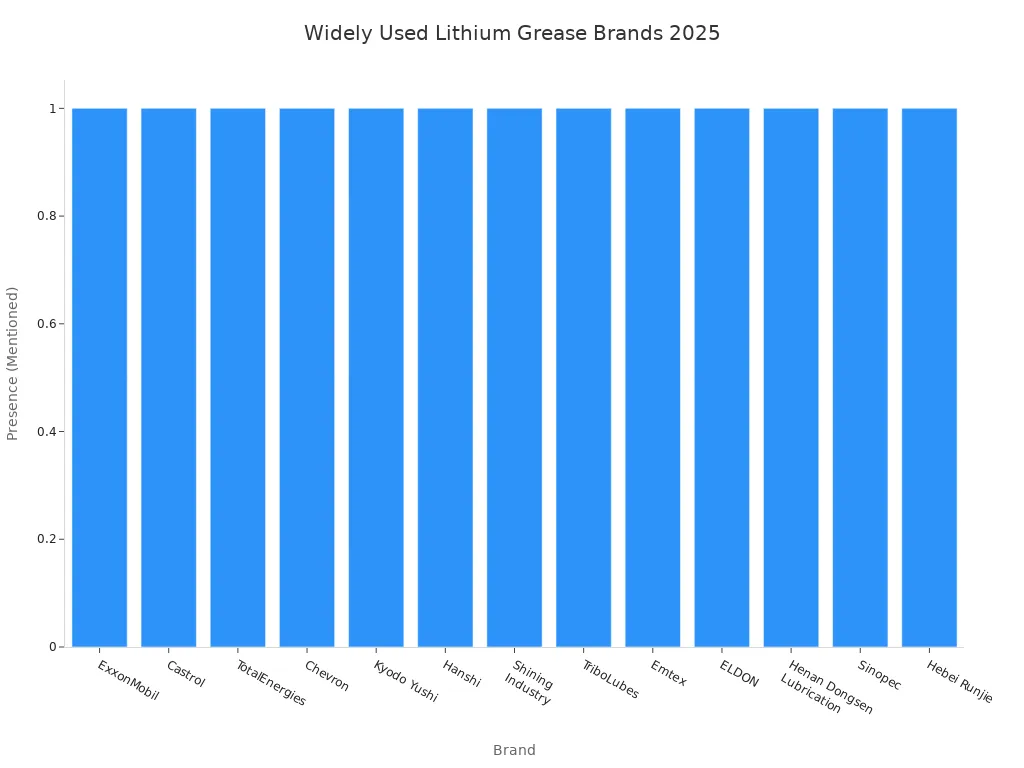
Uses
Lithium grease works for many jobs. You can use it in cars, factories, and at home. Here are some ways people use it:
- Lubricating wheel bearings and chassis parts in cars and trucks
- Protecting gears, motors, and bearings in factories
- Keeping farm equipment joints and linkages moving smoothly
- Fixing squeaky door hinges, locks, and hand tools at home
In cars, lithium grease helps wheel bearings and suspension parts. It also helps gears and joints last longer by stopping friction.
Compatibility
Lithium grease mixes well with other lithium greases. Do not mix it with calcium or polyurea greases. Mixing different thickeners can make grease work worse. Always check the maker’s rules before mixing greases. Our company sells lithium greases that work well for today’s machines.
Tip: Pick the right grease for your equipment. This helps your machines work their best.
Calcium Grease
Properties
Calcium grease uses calcium soap to make it thick. It is great at keeping out water and sticking to metal. This grease works best when it is not too hot. It also stops rust and corrosion. Calcium grease is smooth and easy to put on.
| Type of Calcium Grease | Advantages |
|---|---|
| Hydrated Calcium Grease | Smooth texture, great water resistance, good adhesion |
| Anhydrous Calcium Grease (12HSA) | Higher temperature tolerance, good stability, excellent water resistance |
Calcium grease does not wash away in wet places. It sticks to metal, so it is good for outdoor and marine jobs.
Uses
You can use calcium grease where water is a problem. Here are some common uses:
- Lubricating chassis and suspension parts in cars and trucks
- Protecting bearings and gears in industrial machines
- Keeping construction and heavy equipment running smoothly
- Lubricating marine equipment and boat trailers
- Serving as a food-grade grease for equipment that may touch food
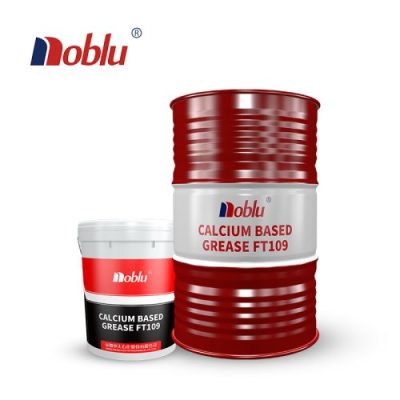
Our Calcium Based Grease FT109 works well in wet and outdoor places.
Compatibility
Calcium grease works with other calcium greases. Do not mix it with lithium or polyurea greases. Mixing can cause problems or make grease not work well. Always follow the maker’s advice when changing greases.
Note: Calcium grease is great for jobs that need water resistance. It is smart for marine, farm, and outdoor machines.
Polyurea Grease
Properties
Polyurea grease is a synthetic grease. It uses polyurea to make it thick. This grease works well at high heat and lasts a long time. It does not break down easily and keeps its shape under heavy loads. Polyurea grease does not melt fast, even when it gets hot.
Polyurea grease does not leave much ash behind. It also does not leak out of bearings or joints.
Uses
Polyurea grease is used in tough jobs. It is good when you want grease to last a long time. Here are some common uses:
- Electric motor bearings, where it can last the life of the motor
- Constant velocity (CV) joints in cars
- Steel mill equipment and continuous castors
- High-speed bearings and pulleys
- Air conditioner compressors and water pumps
Polyurea grease is also good for electric vehicles and machines that get hot or run fast.
Compatibility
Polyurea grease does not always mix with other greases. Even other polyurea greases can be different. Do not mix it with lithium or calcium greases. Always clean out old grease before using polyurea. Our polyurea greases protect machines for a long time and are good for sealed parts.
Tip: Polyurea grease is best for high heat and long use. It is great for electric motors and fast machines.
Aluminum Complex Grease
Properties
Aluminum complex grease is strong and good for hard jobs. It does not mix with water or make a mess. This grease keeps your equipment safe from rust and corrosion, even when it is wet. It sticks to metal and does not wash away. Many types have special additives that help lower wear, friction, and heat. Some also have EP additives for heavy-duty work. You can pick from different NLGI grades, like 0, 1, and 00, to get the right thickness.
| Performance Characteristic | Description |
|---|---|
| Water Resistance | Excellent; protects against rust and corrosion |
| Adhesion and Tackiness | Stays in place under tough conditions |
| Additives | Reduces wear, friction, and heat; includes EP additives for heavy loads |
| Mechanical Stability & Pumpability | Works well in automatic lubrication systems |
| NLGI Grades Available | 0, 1, 00 (different thickness for different uses) |
Uses
You can use aluminum complex grease in many places. It works well in cars for engine parts, chassis, and wheel bearings. Factories and heavy machines use it because it handles heat and heavy loads. Marine equipment, like boat trailers and winches, need its water resistance. In aerospace, it helps bearings and actuators that face heat and pressure. Some types are safe for food or break down naturally.
- Automotive: Engine parts, chassis, wheel bearings (great for electric vehicles)
- Industrial: Manufacturing plants, heavy machinery
- Marine: Equipment exposed to seawater and harsh weather
- Aerospace: Bearings and actuators under extreme conditions
- Specialized: Food-grade, biodegradable, and high-temperature greases
Compatibility
Aluminum complex grease mixes well with other aluminum complex greases. Do not mix it with lithium or calcium greases. Mixing can make it work less well. Always check your manual or ask an expert before changing greases. Our company has aluminum-based greases for modern machines to help protect your equipment.
Tip: Pick the right NLGI grade for your machine. Thicker grease (higher NLGI number) stays put in hot or heavy spots.
Bentone Grease
Properties
Bentone grease uses bentonite clay as a thickener. This makes it different from other greases. It does not melt, even at very high heat. Bentone grease keeps its shape and stays sticky. It protects moving parts under heavy loads. It does not wash away in water and works in dirty places. The grease forms a strong layer on metal.
- Handles extreme pressure and heavy loads
- Made with bentonite clay and high-quality base oils
- Keeps working at high temperatures (up to 600°F)
- Resists water and stays in place
- Offers good shear stability and adhesion
Uses
Bentone grease is used where other greases fail. It is common in steel mills, kilns, and ovens because it does not melt. Heavy machines, mining equipment, and power plants use it for its strength. Some food plants use special bentone greases for pellet mills and oven conveyors.
| Industry/Equipment Type | Typical Applications and Equipment Using Bentone Grease |
|---|---|
| High-Temperature Industrial | Asphalt plants, brick/ceramic kilns, kiln car bearings, exhaust fans |
| Processing Equipment | Oven conveyors, pellet mills, plastics, soot blowers |
| Food Processing Industry | Pellet mills, kilns, exhaust fans, oven conveyors, plastic blow molding machines |
| Automotive and Industrial Use | Applications needing high stability and adhesion |
Compatibility
Bentone grease does not mix well with most other greases. Do not mix it with lithium, calcium, or polyurea greases. Always clean out old grease before using bentone grease. Our bentonite-based greases protect high-temperature and heavy-duty equipment.
Note: Bentone grease is smart for equipment that faces heat, heavy loads, or tough places.
Synthetic Grease
Properties
Synthetic grease uses man-made oils, not natural ones. This helps it work well in hot and cold weather. Synthetic grease keeps its thickness and protects parts in any temperature. It lasts longer than regular grease, so you do not need to use it as often. This grease also fights oxidation and works under heavy loads.
- Maintains proper thickness at low and high temperatures
- Extends equipment life and reduces downtime
- Doubles relubrication intervals compared to mineral-based greases
- Improves efficiency and lowers bearing temperatures
- Offers strong protection against wear and corrosion
Uses
Synthetic grease is used in many modern machines. Cars use it for electric vehicles, wheel bearings, and CV joints. Factories use it for heavy machines that run all day. Marine equipment needs it for saltwater protection. Aerospace companies use it for parts that face heat and pressure. Electronics use it for motors and connectors.
- Automotive: High-performance and electric vehicles, wheel bearings, CV joints
- Industrial: Manufacturing equipment, heavy machinery
- Marine: Equipment exposed to saltwater
- Aerospace: Bearings, actuators, and critical components
- Electronics: Motors, connectors, insulation, and moisture resistance
Compatibility
Synthetic grease comes in many types, like polyurea, silicone, PTFE, and bentone-based greases. Always check the label before mixing synthetic grease with others. Mixing different types can cause problems. Our company has synthetic greases for advanced equipment to help your machines last longer.
Tip: Synthetic grease is great if you want longer service life and less work.
Marine Grease
Properties
Marine grease is special because it works in wet places. It does not wash away or break down in water. This grease uses a thickener called calcium sulfonate. That helps stop rust and keeps it working under heavy loads. Marine grease sticks to metal and does not drip off. You can use it on boats or near the sea.
Some important things about marine grease are:
- It stays put in water, even saltwater.
- It keeps metal safe from rust and corrosion.
- It works with heavy loads in hot or cold weather.
- It passes hard tests for humidity and rust, like the Army-Navy Humidity Test.
- It uses a synthetic oil blend for extra strength.
| Property | Description/Benefit |
|---|---|
| Base Oil | Synthetic hydrocarbon blend for tough conditions |
| Rust and Corrosion Inhibitors | Stops metal from rusting in wet places |
| Temperature Range | Works from 0°F to 400°F (-18°C to 204°C) |
| Water Resistance | Keeps working in fresh or salt water |
| Application Areas | Ball joints, cables, slides, shafts, gears, knuckles that can rust |
| Test Performance | Passes Army-Navy Humidity Test AN-H-31, strong against humidity |
Some marine greases break down naturally and follow strict rules. You can use them near water without hurting nature.
Tip: Pick marine grease if your machines face water, salt, or bad weather.
Uses
Marine grease is used where water causes problems. Boats, ships, and docks need this grease to keep parts safe. You can use marine grease for:
- Bearings and gears on boat trailers and marine machines
- Wire ropes, open gears, and winches on ships and rigs
- Electric motor bearings and other bearings near water
- Jacking and skidding tools on oil platforms
- Curved tooth couplings on thruster packs
- Gearboxes that are not oil-tight and heavy bearings
- Deck gear, rudder carriers, and pumps under water
Marine grease also helps rack and pinion gears on drilling rigs. It works for ball and roller bearings in offshore places. Using the right grease stops rust and wear on your equipment.
Note: Many marine greases follow green rules, so you can use them where oil might touch water.
Compatibility
Always check if marine grease matches the grease in your machine. Most marine greases with calcium sulfonate do not mix with lithium or polyurea greases. Mixing greases can make them work worse or hurt your machine. Clean out old grease before using new marine grease.
Our company has marine greases for new machines that follow green rules. You can trust these greases to protect your machines in wet and salty places.
Always read your manual or ask an expert before changing grease.
Choosing Grease
Key Factors
Temperature
Temperature is important when picking grease. You need grease that works at your machine’s temperature. High-temperature greases do not break down when hot. Low-temperature greases protect moving parts in the cold. Synthetic greases are best for very hot or cold places. They do not lose thickness and fight oxidation. Always check your manual for the right temperature range.
Load
Load means how much weight or pressure is on the grease. Heavy loads need greases with strong base oils and special additives. These greases stop wear and keep a thick layer between parts. For high-pressure jobs, pick greases with extreme pressure (EP) agents. The right base oil viscosity helps gears and bearings last longer. Use the right thickener, like lithium complex or polyurea, for tough jobs.
Water Exposure
Water can hurt grease and your equipment. If your machines get wet, use grease that resists water washout. Calcium-based and aluminum complex greases work well in wet or marine places. These greases stop rust and keep parts safe from water and chemicals. Always pick grease that fits your environment.
Compatibility
Mixing greases can cause problems. Always check if the new grease matches the old one. Use the same thickener type if you can. If you change greases, clean out the old grease first. Follow your manual or ask an expert for help.
Tip: Always check the OEM manual and compare grease properties before you choose.
Application Guide
Automotive
For cars and trucks, use lithium-based greases for wheel bearings, chassis, and universal joints. These greases handle heat and pressure well. For electric vehicles or high-performance cars, synthetic greases give extra protection and last longer.
Industrial
Factories and heavy machines need greases for high loads and tough jobs. Polyurea and aluminum complex greases work well for electric motors and heavy-duty bearings. Use calcium-based greases for machines that get wet or touch chemicals.
Specialized
Some jobs need special greases. Food processing equipment needs food-grade greases with NSF certifications. Marine equipment needs greases that resist saltwater and rust. Always match the grease to your equipment’s needs.
Quality & Brand
Our Products
You can trust our full line of lubricants and greases. We offer engine oils, gear oils, hydraulic oils, and many types of greases. Our products protect your equipment, cut downtime, and help your machines last longer.
Certifications
Look for greases with trusted certifications like NLGI GC-LB, NSF H1, or HPM. These show the grease meets high standards for safety and performance. Certified greases work better and keep your equipment safe.
Application Tips
Methods
Manual
You can apply grease by hand or with simple tools. Grease guns, brushes, and spatulas help you reach bearings, gears, and joints. Always clean the area before you start. Dirt and old grease can cause problems. Use the right type of grease for your machine. Apply enough to cover the part, but do not overfill. Too much grease can cause heat and waste. Manual application works well for small machines or hard-to-reach spots.
Tip: Wipe away extra grease after you finish. This keeps dust and dirt from sticking.
Automatic
Automatic systems make grease application easy and steady. These systems use pumps, hoses, and fittings to deliver grease to many points at once. You set the schedule, and the system does the work. Automatic greasing helps large machines and equipment that run all day. It keeps parts protected and saves you time. You can also add filters and coolers to keep grease clean and at the right temperature.
- Automatic systems reduce human error.
- They help you avoid missed lubrication points.
- You can monitor grease flow and spot problems early.
Frequency
Amount
You must use the right amount of grease. Too little grease leads to wear and noise. Too much grease causes leaks and heat. Always follow your machine’s manual for the correct amount. Use a grease gun with a meter for better control. Check the grease consistency. If it looks too soft or too hard, you may need to change it.
| Grease Amount | Result |
|---|---|
| Too Little | Wear, noise, damage |
| Too Much | Leaks, heat, waste |
| Just Right | Smooth, safe operation |
Schedule
Set a regular schedule for greasing your equipment. Some machines need grease every week. Others need it every month. Check your manual for the best interval. Regular greasing protects against rust, wear, and corrosion. Mark your calendar or use reminders to stay on track. Inspect lubrication points often. Look for signs of dry spots or leaks.
Safety
Handling
Always wear gloves when you handle grease. Some greases can irritate your skin. Wash your hands after you finish. Keep grease containers closed to stop dirt from getting in. Use clean tools every time. Store grease in a cool, dry place.
- Do not mix different greases unless the manufacturer says it is safe.
- Label all grease containers clearly.
Environment
Dispose of old grease and empty containers properly. Do not throw grease in the trash or pour it down the drain. Many places have special recycling centers for used lubricants. Choose greases that are safe for the environment when possible. Some greases break down naturally and protect water and soil.
Tip: Protect your workspace by using drip trays and cleaning spills right away. This keeps your area safe and helps the environment.
Mistakes to Avoid
Mixing Greases
Mixing different types of grease can really hurt your machines. Not all greases work well together. Each grease has its own thickener, like lithium, calcium, or polyurea. If you mix greases with different thickeners, bad things can happen. The grease might get too soft or too hard. Oil can leak out and cause messes. Bearings can get too hot because the grease stops working. Important additives might not protect your equipment anymore. Seals can break, and machines might stop working early.
Always clean out old grease before using a new kind. If you cannot clean it all, ask your lubricant supplier for help. Use color codes or tags to keep greases organized. Train everyone so they know which grease to use. If you must mix greases, test them first to see if they work together. After changing grease, watch for leaks or overheating.
Over/Under Greasing
Using too much or too little grease is bad for machines. Over-greasing happens a lot. Too much grease makes moving parts work harder. This causes extra heat and wastes energy. Grease can break down faster and block new grease from getting in. Too much pressure from a grease gun can break seals. This lets dirt and water inside.
Not enough grease is also a problem. Without enough grease, parts rub and wear out fast. You might hear noise or see damage. Both too much and too little grease can cause high heat. Bearings wear out faster and seals can leak. You will need more repairs and spend more money.
Always use the right amount of grease. Check your manual for how much and how often. Make sure your grease gun is set right. Train your team so they do not make mistakes.
Ignoring Specs
Not following grease specs can cause big trouble. Every grease has important specs you must follow. These include how thick it is (NLGI grade), base oil viscosity, and dropping point. The thickener type must fit your machine and other greases you use. Some greases have special additives for heavy loads or water.
Do not pick grease just by color or brand name. Always read the details and check if it fits your machine. Make sure it matches your machine, the place you use it, and how you put it on. Look for certifications and test results, like water washout or stability. This helps you avoid breakdowns and keeps your equipment safe.
Grease Table
Types & Uses
This table helps you compare different greases. It lists their main features and where to use them. This makes it easier to pick the right grease for your job.
| Grease Type | Key Properties | Best Uses | Water Resistance | Temp Range | Special Notes |
|---|---|---|---|---|---|
| Lithium Grease | Multipurpose, stable, rust protection | Bearings, gears, chassis | Good | -20°C to 130°C | Most common, easy to find |
| Calcium Grease | Water-resistant, sticky | Chassis, marine, outdoor equipment | Excellent | 0°C to 80°C | Great for wet conditions |
| Polyurea Grease | Long life, high temp, stable | Electric motors, high-speed bearings | Good | -20°C to 160°C | Lasts long, low maintenance |
| Aluminum Complex | High load, water-resistant | Food processing, heavy machinery, marine | Excellent | -20°C to 150°C | Food-safe types available |
| Bentone Grease | Non-melting, high temp, sticky | Ovens, kilns, steel mills | Good | Up to 315°C | Does not melt, clay-based |
| Synthetic Grease | Extreme temp, long service life | EVs, wheel bearings, heavy loads | Varies | -40°C to 200°C | Best for harsh conditions |
| Marine Grease | Superior water resistance, anti-rust | Boats, trailers, docks, marine gear | Excellent | -18°C to 204°C | Great for saltwater use |
Tip: Always read your machine’s manual before picking grease. The right grease keeps your equipment safe and working well.
Selection Checklist
There are a few things to check when picking grease. This checklist helps you choose the best one for your machine.
| Criterion | What It Means | Why It Matters | How to Check |
|---|---|---|---|
| NLGI Grade | Grease thickness/consistency | Must match your machine’s needs | NLGI rating on label |
| Thickener Type | What holds the oil in place (like lithium, calcium, clay) | Affects performance and mixing with other greases | Check product info |
| Dropping Point | Temp where grease melts | Should be higher than your machine’s max temp | Product datasheet |
| Water Resistance | How well grease stays on in wet places | Stops rust and keeps parts safe | Look for “water-resistant” |
| EP Additives | Extra protection for heavy loads | Needed for high-pressure jobs | “EP” or “Extreme Pressure” |
| Compatibility | How well grease mixes with others and seals | Prevents damage or leaks | Ask supplier or check chart |
| Base Oil Viscosity | How thick the oil is inside the grease | Must fit your machine’s speed and load | Product specs |
| Wear Protection | Stops metal parts from rubbing | Makes machines last longer | Test results or specs |
Grease Selection Steps:
- Look in your equipment manual for the right grease and NLGI grade.
- Use the same thickener as your old grease or clean out the old grease first.
- Make sure the dropping point is higher than your machine’s hottest temperature.
- Pick water-resistant grease for wet or outside jobs.
- Choose grease with EP additives for heavy or high-pressure work.
- Check that the grease works with your seals and other greases.
- Find grease with good wear protection and the right base oil thickness.
🛠️ Note: This checklist helps you avoid mistakes and keeps your machines running longer.
Picking the right grease helps your equipment work better and last longer. When you use the right grease for each job, your machines stay safe. Our company’s good products protect your machines and help you worry less. You can look at the quick table to see how greases are different. If you are not sure, you can ask us for help or suggestions.
FAQ
What is the difference between grease and oil?
Grease stays in place and protects moving parts longer than oil. You use grease for parts that need constant lubrication. Oil flows more easily and works best for engines or gearboxes.
Can you mix different types of grease?
You should not mix greases with different thickeners. Mixing can cause grease to break down or lose its protective qualities. Always clean out old grease before adding a new type.
How do you know which grease to use?
Check your equipment manual for the recommended grease type and NLGI grade. Use our selection checklist to match grease properties to your needs. When in doubt, ask an expert.
How often should you apply grease?
Follow the schedule in your equipment manual. Some machines need grease weekly, others monthly. Regular checks help you spot dry or dirty spots early.
What does NLGI grade mean?
NLGI grade shows how thick the grease is. A higher number means thicker grease. Use the grade your equipment needs for best results.
Is there a special grease for wet or marine environments?
Yes! Marine grease resists water and prevents rust. Use it for boats, trailers, or any equipment exposed to water.
What happens if you use too much grease?
Too much grease can cause leaks, heat, and wasted product. Bearings may overheat or seals may break. Always use the right amount for safe operation.