




Ordinary lithium grease should not go on brake caliper slide pins; use a synthetic or silicone brake lubricant that is rated for the rubber boots.
- Base oil: our own general-purpose lithium grease is a mineral oil grease, while caliper lube makers state compatibility with EPDM rubber
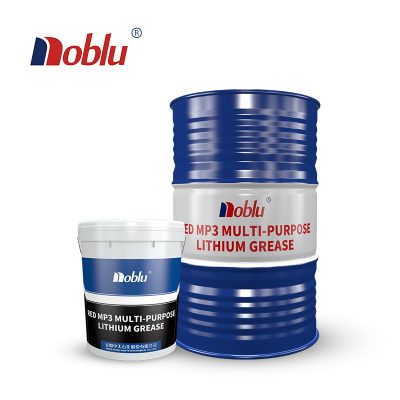
- Heat: our own multi-purpose lithium grease is rated −20 to 120 °C; Permatex rates its synthetic caliper lube −40 to 400 °F (−40 to 204 °C)
- Not the lithium itself: Molykote G-3407, a caliper pin grease, uses a lithium complex thickener in a synthetic polyalkylene glycol oil
- Pads and rotors: no grease of any kind on friction surfaces
- Where lithium fits: chassis points, hinges and, in lithium complex form, wheel bearings
This page used to say the opposite about lithium grease on brake calipers. An earlier version argued that lithium grease was the ideal brake caliper lubricant and quoted standards and test figures we could not verify, so we have rewritten it. We make lithium and lithium complex greases for bearings, which is why we want to be clear about where they should not go.
Can I use lithium grease on brake calipers?
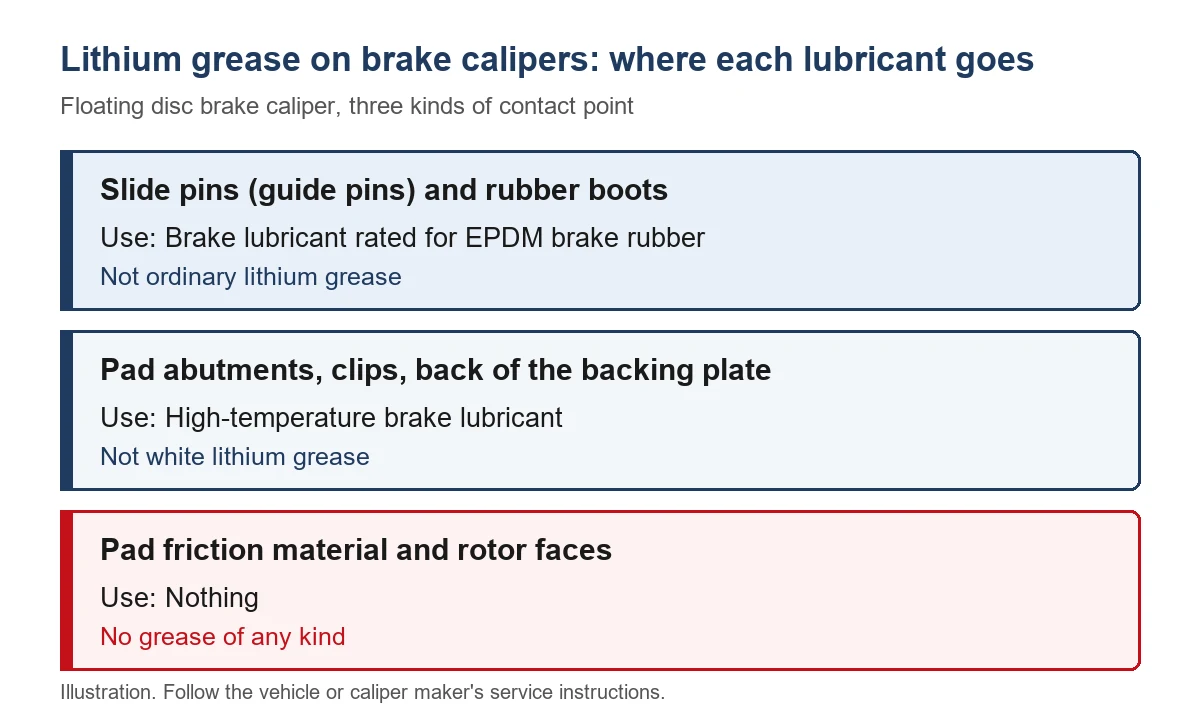
Not on the slide pins or anything that touches the rubber boots. A caliper has three kinds of contact points, and the right answer differs for each:
- Slide pins (guide pins) and their boots: use a brake lubricant whose data sheet says it is compatible with brake rubber. This is where ordinary lithium grease causes trouble.
- Pad abutments, clips and the back of the pad backing plate: use a high-temperature brake lubricant. The surfaces are metal, but they sit next to the hottest parts of the brake.
- Pad friction material and rotor faces: nothing. Grease here reduces braking.
For “can I use lithium grease on brakes?”, there is no place on a disc brake where a general-purpose lithium grease is the recommended product.
Why is ordinary lithium grease the wrong choice for caliper slide pins?
Two things work against it: the base oil and the temperature.
The slide pins of a floating caliper run inside rubber boots or sleeves, and these are often EPDM rubber, which is why both caliper lubricants below state compatibility with ethylene-propylene or EPDM.
Look at how the makers of caliper greases describe their products. Permatex says its Ultra Disc Brake Caliper Lube is a “non-silicone, non-petroleum based formula” that is compatible with brake rubber and plastic hardware, “including ethylene-propylene rubber”. The distributor page for Molykote G-3407 says EPDM test pieces aged at 150 °C showed limited volume and hardness change, and says the results indicate the grease is much less likely to swell or embrittle caliper boots and sleeves than generic greases. They advertise rubber compatibility because generic grease can attack the boots.
A boot that swells can drag on the pin, and a pin that drags stops the caliper from floating freely, which can wear one pad faster than the other.
Temperature is the second problem. A general-purpose lithium grease is a simple lithium soap grease, and its dropping point, the temperature at which the thickener can no longer hold the oil in a standard test, sits well below the figure ChemPoint lists for Molykote G-3407 (above 250 °C). Permatex lists no dropping point for its caliper lube.
| Grease | Base oil | Thickener | Heat figure published | Maker’s word on rubber |
|---|---|---|---|---|
| Zhongtian Multi-purpose Lithium Grease | Mineral oil | Lithium soap | Dropping point 170 / 175 / 180 °C (NLGI 1 / 2 / 3); use range −20 to 120 °C | Not rated for brake rubber |
| Lucas Oil White Lithium Grease | Not stated | Simple lithium | Dropping point 345 °F (174 °C) | Not mentioned; listed for hinges, springs, chassis |
| Permatex Ultra Disc Brake Caliper Lube | Synthetic oil | Not stated | No dropping point; rated −40 to 400 °F (−40 to 204 °C) | Compatible with brake rubber, including EPDM |
| Molykote G-3407 Caliper Pin Grease | Synthetic polyalkylene glycol | Lithium complex | Continuous service −40 to 200 °C; dropping point above 250 °C | Limited volume and hardness change in EPDM aged at 150 °C |
Figures as published by each maker or its distributor: our product page, the Lucas Oil product data sheet (3/26/2024), the Permatex technical data sheet and the ChemPoint product page for Molykote G-3407. A dropping point is a lab test result, not a safe working temperature.
The first row is our own product. Our multi-purpose lithium grease is a good chassis and general bearing grease within its −20 to 120 °C range, and it is the kind of grease that should stay off caliper slide pins.
Is the problem the lithium or the oil?
Mostly the oil. The last row of the table is a caliper pin grease with a lithium thickener. Molykote G-3407 combines a lithium complex soap with a synthetic polyalkylene glycol base oil instead of mineral oil, and ChemPoint reports its EPDM results for that formulation. Lithium complex soap also has a higher dropping point than simple lithium soap: FUCHS lists typical values above 180 °C for lithium and above 230 °C for lithium complex, and notes that values vary by formulation.
“Lithium grease” on a general-purpose tube usually means a simple lithium soap, often in mineral oil, as ours is. A brake lubricant can contain lithium and still be correct for the pins, as long as its data sheet names a synthetic base oil and states compatibility with brake rubber. Judge the grease by its data sheet.
What kind of grease is used on brake caliper pins?
Use the lubricant named in the vehicle service manual; if there is none, use a synthetic or silicone brake lubricant rated for EPDM. Three checks on the data sheet are enough:
- Rubber: it states compatibility with brake rubber, EPDM or ethylene-propylene. Without that line, keep it off the pins.
- Temperature: a service range up to about 200 °C, as on the Permatex and Molykote products above.
- Base oil: polyalkylene glycol or silicone, not mineral oil. A PAO-based grease still needs an explicit EPDM compatibility statement.
Some pad kits come with a sachet of lubricant. Use it where the kit instructions say, and keep it for the parts it was supplied for.
How do you lubricate brake slider pins?
Clean the pins and bores, apply a thin film of the right lubricant, and keep it away from the pads and rotor. The general sequence:
- Remove the pins and wipe off all old grease from the pins and the inside of the boots.
- Inspect the boots. A torn, swollen or soft boot should be replaced. Swelling can be a sign that the wrong grease was used before.
- Apply a thin film to the pin and the inside of the boot, as the lubricant maker directs.
- Refit and check: tighten the guide-pin bolts to the specified torque and check that the caliper slides by hand before refitting the wheel.
- Wipe off any excess, and keep lubricant off pad friction material and rotor faces. Permatex’s own directions say the same.
Can I use lithium grease on brake pads?
No. Nothing goes on the friction material or the rotor face. On the pad backing plate and abutment clips, use a high-temperature brake lubricant, for the temperature reason given above. Any grease on the friction surface reduces braking.
Where does lithium grease belong on a car?
On chassis points, hinges, latches and other moderate-temperature metal parts; for wheel bearings, use a grease the bearing or vehicle maker rates for wheel bearings, such as a lithium complex or polyurea grade. Lucas Oil, for example, lists its white lithium grease for garage door openers, springs, hinges and automotive chassis, and states that it does not recommend it for wheel bearings. A wheel bearing next to a disc brake sees more heat than a door hinge.
Zhongtian Extreme Pressure Lithium Complex Grease
- Thickener: lithium complex
- Operating range, as published: −30 to 220 °C
- For: bearings, not brake slide pins
If you distribute parts, our work with a Venezuelan truck parts supplier on a custom red high-temperature wheel bearing grease shows how a wheel bearing grease is matched to a market. For the difference between a dropping point and a working temperature, see high-temperature grease: dropping point vs operating temperature.
FAQ
When should you not use white lithium grease?
On brake slide pins, on anything that touches brake rubber, on pads and rotors, and in wheel bearings unless the maker rates it for them. White lithium grease is a general-purpose grease for hinges, latches, springs and similar moderate-temperature parts.
Is lithium grease good for brakes?
Not for the slide pins or the pad backing plate. Lithium grease on brake calipers only makes sense in a specialised brake product, such as Molykote G-3407, a lithium complex grease in a synthetic glycol oil. The lithium grease sold for general use is not one of these.
Can I use silicone grease on caliper pins?
Yes, if it is sold for brake use. Ferodo, a brake maker, recommends a silicone lubricant on metal-to-rubber friction points of the caliper, such as the guide pins in their boots. Check that the product is rated for brake temperatures.
What happens if you don’t lubricate caliper pins?
The pins can stick, and the caliper may not release the pads fully. Ferodo lists what follows from a caliper that fails to retract: an overheated, glazed pad, a damaged disc, vibration in the pedal and steering wheel, and faster wear of pads and discs.
What happens if you already used lithium grease on the slide pins?
Take the pins out, clean off the grease, and check the boots. If a boot is swollen, soft or sticky, replace it, then relubricate with a brake lubricant rated for rubber. If the boots look normal and the caliper slides freely by hand, clean and relubricate, and check the boots and pin movement again at the next service.
Sources and notes
- Permatex, Ultra Disc Brake Caliper Lube technical data sheet. PDF
- ChemPoint, Molykote G-3407 Caliper Pin Grease product page. chempoint.com
- Ferodo, How to use brake grease and other lubricants. ferodo.com
- Lucas Oil, White Lithium Grease product data sheet, updated 3/26/2024. PDF
- FUCHS, What is the dropping point of a lubricating grease? fuchs.com
- Zhongtian figures are the values published on our Multi-purpose Lithium Grease and Extreme Pressure Lithium Complex Grease product pages.
- Third-party products are named only to quote their published data. We do not sell or rank them. Always follow the vehicle or caliper maker’s service instructions.