



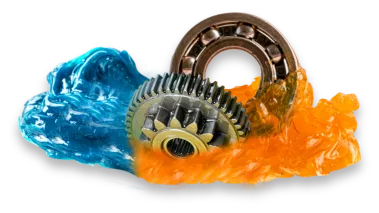
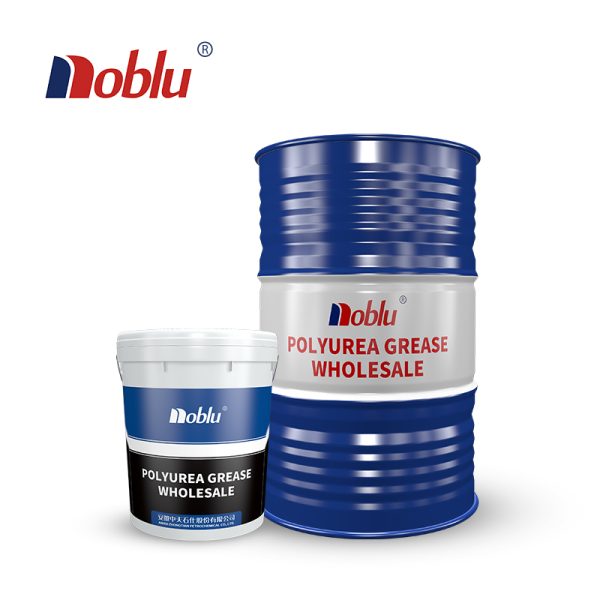

Most greases are oil held in a metallic soap: lithium, calcium, aluminum. Polyurea grease throws out the metal entirely. Its thickener is an organic polymer built from a reaction between isocyanates and amines, and that single structural difference explains almost everything the grease does well: it does not catalyze oil oxidation the way trace metals can, so it ages slowly at temperature; it holds together without coking; and it runs quietly. That combination is why polyurea ended up as the factory fill in so many sealed motor bearings: nobody is going to open them again.
What the data actually says
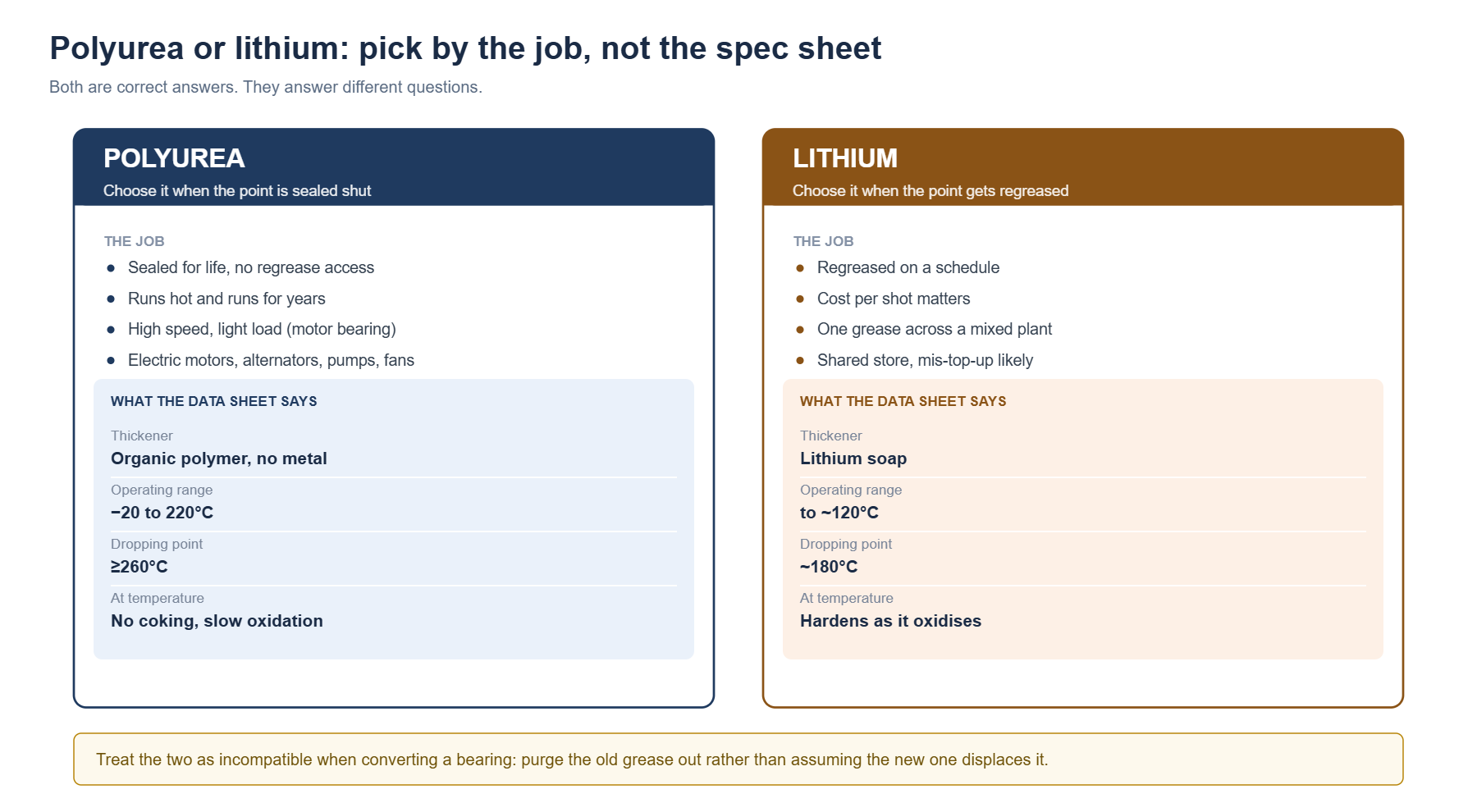
Zhongtian’s polyurea grease is an NLGI 2 with an operating range of −20°C to 220°C, a dropping point of 260°C or higher, and the property that matters most at the top of that range, no coking under sustained high temperature. Set that against a conventional lithium grease, which typically drops around 180°C and hardens as it oxidizes, and the reason for the price gap becomes concrete rather than marketing.
| Property | Polyurea (ZTS) | Typical lithium |
|---|---|---|
| Thickener | Organic polymer, no metal | Lithium soap |
| Dropping point | ≥260°C | ~180°C |
| Upper operating temp | 220°C | ~120°C |
| High-temp behavior | No coking, slow oxidation | Hardens over time |
| Signature strength | Long life in sealed bearings | Low cost, easy availability |
The job it was made for
Polyurea’s home is the sealed-for-life bearing in electric motors, alternators, fans and pumps, where the grease is packed once and expected to survive tens of thousands of hours untouched. Three of its properties line up with that demand: oxidation life at temperature (the non-metallic thickener resists the slow bake that stiffens lithium in a warm end-shield), shear stability (high rpm for years without softening and slinging out), and quiet running (a genuine specification in HVAC and appliance motors). The full head-to-head, including the cases where lithium still wins, is in this polyurea vs lithium comparison; the property deep-dive sits in the advantages of polyurea grease.
Where lithium still wins
A manufacturer that sells both should say this plainly: polyurea is not the universal answer. Lithium and lithium complex greases remain the better choice where you relubricate frequently and cost per shot matters, where you need broad multi-purpose coverage across a mixed plant, and where availability and cross-compatibility with existing grease outweigh maximum service life. Buying polyurea for a grease point you regrease weekly is paying for longevity you throw away.
The compatibility trap
Here is the failure that catches people. Polyurea and lithium are, in many pairings, incompatible. Mix them and the combined grease can soften into a runny mess or stiffen into a paste, either way losing the structure that keeps oil in the contact. When converting a bearing from lithium service to polyurea, purge thoroughly; do not assume the new grease will simply displace the old. This is the same rule that governs any thickener change, and it is worth reading the broader landscape of grease types and their compatibility before a plant-wide switch.
Choosing it on purpose
Reach for polyurea when the point is sealed, hot, high-speed, and meant to run for years, which is the classic motor bearing. Skip it when you regrease often, need one grease for many jobs, or share a store where a mis-top-up with lithium is statistically inevitable. Zhongtian supplies polyurea grease in wholesale and OEM quantities for exactly the first case; technical data sheets with the full test panel are available on request.
FAQ
What is polyurea grease used for? Chiefly sealed-for-life bearings in electric motors, alternators, pumps and fans, plus other high-temperature, long-life points where relubrication is impractical.
Is polyurea grease better than lithium? For sealed, hot, long-life bearings, yes, because of longer oxidation life and no coking. For frequently relubricated, cost-sensitive, or mixed-store use, lithium is often the smarter buy.
What temperature can polyurea grease handle? Zhongtian’s polyurea grease is rated −20°C to 220°C with a dropping point of 260°C or higher and no coking at the top of the range.
Can I mix polyurea and lithium grease? Treat them as incompatible unless a specific pair is proven otherwise. Purge completely when switching.
Two neighbouring decisions sit either side of this one. Getting the grade right does nothing if the quantity is wrong, and motor bearings punish over-filling harder than almost any other point, which is the subject of electric motor bearing grease. And if the point runs hotter than polyurea’s range rather than merely warm, the choice moves off soap and polymer thickeners entirely, toward the clay and inorganic end of the high-temperature ladder.
If you are converting a bearing from lithium
This is where polyurea purchases most often go wrong, and it has nothing to do with the grease being wrong for the job. A bearing that has run on lithium for years holds old grease in the cavity, in the shields and in the housing dead space. Pumping polyurea in on top does not flush it out. The two thickeners meet, and the mixture can slump or set up.
Purge deliberately instead. Run the point on shortened intervals for the first few relubrications so the old grease is pushed out through the drain rather than accumulating, keep the drain open while the machine runs, and expect the first purges to come out discoloured and mixed. If the bearing is sealed with no drain path, the honest answer is that it cannot be converted in service: it gets converted at the next rebuild, or it stays on lithium.
Product figures on this page (NLGI grade, −20°C to 220°C range, dropping point ≥260°C, no coking) come from the Zhongtian polyurea technical data sheet in current production. The lithium column is typical behaviour for conventional lithium soap grease, not a measurement of any specific competitor product. If you are planning a conversion, tell us what is in the bearing now and what the drain path looks like, because those two answers decide whether a conversion is even available to you.