


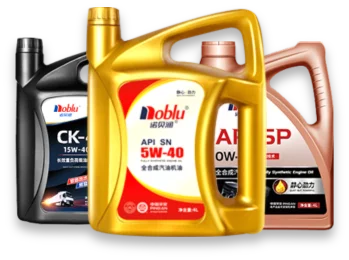


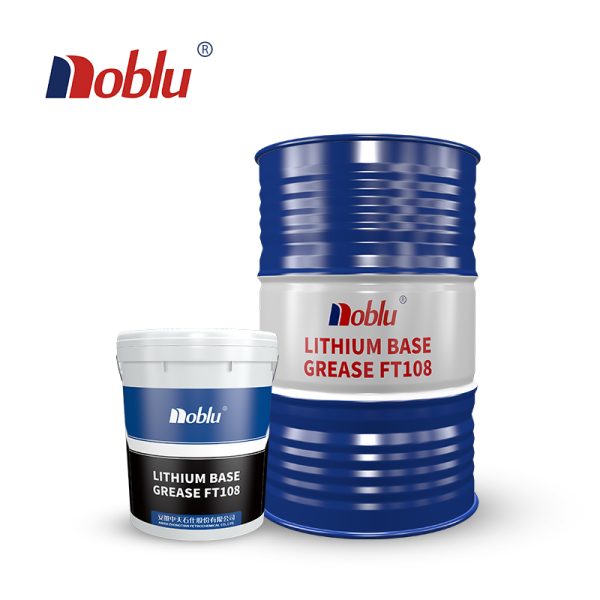
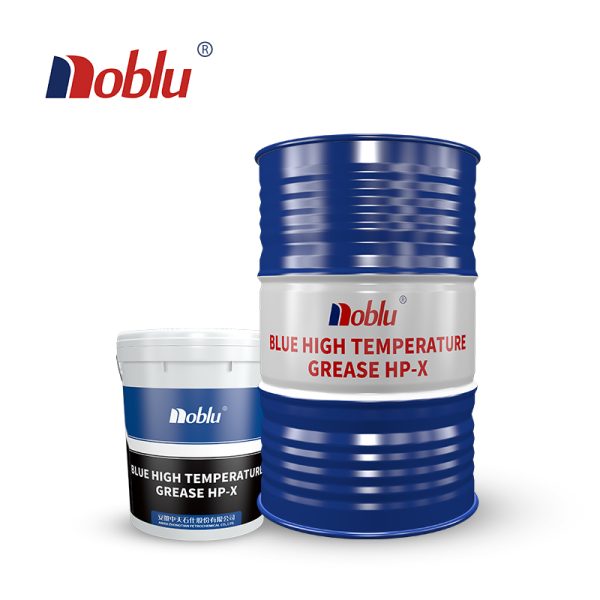
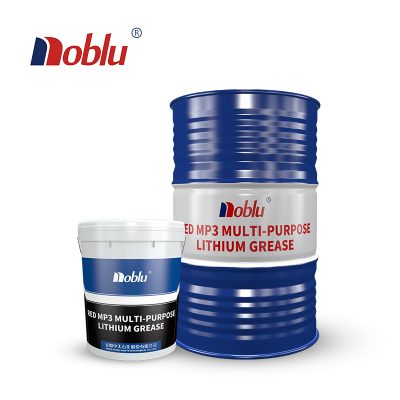

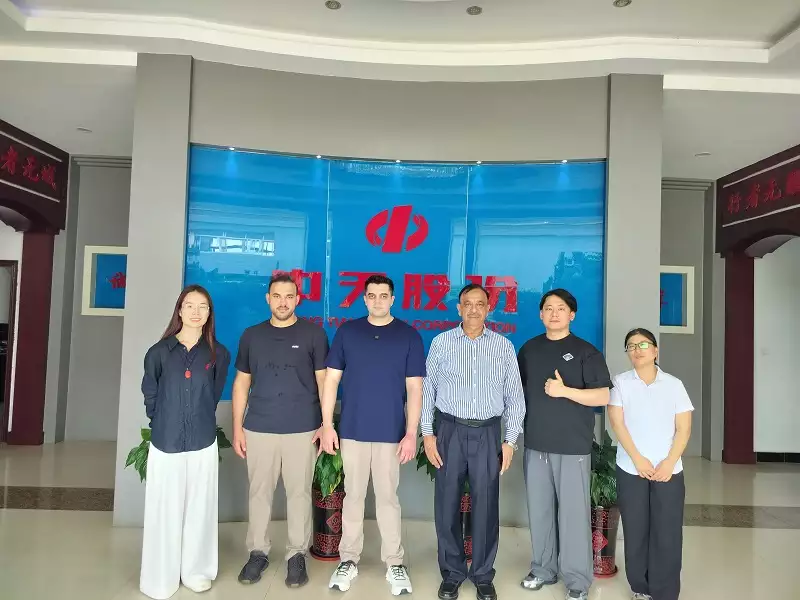
A three-person team from Pakistan recently visited Zhongtian Petrochemical to evaluate lubricant sourcing cooperation. According to the project brief, the visitors have operated their own lubricant brand in Pakistan for 25 years and also distribute a major Korean lubricant brand.
That background changed the conversation.
They were not looking for a casual quotation from a random lithium grease supplier from China. They discussed general lithium grease, lubricating grease, engine oil, and vehicle gear oil, with the current purchase focused on No.3 general lithium grease. For an established Pakistan lubricant distributor, the real question is not “Who has the lowest price?” It is “Can this manufacturer protect our brand when the same product is reordered, relabeled, shipped, and sold in our market?”
This article uses that visit as a practical sourcing case for Pakistan lubricant distributors, international lubricant importers, automotive lubricant buyers, and industrial grease distributors evaluating a lithium grease manufacturer in China.
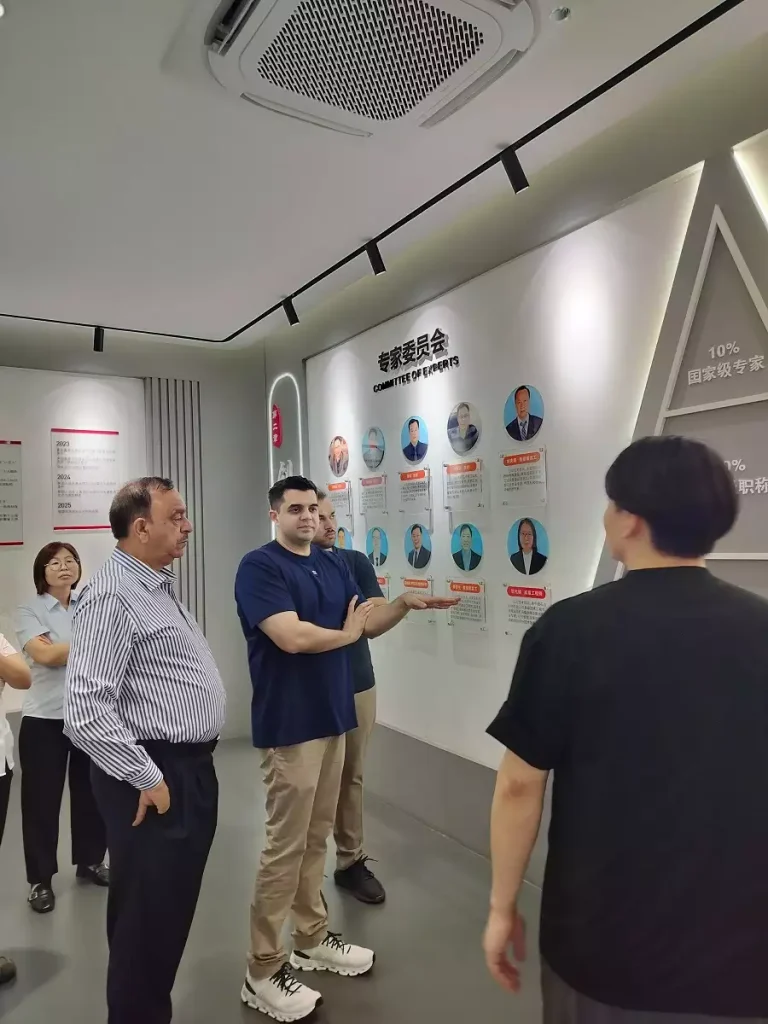
The Visit Was a Supplier Audit Conversation, Not a Price Check
The Pakistan visitors arrived with market experience. A buyer who has built a lubricant brand for 25 years usually understands dealer expectations, local price levels, packaging habits, and complaint risks better than a first-time importer.
That makes the factory visit useful as a trust signal—but only if it is presented correctly. The value is not simply that “foreign customers visited.” The value is that experienced lubricant buyers came to discuss product fit, manufacturing capability, and future supply control across grease and oil categories.
During the visit, the discussion covered:
- General lithium grease
- Broader lubricating grease products
- Engine oil
- Vehicle gear oil
- Current purchase direction: No.3 general lithium grease
For Pakistan and similar markets, No.3 lithium grease can be commercially familiar because many workshops and distributors recognize the grade. But familiarity does not remove the need for technical checks. A stiffer grease may suit some applications and fail in others.
The visit therefore points to a practical buying rule: an established lubricant brand should evaluate a Chinese supplier through product matching, document review, sample approval, packaging control, and repeat-order consistency—not through drum price alone.
Why No.3 General Lithium Grease Needs a Precise Discussion
“Lithium grease” is not one product. General lithium grease, EP lithium grease, molybdenum disulfide lithium grease, and lithium complex grease may appear in the same sourcing conversation, but they are not interchangeable.
No.3 general lithium grease is mainly a consistency choice. It is stiffer than No.2 grease under the NLGI consistency classification system. NLGI grades describe grease consistency by worked penetration range; they do not, by themselves, prove high-temperature performance, water resistance, load-carrying capacity, or bearing suitability.
The National Lubricating Grease Institute (NLGI) publishes the widely used grease consistency grade system. ASTM D217 is the standard test method commonly referenced for cone penetration of lubricating grease. ASTM dropping point methods such as ASTM D566 or ASTM D2265 may appear on grease technical data sheets depending on product type and supplier practice.
A buyer should read those values as test references, not as marketing decoration.
| Technical term | What it tells the buyer | What it does not prove alone |
|---|---|---|
| NLGI grade | Grease consistency and relative stiffness | Full performance in heat, water, load, or speed |
| Worked penetration | Measured consistency after working | Whether the grease is correct for every application |
| Dropping point | Temperature where grease structure changes under test conditions | Continuous operating temperature |
| Thickener type | Grease family, such as lithium or lithium complex | Additive quality or batch consistency |
| EP / anti-wear properties | Intended load and wear protection direction | Suitability without application conditions |
| Oil separation | Storage and structure stability indicator | Complete field performance |
For the Pakistan visit, the stated current purchase focus is No.3 general lithium grease. That is a useful starting point. It still leaves several open questions: application, climate, package format, customer type, label claims, and document requirements.
What the Pakistan Buyer Profile Reveals About Supplier Selection
A buyer with a 25-year local brand does not only buy product. It buys risk control.
If the grease leaks, separates visibly in storage, fails under load, or is packaged with inconsistent claims, the complaint goes to the local brand first. The end user may never know which factory produced it. That is why private-label and distributor buyers need a more disciplined process than spot buyers.
For this type of customer, a lithium grease supplier from China should be evaluated on five practical dimensions:
- Can the manufacturer explain which grease fits the application?
- Can the supplier provide a clear TDS, SDS, and batch document package?
- Can samples be traced to the quoted product?
- Can packaging support the buyer’s market position?
- Can repeat orders remain consistent in name, grade, formulation direction, and documentation?
The Pakistan team’s broader discussion—grease, engine oil, and vehicle gear oil—also matters. Many lubricant distributors prefer supplier relationships that can grow beyond one SKU. But range is only useful when the supplier can narrow the choice.
A wide catalog without technical guidance creates confusion. A focused recommendation backed by documents is more valuable.
Manufacturer, Supplier, and Trading Company Are Different Risks
A manufacturer, supplier, and trading company can all sell lithium grease. They do not give the buyer the same control.
A direct manufacturer is usually closer to formulation, production records, packaging planning, and technical response. A trading company may still be useful for small mixed shipments or trial sourcing, but the buyer should know who controls production and who will answer when a batch question appears.
| Verification point | Direct manufacturer | General supplier | Trading company |
|---|---|---|---|
| Production control | Usually direct or factory-controlled | Depends on business model | Usually indirect |
| Technical response | Closer to formulation and testing | Varies | Often depends on upstream factory |
| TDS / SDS / COA support | Easier to coordinate | May be available | May require factory coordination |
| Sample-to-batch control | Easier to audit | Depends on source control | Needs stronger checking |
| Private-label flexibility | Often stronger | Varies | Depends on factory partners |
| Best fit | Long-term distributor or brand supply | Mixed product sourcing | Trial or multi-source purchasing |
According to provided catalog excerpts, Zhongtian Petrochemical was founded in 1998 and is described as a high-tech enterprise integrating lubricant research and development, production, sales, and technical services
The catalog excerpts list the R&D Center Address as 188 Shanghai Road, Baohe District, Hefei City, Anhui Province, China, and the Factory Address as No. 27 Xingye Road, Susong Economic Development Zone, Anhui Province, China
These details are useful because they give importers something specific to check. They do not replace due diligence. A serious buyer should still verify business identity, production site, export documents, product codes, and technical contacts before approving bulk orders.
A Factory Visit Should Produce Evidence, Not Just Photos
Factory visits often become marketing content. For B2B lubricant sourcing, they should become evidence.
A useful visit record should connect the customer’s buying goal to the supplier’s ability to respond. In this Pakistan case, the important commercial facts are clear: three visitors, long-established Pakistan brand background, distributor experience with a major Korean lubricant brand, and discussion of No.3 general lithium grease plus other lubricant categories.
If privacy prevents naming the Pakistan company, that is acceptable. The article can still be credible if it explains what was discussed and what buyers should learn from the process.

The TDS Should Carry the Buying Decision
A lithium grease RFQ should not say only “send price for lithium grease.” That request leaves too much open and encourages the supplier to quote the cheapest product that matches the words.
At minimum, the buyer should request or define:
- NLGI grade
- Worked penetration
- Thickener type
- Base oil type
- Dropping point
- Operating temperature guidance
- Water resistance
- EP and anti-wear direction
- Corrosion protection
- Oil separation
- Packaging
- TDS, SDS, and COA format
The TDS is where the commercial discussion becomes technical. It should connect the product name, grade, test items, typical values, application guidance, and packaging plan.
Zhongtian catalog descriptions supplied for this project state that automotive multi-purpose lithium grease uses highly refined mineral base oil thickened with fatty acid metal soap, with anti-oxidation, anti-rust, extreme pressure, and anti-wear additives added through a special process.
That type of description is useful, but it is not enough by itself. Buyers should request the current technical data sheet for the exact product being quoted.
A product description explains the formulation direction. A TDS defines the comparison basis. A COA confirms batch-level information for a specific shipment.
No.3 Grease Can Fit the Market, But It Is Not Universal
NLGI 3 grease may be attractive when the buyer wants a stiffer grease body than NLGI 2. It can suit markets where workshops, mechanics, and dealers are already familiar with No.3 general lithium grease.
It may also help in applications where staying power is valued and the grease should not move too easily from the service point. Warmer climates and certain open or semi-open lubrication points may make a stiffer product commercially appealing.
But No.3 is not automatically better.
A stiffer grease can be harder to pump, harder to apply in low-temperature conditions, and unsuitable for some centralized lubrication systems. It may also be wrong for high-speed bearings if the grease cannot move and release oil as required.
For the Pakistan purchase direction, the supplier should ask:
- Is the grease mainly for automotive workshop use, industrial use, or general retail demand?
- Will the product be sold in cartridges, small packs, pails, or drums?
- What climate and storage conditions will it face?
- Are users applying it manually or through grease guns or systems?
- Is the product expected to carry “general purpose,” “EP,” or “high temperature” claims?
If the end use is uncertain, the buyer should approve samples before a private-label bulk order. If operating temperature or load is severe, the discussion may need to move from general lithium grease to EP lithium grease, molybdenum disulfide lithium grease, lithium complex grease, or another grease family.
For broader background, Zhongtian’s guide to grease categories can support early technical screening: guide to different grease types
Product Range Only Matters When It Narrows the Choice
The Pakistan team also discussed lubricating grease, engine oil, and vehicle gear oil. That makes sense for a distributor or importer managing multiple lubricant categories.
Still, a broad product range is only an advantage if the supplier can recommend the right product for each application. A catalog should not push every buyer toward the same grease.
Provided Zhongtian catalog excerpts include several grease directions relevant to lithium grease buyers:
- Automotive multi-purpose lithium grease for friction parts, with anti-oxidation, anti-rust, EP, and anti-wear additive direction
- Molybdenum disulfide lithium grease described as lithium-based grease with molybdenum disulfide, anti-oxidation, and anti-rust additives, used in high-temperature, humid, and heavy-load equipment in metallurgical and chemical industry centralized lubrication systems, with an operating temperature range of -20°C to 120°C
- Extreme pressure lithium grease made with lithium 12-hydroxystearate soap thickened with high-viscosity refined mineral oil and additives, described for high-temperature, humid, and heavy-load centralized lubrication systems in large metallurgical and chemical equipment, with an operating temperature range of -20°C to 120°C
Those descriptions help a buyer ask better questions. They should not be treated as a substitute for the current TDS, sample approval, or application confirmation.
Packaging is also part of product fit. Provided catalog excerpts list grease packaging formats including 320g, 400g, 500g, 1kg, 2kg, 5kg, 12kg, 15kg, 170kg, and 180kg
For a Pakistan lubricant distributor, small packs may support retail and workshop sales. Pails may fit repair shops, fleets, and local dealers. Drums may fit industrial customers and large-volume users. The same grease can require different commercial positioning depending on the package.

Private-Label Buyers Should Approve the Product Before the Label
Private-label lubricant projects often go wrong when label design starts before product positioning. A local brand may know the target price and packaging style, but the manufacturer still needs to confirm the technical match.
For No.3 general lithium grease, the buyer should first decide whether the product is positioned as:
- Economy general-purpose grease
- Standard workshop grease
- Heavy-duty grease
- Industrial grease
- Premium or higher-temperature line
Only after that should the discussion move to label design, carton marks, language, barcodes, and retail claims.
Label claims must match the technical file. If a package says “high temperature,” “extreme pressure,” or “heavy duty,” the TDS and application guidance should support the intended use. Otherwise, the brand owner carries the risk when dealers or end users challenge the claim.
A private-label buyer should define five items before bulk order:
| Decision area | What to confirm |
|---|---|
| Product position | Economy, standard, heavy-duty, industrial, or premium |
| Technical baseline | NLGI grade, application, temperature guidance, key properties |
| Packaging system | Pack size, pail or drum type, carton, pallet, label language |
| Document package | TDS, SDS, COA, label content, import documents |
| Repeat-order control | Product code, approved sample, batch reference, change notice |
Zhongtian’s catalog positions the company as a lubricant producer with R&D, production, sales, and technical services. It also states that products have been exported to more than 100 countries and regions including Europe, America, Japan, South Korea, South Asia, and Southeast Asia.
For buyers, the important point is not the number alone. It is whether the supplier can support the next order with the same technical discipline as the first one.
For context on the broader lubricant manufacturing landscape, see: global lubricant manufacturers
A Better RFQ for the Pakistan No.3 Lithium Grease Case
The Pakistan visit shows why a good RFQ should be more than a product name. “No.3 general lithium grease” is a start. It is not a complete sourcing instruction.
A practical RFQ for this case should include:
| RFQ field | What the buyer should provide | Why it matters |
|---|---|---|
| Buyer type | Distributor, importer, private-label brand, OEM buyer | Clarifies cooperation model |
| Market | Pakistan or target export region | Supports label language, packaging, and documents |
| Application | Workshop, chassis, bearing, machinery, general retail | Guides grease selection |
| Required grade | NLGI 3, or comparison with NLGI 2 if needed | Prevents wrong consistency quotation |
| Conditions | Temperature, water, dust, load, speed | Supports technical recommendation |
| Product level | Economy, standard, heavy-duty, premium | Aligns formulation direction and cost |
| Packaging | 400g, 500g, 1kg, 5kg, 15kg, 180kg, or other | Affects price, MOQ, and production planning |
| Documents | TDS, SDS, COA, label, import documents | Reduces approval and shipment delays |
| Branding | Supplier brand, neutral, or private label | Determines artwork and packaging work |
| Volume | Trial order and annual estimate | Helps quote realistic commercial terms |
If the buyer does not know the exact technical requirement, describing the application honestly is better than forcing an uncertain specification. A good manufacturer can recommend a product direction, but the buyer should still approve samples and documents before placing a bulk order.
For sample control, request labels with product name, grade, date, and reference code. Keep the approved sample as a comparison point for the first production batch.
If third-party testing is required, agree on the test items and acceptance criteria before sending the sample. Do not test first and argue about standards later.
Red Flags That Should Slow the Purchase
A weak lithium grease supplier may look acceptable until the buyer asks for detail. The warning signs usually appear in documents, product naming, and repeat-order control.
Be cautious if one price is given for every lithium grease grade. Be cautious if the supplier cannot explain the difference between NLGI 2 and NLGI 3. Be cautious if the TDS has no product code or the sample label does not match the quotation.
Overclaiming is another warning sign. Phrases such as “suitable for all machines,” “same as famous brand,” or “best quality at lowest price” are not technical evidence.
A buyer should slow the purchase when:
- The quotation, sample, invoice, and label use different product names
- The label says lithium complex grease but the TDS describes general lithium grease
- The supplier cannot provide a current TDS or SDS
- The quoted product has no clear NLGI grade
- Packaging claims are stronger than the technical document
- The supplier resists sample approval before bulk private-label production
For an established Pakistan lubricant brand, these are not small problems. They can become dealer complaints, customs delays, relabeling costs, or damage to brand trust.
Where Zhongtian Petrochemical Fits in the Evaluation
Zhongtian Petrochemical should be evaluated the same way any serious lithium grease manufacturer from China should be evaluated: by company identity, product range, technical documents, sample quality, packaging capability, and repeat-order support.
The available project and catalog information gives several verification anchors. Zhongtian is described as founded in 1998 and as a lubricant company integrating R&D, production, sales, and technical services. The provided catalog excerpts also mention an R&D center in Hefei and a factory in Susong Economic Development Zone.
The company profile excerpts describe a research institute with testing, analysis, and experimental equipment, R&D personnel, and technical consultants. They also state that the company has been approved to establish provincial key laboratories, provincial engineering technology research centers, academician workstations, and postdoctoral workstations, and is the undertaking unit of the provincial lubricant standardization technical committee.
For lithium grease buyers, the most useful evaluation points are more practical:
- Does Zhongtian provide the current TDS for the exact No.3 grease?
- Can the sample be linked to the quotation and future production?
- Can packaging be matched to Pakistan distributor needs?
- Can documents support import, dealer, and private-label requirements?
- Can future orders keep the same product reference and approved technical direction?
Zhongtian is therefore best approached not as a generic supplier listing, but as a manufacturing partner to evaluate through a structured procurement process.
You can start from the official site for company and product information: Zhongtian Petrochemical official website
The Buying Rule That Protects a Distributor Brand
The Pakistan visit is a useful reminder for lubricant importers: the right supplier conversation starts with the product’s job.
For No.3 general lithium grease, define the local use case, package size, price level, document requirements, and performance boundary. For construction machinery or industrial use, add load, water, temperature, dust, speed, and relubrication conditions. For higher-temperature requirements, check whether standard lithium grease is enough or whether another grease family should be reviewed.
A disciplined buyer should qualify the supplier in this order:
- Confirm manufacturer identity and factory information.
- Match the grease family to the application.
- Review the TDS, SDS, and document package.
- Test and approve samples.
- Confirm packaging and private-label details.
- Negotiate price, MOQ, lead time, and repeat-order control.
That order protects the buyer’s brand. It also helps the manufacturer quote the right product instead of the cheapest one.
If your team is preparing a lithium grease RFQ for Pakistan or another export market, send the application, target NLGI grade, packaging format, destination market, and private-label requirements. Zhongtian Petrochemical can then respond with the relevant product direction, technical data, sample discussion, and quotation details for your sourcing project.
For buyers comparing grease thickener options beyond lithium products, this technical comparison may help frame the discussion before RFQ approval: polyurea vs lithium grease comparison