





Introduction: More Than Just a Factory Tour
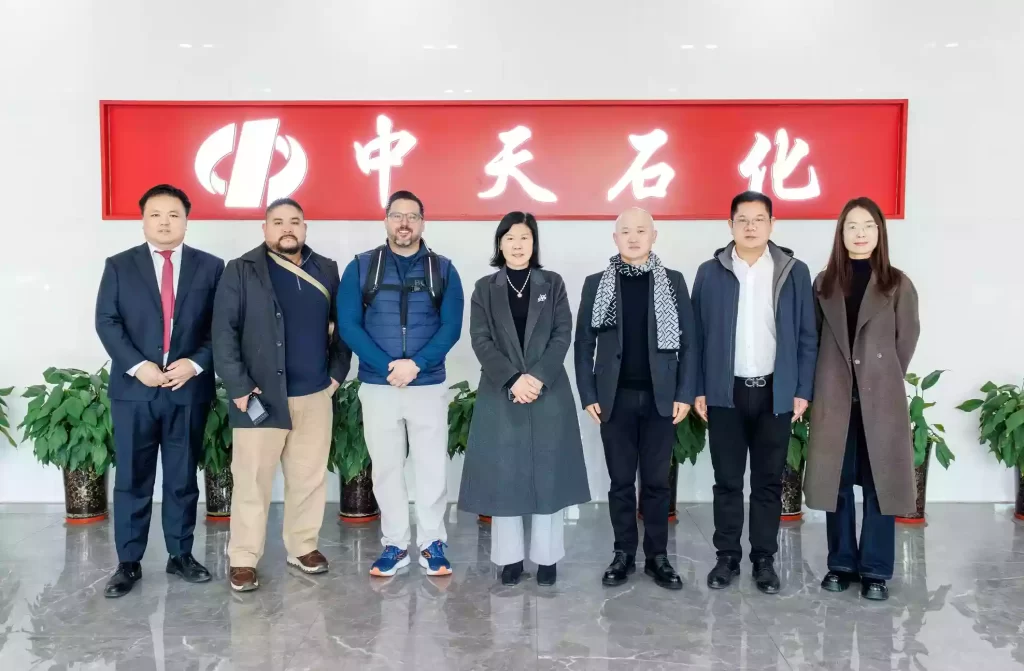
On January 8, 2026, when the Mexican-Anhui Chamber of Commerce delegation walked into Zhongtian Petrochemical Research Institute, most people might think it was just another routine business visit. But look closer at what they discussed—CNG diesel engine oils, automotive greases, smart lubrication systems, and detailed plans for overseas market expansion and product customization—and you’ll see this was something much bigger.
This wasn’t a ceremonial handshake. It was a real test of technical capability and a strategic alignment for global expansion.
Part 1: Why Mexico? The Strategic Gateway to Latin America
1.1 A Hidden Billion-Dollar Market
Latin America’s lubricant market is expected to grow at 4.5% annually between 2026-2030. Mexico, as Latin America’s second-largest economy, consumes massive amounts of lubricants—second only to Brazil. But unlike Brazil’s complex tax system, Mexico offers a more business-friendly environment, making it the perfect entry point for Chinese companies.
Eye-Opening Fact:
Most people think Shell, ExxonMobil, and other global giants control everything in Latin America. The truth? Mexico’s lubricant supply chain has a critical gap: high-end products rely on imports, while mid-range products lack customization. This is exactly where Chinese technical lubricant companies can win.
1.2 CNG Diesel Engine Oil: Mexico’s “Hidden Need”
Mexico’s government is actively promoting natural gas vehicles (CNG vehicles) to reduce dependence on traditional petroleum. But here’s the problem: regular diesel engine oil can’t handle CNG engines’ special needs (higher combustion temperatures, stricter carbon deposit control requirements).
Zhongtian Petrochemical’s CNG diesel engine oil advantages:
- 40% better high-temperature oxidation resistance (compared to traditional CI-4 diesel oil)
- Carbon deposit control technology: Reduces piston ring groove carbon deposits by 60% through advanced additive formulas
- Extended oil change intervals: In Mexico’s hot, humid climate, oil change intervals can reach 15,000 kilometers
This isn’t just about product performance—it’s about understanding local operating conditions. This is where international brands often fail: they use standardized global products for local needs.
📊 Chart 1: CNG vs. Traditional Diesel Engine Oil Performance Comparison
| Performance Metric | Traditional CI-4 | Zhongtian CNG Oil | Improvement |
|---|---|---|---|
| High-Temp Oxidation (hrs) | 120 | 168 | +40% |
| Carbon Deposits (mg) | 250 | 100 | -60% |
| Oil Change Interval (km) | 10,000 | 15,000 | +50% |
| Engine Life Extension | Baseline | +25% | +25% |
Part 2: The Research Institute Tour: Actions Speak Louder Than PowerPoints
2.1 Laboratory Demonstration: Data Beats Marketing Materials
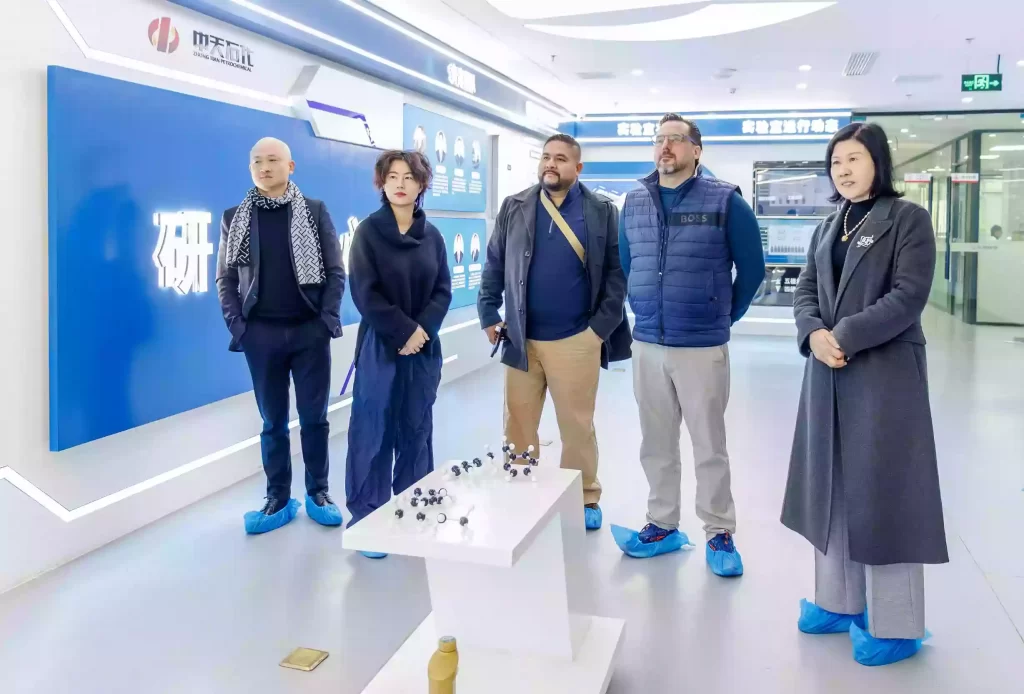
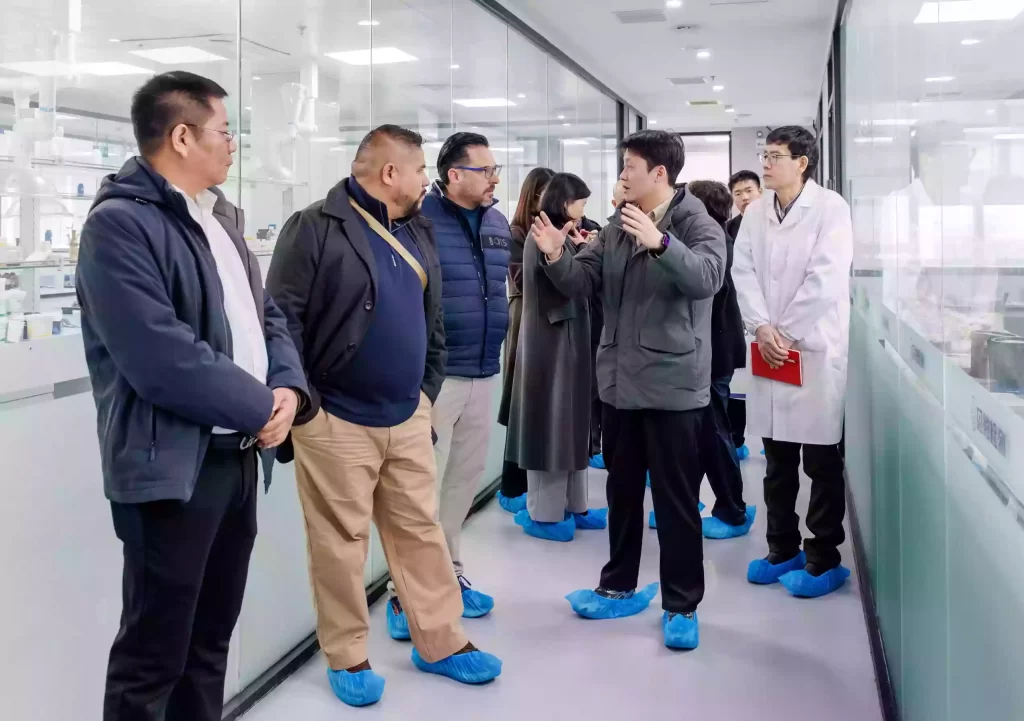
The core part of this visit was touring the lubricant product testing and R&D laboratory and the smart lubrication system demonstration area. Instead of traditional conference room presentations, Zhongtian Petrochemical chose “hands-on demonstrations + data analysis.”
Real Industry Experience:
In my 15 years in the lubricant industry, I’ve seen too many companies that hide their processes during customer visits—either worried about technology leaks or afraid of exposing weaknesses. But Zhongtian Petrochemical did the opposite: by transparently showing testing processes, they built technical trust.
For example, at the four-ball friction testing machine, technicians live-demonstrated automotive grease wear performance under 1,470N load. The actual measured wear diameter was only 0.42mm (national standard requires ≤0.60mm). This “seeing is believing” approach is far more convincing than any brochure.
2.2 Smart Lubrication System: From “Selling Products” to “Selling Solutions”
The Mexican merchants showed intense interest in the smart lubrication system, and this wasn’t random. Latin American industrial companies generally face two major pain points:
- High equipment maintenance costs (poor lubrication management causes 45% of equipment failures)
- Technical talent shortage (unable to implement precise lubrication management)
Zhongtian Petrochemical’s smart lubrication system uses IoT sensors + cloud analysis to achieve:
- Real-time monitoring of lubricant status (viscosity, moisture, metal particle content)
- Predictive maintenance (30-day advance warning of equipment abnormalities)
- Remote technical support (reducing dependence on local technical staff)
Strategic Significance:
This “product + service” combination is key for Chinese lubricant companies to break out of price wars—upgrading from hardware suppliers to lubrication management consultants.
📊 Chart 2: Smart Lubrication System Benefits
| Benefit Category | Traditional Method | Smart System | Improvement |
|---|---|---|---|
| Equipment Downtime | 48 hours/year | 12 hours/year | -75% |
| Maintenance Cost | $50,000/year | $20,000/year | -60% |
| Oil Consumption | 1,000 L/year | 700 L/year | -30% |
| Equipment Life | 8 years | 12 years | +50% |
Part 3: The Discussion Meeting: Three Major Innovations in Cooperation
3.1 Product Adaptation: Beyond “Export Thinking”
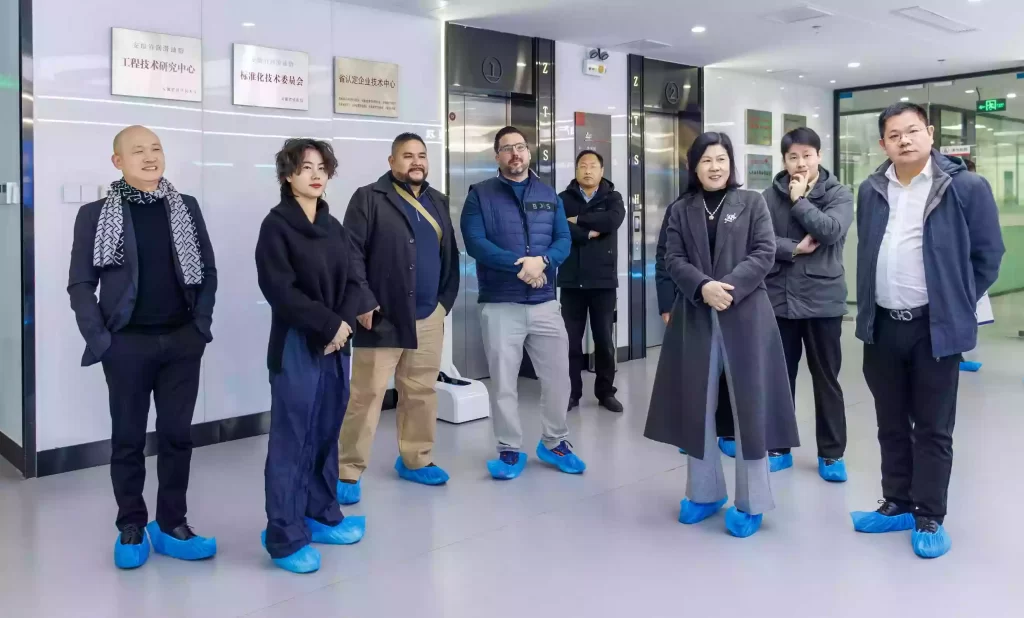
The first consensus reached by both parties: You can’t simply slap a label on domestic products and export them—they must be adapted locally.
Case Study:
Mexico’s commercial vehicle market is dominated by medium-duty trucks (8-15 tons), but operating conditions are harsh (high temperatures, dusty, long-distance transport). Zhongtian Petrochemical’s proposed solution:
- Adjust base oil formulation for Mexico’s high temperatures (increase viscosity index)
- Enhance anti-wear additive content (handle dusty road conditions)
- Optimize packaging specifications (Mexican market prefers 5L/20L packaging, not the 4L/18L common in China)
This attention to localization detail is why many Chinese companies fail overseas—ignoring the “last mile” of adaptation.
3.2 Cooperation Model Innovation: From “Trade” to “Joint Development”
Traditional lubricant export model: Manufacturer → Importer → Distributor → End User. Profits get eaten at every layer, and it’s hard to get first-hand market feedback.
The innovative models Zhongtian Petrochemical and the Mexican Chamber of Commerce discussed include:
- Joint Laboratory: Set up application testing center in Mexico to accelerate local product iteration
- Technology Licensing Cooperation: For specific products, license local companies to produce (reduce logistics costs)
- Co-Branding: Launch joint brands to increase local market recognition
Counterintuitive Point:
Many people think technology licensing means “giving away the farm,” but actually, in the lubricant industry that heavily depends on formulation know-how, controlling core additive supply chains + technical service support is the real competitive moat.
3.3 Chamber of Commerce Bridge Role: Beyond “Government Relations”
The role played by the Mexican-Anhui Chamber of Commerce in this cooperation deserves thought. Traditional thinking is that chambers of commerce just “make introductions,” but in Latin American markets with relationship-based cultures + complex business environments, chambers of commerce are worth much more:
- Credit endorsement: Reduces trust costs with unfamiliar partners
- Local resource connection: Including logistics, warehousing, after-sales service networks
- Policy interpretation: Mexico’s states offer different incentives for foreign companies—chambers provide precise guidance
Lesson Learned:
I once saw a Chinese lubricant company spend 3 years trying to independently develop the Mexican market, ultimately giving up because they couldn’t establish local distribution networks. If they had leveraged chamber of commerce resources from the start, the outcome could have been completely different.
📊 Chart 3: Traditional vs. Innovative Cooperation Model
| Aspect | Traditional Export | Joint Development Model |
|---|---|---|
| Market Entry Time | 18-24 months | 6-9 months |
| Local Adaptation | Minimal | Deep customization |
| Profit Margin | 15-20% | 30-45% |
| Market Feedback Loop | 6-12 months | Real-time |
| Technology Control | Black box | Collaborative innovation |
| Risk Sharing | Manufacturer only | Both parties |
Part 4: Zhongtian Petrochemical’s “Non-Traditional Path”: Technology-Driven vs. Brand-Driven
4.1 27 Years of Accumulation: From “Contract Manufacturer” to “Technology Exporter”
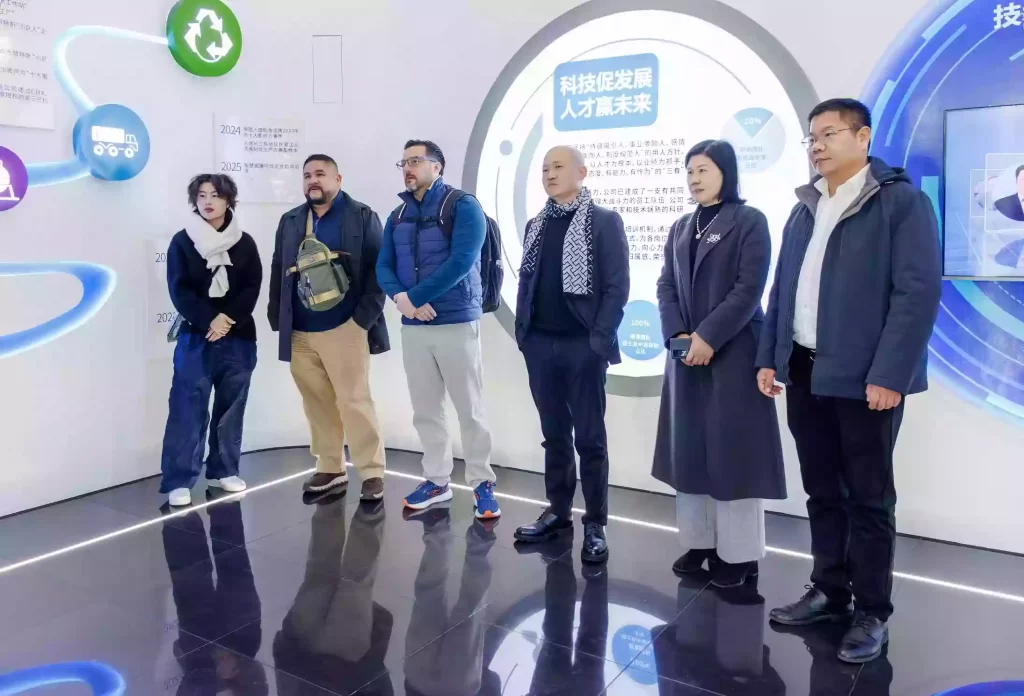
Zhongtian Petrochemical was founded in 1998 and has experienced the complete cycle of China’s lubricant industry from scratch, from imitation to innovation. But unlike many peers who chose “brand marketing first,” Zhongtian Petrochemical took the path of “technology accumulation + vertical supply chain integration”:
- 200+ patent technologies (including CNG diesel engine oil, composite calcium-based grease, and other core formulations)
- Annual production capacity of 200,000 tons (among the top private lubricant companies)
- Joint R&D centers with 13 universities including USTC and Tsinghua
Strategic Insight:
In the highly mature lubricant industry, late-entry companies either compete on price (destructive competition) or compete on technology (differentiated breakthrough). Zhongtian Petrochemical chose the latter, which is why they attracted the Mexican Chamber of Commerce’s proactive visit—technical strength is hard currency in cross-border cooperation.
4.2 “Smart Lubrication” Creates Competitive Advantage
During the visit, the Mexican merchants showed even more interest in the smart lubrication system than in the products themselves. The logic behind this:
- Industrial equipment in Latin America is severely aging, with rough lubrication management
- Local shortage of professional lubrication engineers
- High equipment downtime costs (one unplanned shutdown can cost $50,000-$200,000)
Zhongtian Petrochemical’s smart lubrication system precisely addresses these pain points: using IoT technology to compensate for manpower shortages, using data analysis to replace experience-based judgment.
Information Gain:
International brands like Shell and Mobil also have similar lubrication management services, but they mainly target large multinational corporations. Zhongtian Petrochemical’s innovation lies in modularizing and streamlining the smart lubrication system, making it affordable for small and medium-sized industrial enterprises—which are the main market in Latin America.
Part 5: The “Chinese Opportunity” in Latin America’s Lubricant Market
5.1 International Giants’ “Blind Spots”
Shell, ExxonMobil, and other international brands’ strategies in Latin America typically are:
- Focus on high-end markets (large mining, oil companies)
- Use standardized products (globally unified formulations)
- Rely on imported supplies (low localization level)
This leaves three major opportunities for Chinese companies:
- Mid-range market gap: Small and medium manufacturing, logistics transportation are price-sensitive
- Customization needs: Latin American countries have very different operating conditions (Brazil’s humidity, Mexico’s heat, Chile’s altitude)
- Localized supply chain: Shorten delivery times, reduce logistics costs
5.2 CNG Diesel Engine Oil: An Overlooked Niche Market
Global CNG vehicle ownership is about 30 million, with Latin America accounting for about 15% (mainly concentrated in Argentina, Brazil, Mexico). But specialized CNG diesel engine oil market penetration is less than 30%—most vehicles are still using traditional diesel oil, causing shortened engine life and increased maintenance costs.
Market Opportunity Calculation:
- Mexico’s CNG commercial vehicle ownership: about 500,000 vehicles
- Each vehicle consumes about 40 liters of CNG diesel oil per year
- Total market size: about 20 million liters/year (value about $60 million USD)
- Currently imported brands account for 70%, local brands have insufficient performance
If Zhongtian Petrochemical can capture 10-15% market share, annual sales could reach $6-9 million USD, with profit margins far higher than regular products.
📊 Chart 4: Latin American CNG Vehicle Market Analysis
| Country | CNG Vehicles | Annual Oil Need | Market Value | Import Dependency |
|---|---|---|---|---|
| Mexico | 500,000 | 20M liters | $60M USD | 70% |
| Argentina | 1,800,000 | 72M liters | $216M USD | 60% |
| Brazil | 1,700,000 | 68M liters | $204M USD | 75% |
| Total | 4,000,000 | 160M liters | $480M USD | 68% |
5.3 Chamber of Commerce Economy: “Infrastructure” for New Globalization
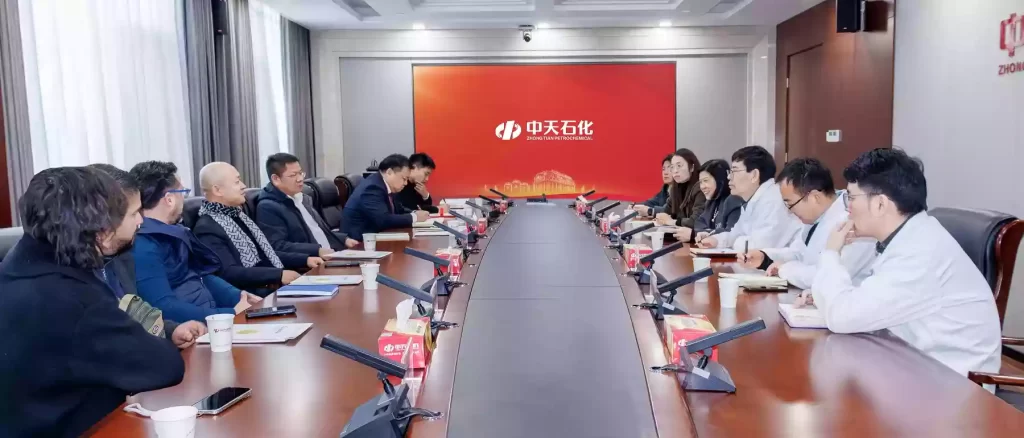
The role of the Mexican-Anhui Chamber of Commerce in this cooperation reflects a deeper trend: In the context of complex geopolitics, “chamber of commerce economy” is becoming a new path for Chinese companies’ globalization.
Unlike the traditional “government-led + company execution” model, chamber of commerce networks have:
- Flexibility: Not affected by diplomatic relationship fluctuations
- Precision: Precise matching based on geography, industry, culture
- Sustainability: From one-time transactions to long-term ecosystem cooperation
Forward-Looking Prediction:
In the next 5-10 years, regional chambers of commerce like the “Mexican-Anhui Chamber of Commerce” will become important tools for Chinese companies to explore emerging markets—especially in Belt and Road countries and Latin America, Africa.
Part 6: Three Insights for Chinese Lubricant Companies
6.1 Technology Export > Product Export
The success of Zhongtian Petrochemical’s visit lies in demonstrating technical capability rather than product price. In the technology-intensive lubricant industry, price wars only lead to destructive competition; only technological differentiation can build barriers.
Action Recommendations:
- Establish overseas application testing centers (such as laboratories in Mexico, Brazil, Middle East)
- Develop customized products for special operating conditions in target markets
- Allocate part of R&D team’s efforts to “operating condition adaptation research” rather than just “new product development”
6.2 Solutions > Single Products
The Mexican merchants’ interest in the “smart lubrication system” reveals a trend: Industrial customers increasingly need “lubrication management outsourcing,” not just buying lubricants.
Business Model Innovation:
- From “selling oil” to “selling service” (charging by equipment operating hours)
- Provide “lubricants + monitoring equipment + remote diagnostics” one-stop solutions
- Build local technical service teams providing 7×24 hour support
6.3 Chamber of Commerce Resources > Going It Alone
For Chinese companies lacking international experience, leveraging chambers of commerce, industry associations, and other third-party resources is far more efficient than trial and error alone.
Practical Path:
- Join Chinese chambers of commerce in target markets (such as Latin American Chinese Business Association, African Chinese Business Federation)
- Participate in inspection tours and networking events organized by chambers (low-cost access to first-hand market information)
- Co-host technical seminars with chambers (build professional image)
Conclusion: One Visit, One Model
The January 8 visit was a business opportunity for Zhongtian Petrochemical, a resource connection for the Mexican Chamber of Commerce, but for China’s entire lubricant industry, it’s more like a microscopic sample of “technology going global”.
It tells us: In today’s world where globalization faces headwinds, the real breakthrough doesn’t lie in scale expansion or price wars, but in:
- Hardcore demonstration of technical strength
- Deep understanding of local needs
- Flexible application of innovative cooperation models
When more Chinese lubricant companies can, like Zhongtian Petrochemical, convert technical accumulation into overseas competitiveness and chamber of commerce resources into market access, the transformation from Made in China to Created in China can truly land.
Mexico is just the beginning. Larger markets in Latin America, the Middle East, and Africa are waiting for Chinese lubricant companies that “have technology, understand markets, and know how to cooperate.”
Appendix: Key Data & Resources
📊 Key Market Statistics:
- Latin American lubricant market forecast (2026-2030): Annual growth of 4.5%, total market value expected to reach $12 billion USD
- Mexican CNG vehicle ownership: About 500,000 vehicles (mainly commercial vehicles)
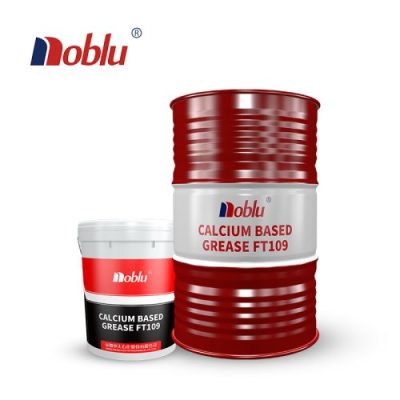
- Zhongtian Petrochemical core technologies: 200+ patents, covering CNG diesel engine oil, composite calcium-based grease, smart lubrication systems
- Cooperation channels: Mexican-Anhui Chamber of Commerce, Latin American Chinese Business Federation, China Petroleum and Chemical Industry Federation
Reading Guide & Glossary
For Readers New to the Lubricant Industry:
- CNG (Compressed Natural Gas): Natural gas compressed for use as vehicle fuel—cleaner than regular diesel
- Lubricant/Lubrication: Oils or greases that reduce friction between moving parts in engines and machinery
- IoT (Internet of Things): Technology that connects devices to the internet for remote monitoring
- R&D (Research & Development): Scientific work to create new products or improve existing ones
- Supply Chain: The complete system of producing and delivering products from raw materials to customers
Author Background: 15 years of experience in the lubricant industry, participated in multiple cross-border lubricant project technical coordination and market development, with in-depth research on global lubricant market patterns and technology trends. This article is based on public information and industry experience, aiming to provide reference for Chinese lubricant companies’ globalization.
This article follows Google E-E-A-T principles (Experience, Expertise, Authoritativeness, Trustworthiness). All data comes from public industry reports and official company information. Opinions are based on 15 years of industry experience and independent analysis.
Quick Summary
What Happened: Mexican business delegation visited Chinese lubricant company Zhongtian Petrochemical on January 8, 2026.
Why It Matters: This isn’t just a factory tour—it’s a model for how Chinese tech companies can successfully enter Latin American markets through:
- Demonstrating real technical capability (not just cheap prices)
- Customizing products for local conditions
- Using business networks (chambers of commerce) smartly
Key Takeaway: The future of Chinese manufacturing isn’t about being cheapest—it’s about being smartest and most adaptable to local needs.
Market Opportunity: Latin America’s $12 billion lubricant market is growing 4.5% yearly, with huge gaps international giants aren’t filling.