





Contrarian Take — Read This First
Most buyers are focused on the oil price spike. That is the wrong variable to watch.
The real threat is a 3–6 month disruption to chemical additive supply chains rooted in Middle East feedstocks — and the window to act on it is closing fast.
1. What Happened — The Situation in Plain Terms
On the night of February 28, 2026, following a large-scale U.S.-Israeli airstrike campaign on Iran, the Iranian Revolutionary Guard Corps announced a suspension of vessel passage through the Strait of Hormuz.
Within 24 hours, several major international oil companies confirmed they had halted tanker movements through the waterway. By March 1, a vessel attempting transit was struck and began sinking.
Iraq’s role in this conflict is that of a conduit rather than a combatant. Its major oil fields — Kirkuk in the north, Basra in the south — remain physically intact for now.
But the country’s airspace is closed, Iran-aligned Shia militias within its borders have pledged attacks on U.S. targets, and the downstream logistics of its petroleum exports have been severely disrupted.
20%of global seaborne oil passes through Hormuz daily
20M+barrels/day of crude, condensate & LNG at risk
+13%Brent crude opening surge on March 1, 2026
$82Brent $/bbl at time of writing — with $100–110 risk scenario
The alternative routing options — Saudi Arabia’s East-West pipeline (~2–4M bbl/day spare capacity) and the UAE’s Fujairah pipeline (~400–500K bbl/day) — together cover less than 25% of the Strait’s throughput.
There is no realistic bypass at scale, which is precisely why lubricant buyers cannot treat this as a simple “wait and see” situation.
2. The Three-Layer Impact on Base Oil
Layer 1 — Crude Cost Surge and Its Direct Pass-Through
Base oil is a refined derivative of crude petroleum. For Group I and Group II mineral base oils — the backbone of most industrial lubricant and grease formulations — crude accounts for 60–75% of total production cost.
Every $10/barrel increase in Brent translates to an 8–12% rise in mineral base oil production cost.
At the current price level of ~$82/barrel, that is already a 20–25% cost increase over the $65–68 baseline that prevailed in January 2026.
If the conflict escalates and Brent reaches the $100–110 scenario modeled by energy analysts, base oil production costs would surge 35–45% in a matter of weeks.
Group III base oils — used in premium synthetic blends and high-performance anti-wear hydraulic oils — carry an additional buffer due to their complex hydrocracking process, but they are not immune. Expect a 4–8 week lag before Group III prices fully reflect this disruption.
Layer 2 — Chemical Additive Supply Chain Disruption
This is the layer most buyers are not discussing. Finished lubricants and industrial greases are not pure base oil — they contain additive packages that provide their performance characteristics.
A substantial portion of additive precursors and specialty chemical intermediates originate from Middle Eastern petrochemical complexes.
The Strait of Hormuz closure, combined with ongoing Red Sea disruptions, creates a double-blockade scenario for Middle East chemical exports.
Industry sources indicate that domestic Chinese refineries are already reviewing their Q2 operating rates due to anticipated feedstock shortages, with some expecting April procurement shortfalls to translate into production cuts of 10–25% by May–June.
Products most at risk from additive supply tightening include:
- Calcium Sulfonate Complex Greases — over-based calcium sulfonate (OBC) thickener precursors are partially sourced from Middle East chemical producers
- Sulfur-phosphorus EP additive packages — used in industrial gear oils and vehicle driveline lubricants
- Polyol ester-based synthetic lubricants — require specialty chemical intermediates with limited alternative sourcing
- Perfluoropolyether (PFPE) greases — niche feedstock sourcing concentrated in a small number of global chemical facilities
Layer 3 — Freight and Lead Time Explosion
Oil tankers rerouting around the Cape of Good Hope add approximately 7,000 nautical miles per round trip. Freight costs for VLCC tankers are expected to rise 40–60% over pre-crisis rates.
Chemical tankers and containerized additive shipments face the same pressure. For buyers sourcing base oil on CFR terms from Middle Eastern or European suppliers, the landed cost increase will be greater than the crude price increase alone suggests.
Lead times for specialty base oils and additive packages that previously required 4–6 weeks are now realistically 8–12 weeks under the current routing constraints. Buyers running lean inventory strategies are most exposed.
3. What This Means for Industrial Lubricant and Grease Buyers
The impact is not uniform across product categories. Understanding the differentiated exposure of your specific lubrication needs is essential for making smart procurement decisions right now.
| Product Category | Short-Term Risk (0–4 Wks) | Medium-Term Risk (1–3 Mo) | Recommended Action |
|---|---|---|---|
| Anti-Wear Hydraulic Oil (L-HM) | HIGH — Gr.II base oil exposed | MODERATE — OPEC+ easing expected Q2 | Lock 45–60 day stock now |
| Calcium Sulfonate Complex Grease | HIGH — OBC additive at risk | HIGH — Limited substitution options | Prioritize stocking; negotiate multi-month contracts |
| Precision Bearing Grease | MODERATE — mineral Gr.I/II base | LOW — Domestic sourcing viable | Standard replenishment; review supplier origin |
| Bentonite High-Temp Grease | LOW — Clay thickener, domestic origin | LOW — Supply chain insulated | No urgent action required |
| Hydraulic Transmission Oil | HIGH — Gr.II/III import content | MODERATE — watch Brent trajectory | Price-lock preferred; avoid spot buying |
| PFPE Specialty Greases | VERY HIGH — concentrated supply | VERY HIGH — no short-term alternative | Immediate inventory audit; contact supplier |
4. The Contrarian Read: What Everyone Else Is Getting Wrong
The conventional narrative is simple: oil prices go up, lubricant prices go up, ride the wave if you are a producer or hedge if you are a buyer.
Our 26 years of manufacturing experience through multiple geopolitical cycles tells a more nuanced story.
The “Demand Illusion” Risk
When geopolitical disruptions strike, purchasing managers at mining operations, ports, and heavy equipment fleets enter panic-buying mode.
This creates a short-term demand surge that looks like robust industrial activity but is actually inventory front-loading.
The real economic damage — slower global growth caused by sustained high energy costs — will suppress genuine demand 6–10 weeks later.
Buyers who over-purchase at peak panic prices and then face a declining market are doubly exposed.
OPEC+ members including Saudi Arabia and Russia have already signaled incremental production increases from April 2026, which will begin capping the oil price premium within 4–8 weeks of current writing.
The Domestic Sourcing Opportunity
Every crisis in Middle East supply chains historically accelerates domestic base oil refining capacity in China.
This benefits manufacturers like ZhongTian Petrochemical that have built long-term relationships with domestic Group II base oil refineries and use domestically sourced thickener systems.
Buyers who deprioritized “made in China” lubricants due to cost arbitrage may find that supply security now justifies a different calculus.
The Price Window Is Short
Lubricant manufacturers who hold inventory will see a margin recovery window. But that window is likely 4–8 weeks, not a sustained trend.
The critical move is not simply to raise prices — it is to use this window to sign longer-term supply agreements with customers that include crude price indexing clauses, securing margin protection for the inevitable reversion.
5. A Practical Action Plan for Procurement Managers
Based on our analysis of how this crisis will progress through Q2 2026, we recommend the following prioritized actions for industrial lubricant buyers:
1.Audit your current inventory against 60-day consumption
Identify which products use Middle East-sourced base oil or chemical additives.
Products using domestic Sinopec/PetroChina Group II base oil have substantially lower supply-chain risk than those dependent on import routes through the Strait of Hormuz.
2.Prioritize stocking high-additive-content greases within the next 2–3 weeks
Calcium sulfonate complex grease, sulfurized extreme-pressure gear oil, and synthetic ester-based formulations face the longest and most uncertain supply recovery.
These should be your first priority for inventory building — before the additive shortage works its way through to finished product availability.
3.Request a crude price indexing clause in your supply agreements
Any responsible lubricant supplier should be willing to sign contracts that index pricing to Platts MOPS or Brent assessments.
This protects both parties — buyers are shielded from arbitrary price increases; suppliers are protected from margin compression in a volatile market.
If a supplier refuses this transparency, treat it as a red flag.
4.Qualify a backup domestic supplier if your current source uses import-route base oil
Supply chain resilience requires optionality.
Identifying and onboarding a secondary domestic lubricant manufacturer now — before your primary supplier faces an allocation constraint — is far less costly than the downtime risk of running without critical lubricants during a production cycle.
5.Do not over-stock beyond 60 days on crude-sensitive products
OPEC+ production increases are scheduled from April 2026.
Brent futures markets already price in a reversion toward the $72–80 range by Q3 2026.
Over-stocking at current elevated prices risks holding expensive inventory when market prices correct. The sweet spot is 45–60 days on exposed products, not 90–120 days.
6. Why Domestic Supply Chain Stability Matters More Than Price Right Now
In normal markets, procurement decisions are dominated by price.
In a disrupted market like March 2026, the calculus shifts to availability and lead time certainty.
A product that is 5% more expensive but ships in 7 days from a domestic manufacturer is worth more than an import-priced product with a 90-day uncertain lead time.
This is the principle behind Anhui Zhongtian Petrochemical’s production philosophy: our 200,000-ton annual capacity is built on a vertically integrated supply chain that relies primarily on domestically sourced base stocks.
Our standard lead time of 3–7 days for in-stock products and 10–20 days for custom formulations does not change in a Hormuz crisis.
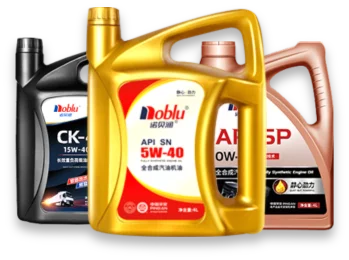
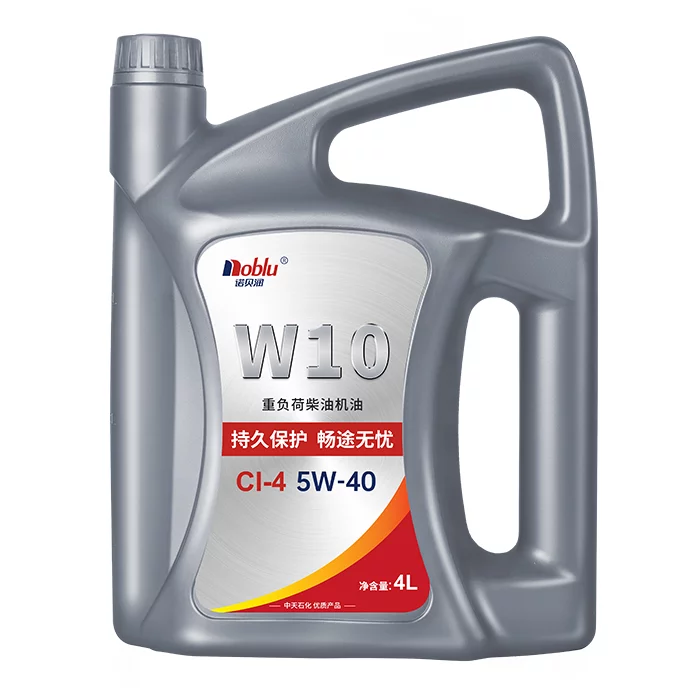
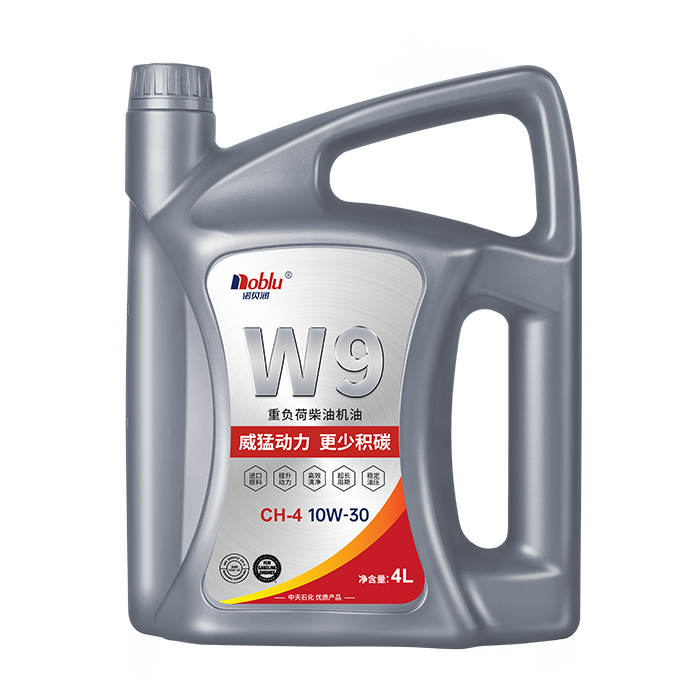
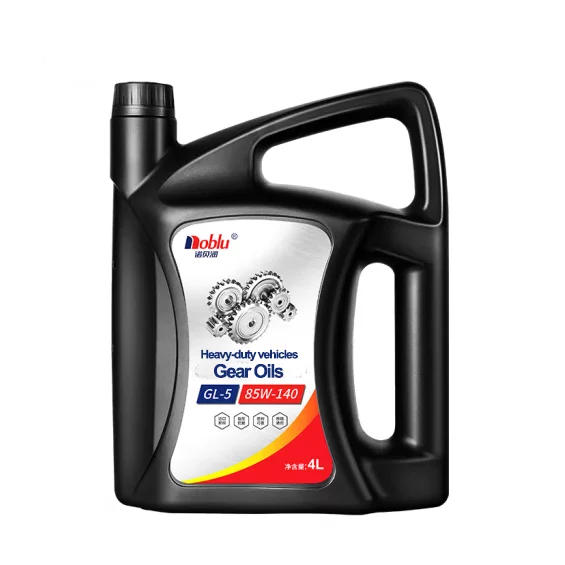
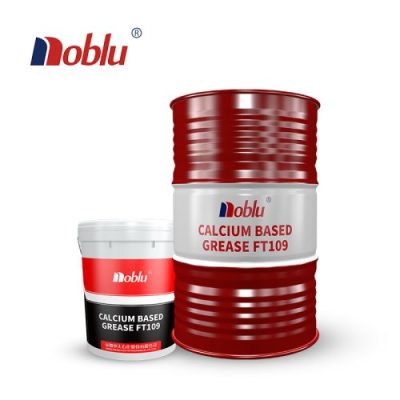
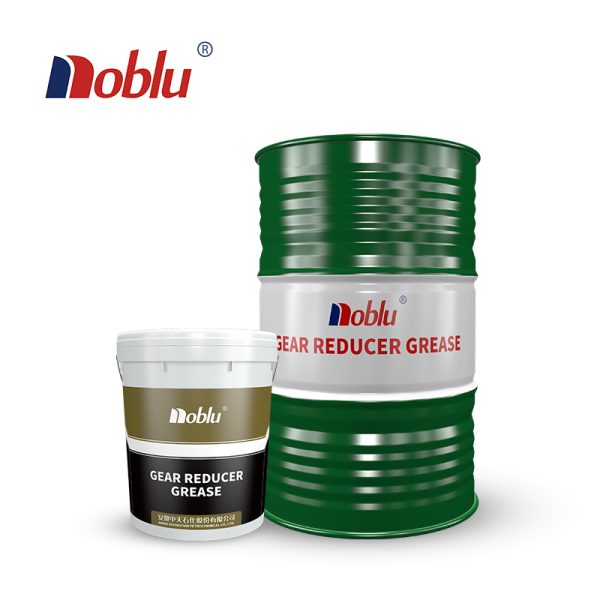
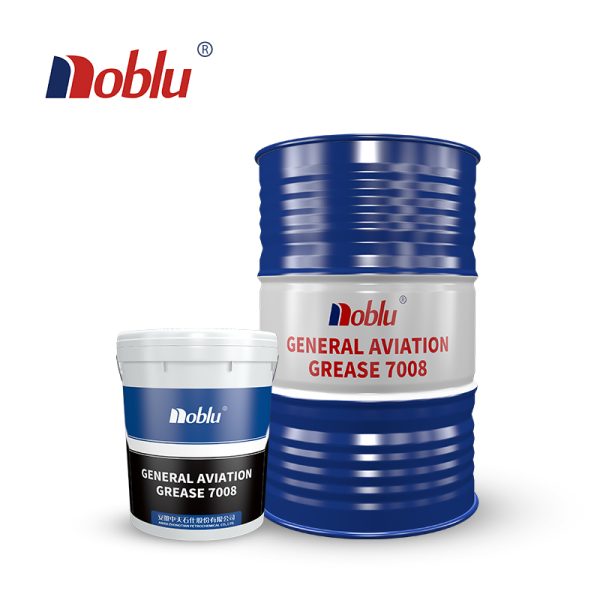
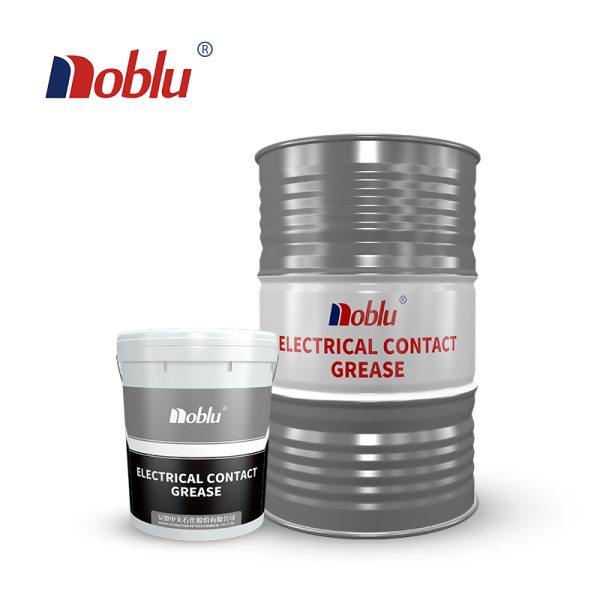
Browse our most supply-chain-resilient product lines for your critical equipment needs:
7. Market Outlook: What Happens Next
| Dimension | Short-Term (1–4 Weeks) | Medium-Term (1–3 Months) |
|---|---|---|
| Brent Crude Price | ↑ $80–100/bbl range; $110 tail risk | ↓ Eases to $72–82 on OPEC+ increases |
| Group II Base Oil Spot | ↑ +15–25% above Jan 2026 levels | → Stabilizes with domestic production offset |
| Additive Package Prices | ↑ Tightening; procurement anxiety rising | ↑ Q2 open rates may drop 10–25%; prices rise |
| Finished Lubricant Pricing | ↑ Window for 5–15% price adjustment | → Window closing; Brent correction caps upside |
| Industrial Lubricant Demand | ↑ Panic buying, inventory front-loading | ↓ Real demand softens with economic slowdown |
| Domestic Supply Chain Products | ✓ Stable — no Hormuz exposure | ✓ Increasing advantage as imports lag |
The most important medium-term development to watch is not the oil price headline — it is whether the Strait of Hormuz reopens within 4 weeks (moderate scenario), remains partially restricted through Q2 (base scenario), or escalates into a broader regional conflict affecting Saudi and UAE export capacity (tail risk).
Each scenario has a materially different implication for base oil pricing by July 2026.
The Right Response Is Preparation, Not Panic
Geopolitical crises in the Middle East are not new to the lubricant industry.
Those of us with memory stretching to the 1991 Gulf War, the 2003 Iraq invasion, and the 2019 Abqaiq attacks know that markets overreact, then correct, and the companies that survive best are those that act on fundamentals rather than sentiment.
The fundamentals right now say: secure your supply of additive-intensive products, review the geographic origin of your base oil supply chain, and sign contracts with crude price indexing rather than fixed prices.
What they do not say is: pay any price for anything available today.
For buyers seeking a stable domestic supply partner with 26 years of manufacturing experience, verified production capacity of 200,000 tons annually, and a supply chain built on domestic base oil sourcing, ZhongTian Petrochemical offers free sample testing and 3–7 day lead times on all standard product lines.
Contact our team to discuss your Q2 lubrication needs before the additive supply situation tightens further.
For a deeper understanding of product selection across our grease range, see our guides: 7 Different Types of Grease and How to Use Them and Types of Grease and Their Industrial Applications.
Contents
1. What Happened 2. Three-Layer Impact on Base Oil 3. Impact by Product Category 4. What Most Buyers Get Wrong 5. Action Plan for Procurement 6. Why Domestic Supply Matters 7. Market Outlook Conclusion
📊 Key Market Indicators (Mar 2026)
Brent Crude $82/bbl +13%
WTI Crude $75.33 +11%
Group II Base Oil Elevated +15–20%
Hormuz Status CLOSED
Extreme Scenario $100–110 /bbl risk
About Zhongtian Petrochemical
Founded in 1998, Anhui Zhongtian Petrochemical (ZTS Oil) is a national high-tech enterprise with 26 years of lubricant R&D, manufacturing and technical service experience.
Annual capacity: 200,000 tons. Lead time: 3–7 days. Free sample testing available. Supply chain built on domestic base oil sourcing — insulated from Middle East disruption.
Products: industrial lubricants, calcium sulfonate grease, automotive lubricants, hydraulic oils, and 100+ specialty greases.→ View All Products → Request a Free Sample
Related Reading
7 Types of Grease and How to Use Them (2025)Types of Grease and Their Industrial ApplicationsTop Global Lubricant Grease Manufacturers 2025Anhui Zhongtian Petrochemical Co., Ltd.
26 years of lubricant manufacturing expertise — www.ztshoil.com
Tel: +86 0551-65568816 | Email: [email protected]