





Hydraulic oil does go bad, but slowly: a sealed drum stored indoors keeps about five years, while oil in a working system ages far faster.
- Sealed drum: five years is Zhongtian’s stated shelf life and the figure Mobil, Chevron and Petro-Canada publish for standard hydraulic oils
- Main risk in storage: water drawn into the drum as it breathes with temperature swings
- Before use: we recommend retesting oil that has been in store for over a year; past the shelf life, Chevron says test it against its original specification and Mobil advises against using it
- In service: judge the oil by analysis of viscosity, acid number and water, not by the calendar
- Shorter-lived fluids: Petro-Canada gives its tractor hydraulic/transmission fluids 3 years, and some synthetic and water-based fluids are also shorter-lived; read their own labels
A drum of hydraulic oil that has sat in a shed for years raises one practical question: pour it into the machine, or pay to dispose of it? In one discussion in a fabrication community about sealed drums dated 2013, the replies split between throwing the oil out and opening the drum to look. Both camps are partly right, because the answer depends on how the drum was stored and where the oil is going.
Компания Zhongtian Petrochemical производит Гидравлическое противоизносное масло L-HM in ISO VG 32, 46, 68 and 100 and packs it in 18 L and 200 L containers.
How long does hydraulic oil last in a sealed drum?
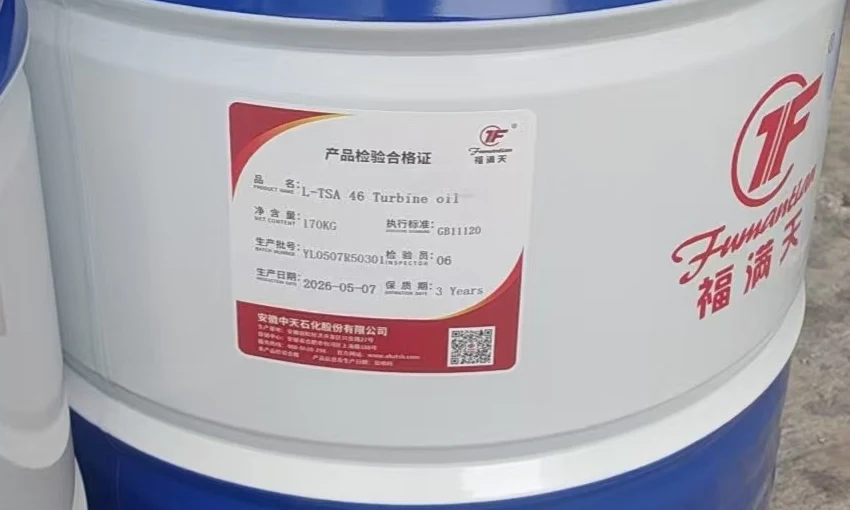
Hydraulic oil in a sealed, unopened drum keeps for about five years, the shelf life Zhongtian states and the figure three major oil companies publish. We state a shelf life of five years for our hydraulic oil in its sealed, unopened container. We count those five years from the fill date; the inspection label on our drums carries the batch number and the production date, which is sometimes, but not always, the fill date. The published figures from Mobil, Chevron and Petro-Canada agree on five years for standard hydraulic oils, but each attaches conditions and names exceptions.
| Источник | Shelf life stated | Shorter-lived exceptions named | Storage condition attached |
|---|---|---|---|
| Чжунтянь (standard hydraulic oil) | 5 years from the fill date | Ask us about special-purpose types | Sealed, unopened container |
| Мобильный (oils and greases) | Generally 5 years | Water-based, moisture-sensitive and high-additive products, which carry a “use by” date | Original sealed container, stored properly |
| Шеврон (finished lubricants, grease excluded) | Up to 5 years, described as estimates | Clarity Synthetic EA Hydraulic Oil: 2 years; Hydraulic Oil 5606A: 4 years | Original opaque container, sealed, dry, preferably indoors; ideally 0–25 °C (32–77 °F) |
| Петро-Канада (hydraulic oils) | 5 years from the fill date on the package | HYDREX Extreme and PURITY FG AW: 3 years; tractor hydraulic/transmission fluids: 3 years | Unopened, indoors or under cover, no freeze-thaw cycles |
Shelf life as published by each company for its own products; see Sources and notes at the end for the documents and their dates. A shelf life applies only to unopened containers stored as described.
Every company ties its figure to a sealed container kept out of the weather. Zhongtian and Petro-Canada both count from the fill date, not from the day you bought the drum, so a drum that waited two years in a warehouse before delivery has two of its five years behind it, and a drum stored in the open falls outside the conditions every one of these figures assumes.
The named exceptions run from two to four years, and Mobil puts water-based products, the group that includes water-glycol fire-resistant hydraulic fluids, among its shorter-lived lines. Tractor owners should note the Petro-Canada row: its tractor fluids, which serve the hydraulics and the transmission together, get three years, not five. For any hydraulic fluid that is not a standard mineral oil, go by the date on its own label rather than assuming five years.
What makes stored hydraulic oil go bad?
Stored hydraulic oil goes bad mainly through water: a drum breathes in moist air as it warms and cools, and that water attacks the additives. The ways water gets in are well documented:
- Drum breathing: as a drum warms by day and cools at night, air moves in and out past the bungs and carries moisture and dust with it, as both Chevron and Noria’s Machinery Lubrication describe.
- Water on the lid: rain that pools on top of an upright drum stored outdoors is drawn past the bung seals each time the drum breathes in.
- Loose or open containers: Mobil gives the example of engine oil in unsealed containers absorbing moisture from the air and turning hazy.
- Freezing and thawing: Petro-Canada’s five-year figure excludes storage where the oil goes through freeze-thaw cycles.
Water in the oil also does chemical damage. Noria’s Wes Cash describes water as the most destructive contaminant after particles and explains that it breaks down the zinc-based anti-wear additive ZDDP, producing acids. Chevron adds that water reacts with some additives and encourages microbial growth. A slight sediment at the bottom of an old container is a different matter: Mobil says it generally has no harmful effect, while heavy sediment is one of its signs that the oil has deteriorated.
Some owners assume oil keeps indefinitely. In one discussion in a tractor owners’ community on whether hydraulic fluid expires, one owner said they still use gear oil at least 25 years old, and the main caution from others was to make sure no condensation had got in. The makers’ guidance is more cautious about time, as the shelf lives above show, but it agrees that water is what damages oil in a drum. For what water does once it reaches a working system, see our guide to вода в гидравлическом масле.
A drum’s history, sealed or opened, indoors or out, upright under a puddle or on its side, tells you more about its condition than the date on the label.
How should you store hydraulic oil drums?
Store hydraulic oil drums sealed, indoors, in a clean, cool and dry place, lying on their side with the bungs at 3 and 9 o’clock. Our storage advice to customers is to keep drums sealed, in a clean, cool, dry and ventilated place, away from open flames and heat sources, indoors rather than in the open, labelled by grade, and issued first in, first out. The technical data sheet for our hydraulic oil gives a shorter version: keep water and dust out, and store the oil in a clean, cool and dry place.
Lubricant makers’ own storage guidance adds the practical details:
- Position: lay drums on their side with both bungs at about 3 and 9 o’clock. Shell gives this as the way to stop the seals drying out and moisture getting in, and Noria notes that the oil covers both bungs while the drum is more than half full.
- Temperature: Chevron calls 0–25 °C (32–77 °F) ideal and up to 43 °C (110 °F) acceptable; Shell advises keeping lubricants below 40 °C.
- Outdoors, if unavoidable: store drums on their side or under cover, so that no water can stand on the lid.
- Rotation: issue the oldest fill date first, so no drum sits at the back of the store for years.
- Labels: keep each grade together and clearly marked; our technical data sheet warns against mixing the oil with other oils.
- Opened containers: close the bung tightly after each draw and use opened containers before sealed ones.
None of the shelf lives in the table above apply once a drum has been opened, so treat an opened drum as stock to use up rather than stock to keep.
Can you still use hydraulic oil past its shelf life?
Whether hydraulic oil past its shelf life can be used depends on whose guidance you follow: Chevron allows it after testing, Mobil advises against it. Both treat the end of the shelf life as the point to retest the oil, not as the day it turns bad.
- Шеврон: oil past its shelf life may still be suitable. Mix the drum thoroughly, test it against the original product specification, and check that specification against your equipment maker’s current requirements. Oil that passes but is not used within a year should come out of stock.
- Мобильный: at the end of the shelf life, send the oil to a laboratory for recertification; Mobil does not recommend using it beyond the shelf life. Its signs of deterioration are cloudiness, a strong odour and significant sediment.
- Petro-Canada: older oil may not meet the latest requirements of newer equipment, even if it has not deteriorated.
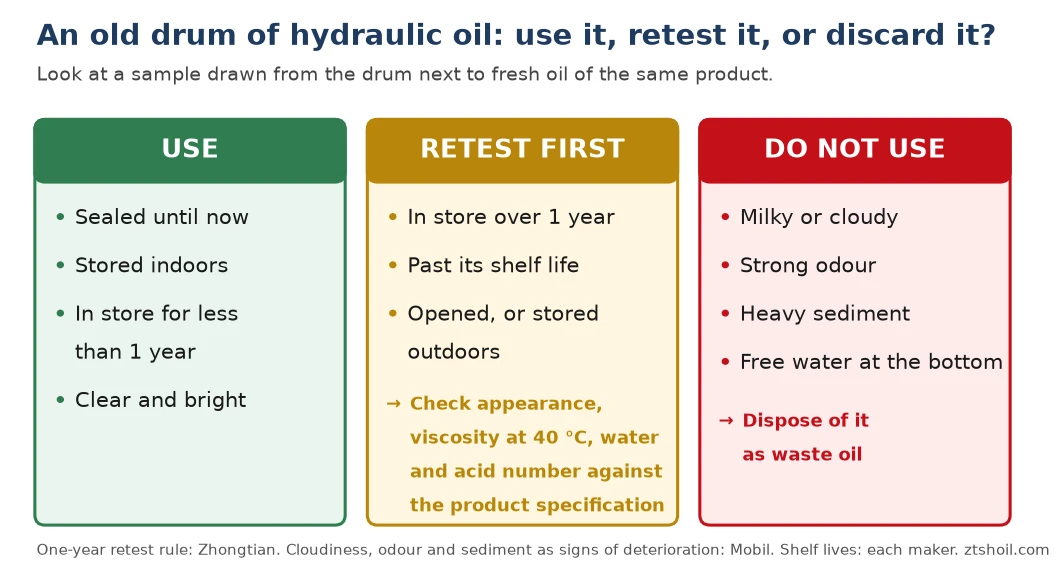
Our own rule starts earlier than the shelf life: the five years say how long a sealed drum can keep, and a retest after a year checks that a particular drum has. We recommend retesting appearance, kinematic viscosity at 40 °C, water content and acid number for hydraulic oil that has been in store for more than a year.
| Проверять | What it shows | How it is usually measured |
|---|---|---|
| Appearance: clarity, colour, sediment | Haze or a milky layer points to water; heavy sediment points to deterioration | By eye, in a clear jar next to fresh oil of the same product |
| Кинематическая вязкость при 40 °C | Whether the oil has drifted from its viscosity grade | ASTM D445 or an equivalent national method |
| Содержание воды | The main risk in storage | Karl Fischer titration |
| Acid number | Acids formed as water breaks down additives or the oil oxidises | Titration, reported in mgKOH/g |
The four checks are Zhongtian’s recommendation for hydraulic oil in store for more than a year; the measuring methods are common laboratory practice. Pass limits come from the product specification or batch certificate of analysis, not from this table.
None of the three oil companies publishes a fixed list of tests for an expired drum; Chevron’s instruction is to test against the original specification. Judge each result against the limits the oil was sold against, from its product standard or batch certificate of analysis. The typical values on a technical data sheet describe normal production, not pass marks, as our guide to TDS vs SDS vs CoA объясняет.
We keep a retained sample from every batch we ship, for a limited period, so give us the batch number on the label if you have a question about a recent drum of ours.
A sealed drum stored indoors for less than a year and clear when drawn can go into service. Anything held longer, past its shelf life, opened or stored outside should pass the four checks first, and a milky or cloudy drum belongs with waste oil.
How long does hydraulic oil last in a running system?
Hydraulic oil in a running system has no fixed life: it lasts until analysis shows its viscosity, acid number or water content outside set limits. We train our sales staff that the decision to change hydraulic oil rests on regular testing of viscosity, acid number and water content, and that a milky, cloudy oil points to water getting into the system. Published guidance gives reference figures for those tests:
| Источник | What is checked | Reference figure or rule |
|---|---|---|
| JCMAS P 045, Japan Construction Machinery and Construction Association (mineral hydraulic oil in construction machinery) | Кинематическая вязкость при 40 °C | Change of +10% maximum |
| Acid number | Increase of 2.0 mgKOH/g maximum | |
| Contaminants (0.8 µm membrane) | 10 mg/100 mL maximum | |
| Bosch Rexroth, manual for Hägglunds CA hydraulic motors | Oil analysis every 6 months: viscosity, oxidation, water, particles | Change the oil if the acid number rises two to three times between inspections, or if results fall outside the specification |
| Чжунтянь sales training | Viscosity, acid number, water content, tested regularly | Milky, cloudy oil points to water getting in |
JCMAS P 045 gives these as reference examples, tied to its laboratory oxidation test and a 2,000-hour change interval, and leaves final limits to the machine maker and the fluid supplier. Your equipment maker’s limits take precedence over any figure in this table.
Milky oil is the sign owners notice first, and it does not always mean the oil itself has failed. In one discussion in a tractor owners’ community, a Case 530 owner described a leaking gasket under the shifter cover letting in enough water to turn about $150 of fluid into “chocolate milk”. In another, about a loader that stuttered on fresh fluid that had turned milky, replies suggested water or air, and the owner traced it to a low fluid level.
Water and air both make oil look milky, so find the source before you drain the system, or the new oil will go the same way. Our guide to вода в гидравлическом масле covers how water gets in, and oil that darkens quickly while running hot points to the causes in our guide to перегрев гидравлической системы.
Machines that run few hours a year raise the opposite question. One owner of a 2017 compact tractor with 110 hours changed the engine oil and coolant because the fluids could be five years old, then asked whether the hydraulic fluid should go too, since the manual’s hour-based intervals would put that change off to 200 hours. Where the equipment maker gives a time-based interval, follow it; where it does not, an oil analysis tells you whether low-hour oil needs changing.
Treat the five-year figure as the rule for oil in the drum and oil analysis as the rule for oil in the machine; mixing the two up is how good oil gets thrown away and worn oil stays in service.
Часто задаваемые вопросы
Does hydraulic fluid expire?
Yes, in the sense that makers give it a shelf life: five years in a sealed container for standard hydraulic oils from Zhongtian, Mobil, Chevron and Petro-Canada, with Petro-Canada counting from the fill date on the package. Petro-Canada gives its tractor hydraulic/transmission fluids three years. Past that date the oil is not automatically bad, but it should be tested before use.
Is hydraulic fluid flammable?
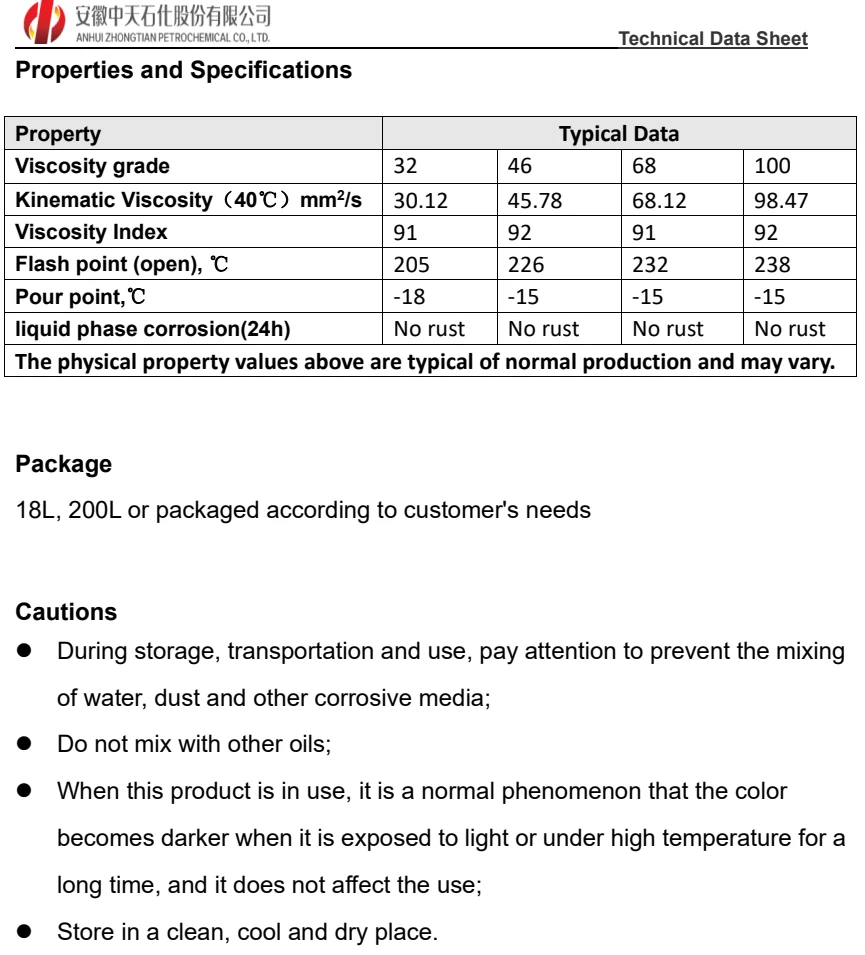
Mineral hydraulic oil is combustible: the typical open-cup flash points of our L-HM oil run from 205 °C for ISO VG 32 to 238 °C for ISO VG 100. Keep drums away from open flames and heat sources, and check the product’s SDS for fire-fighting measures and handling precautions.
Does grease go bad the same way as hydraulic oil?
No. Grease ages through oil separating from the thickener and through hardening, so it has its own checks, and Chevron gives its greases three years against five for its oils. See our guide to grease shelf life and storage.
Can you mix old and new hydraulic oil?
Adding fresh oil dilutes water and acid in old oil but does not remove them, so test the old oil before topping up a doubtful system. Our technical data sheet also warns against mixing our hydraulic oil with other oils, so keep to the same product.
Источники и примечания
- Mobil, technical topic on shelf life of lubricating oils and greases (2012), and storing oil drums outdoors.
- Chevron Lubricants, general shelf life bulletin LTB-26_08_01_21 (January 2021).
- Petro-Canada Lubricants, Lube Source Handbook: product shelf life.
- Shell, lubricant storage quick tips (March 2018).
- Noria, Machinery Lubrication: drum storage, water on drum lids, and Wes Cash, hydrolysis and hydrolytic stability.
- Japan Construction Machinery and Construction Association, JCMAS P 045 hydraulic fluid for construction machinery (2004, corrected 2010); in-service limits are given as examples for reference.
- Bosch Rexroth, Hägglunds CA motor manual RE 15305-WA (November 2019), oil analysis section.
- Owner accounts are paraphrased from public owner discussions, linked where cited; they describe the owners’ own machines, not Zhongtian’s experience.
- Zhongtian Petrochemical: L-HM anti-wear hydraulic oil TDS (typical values, not batch results). Shelf life, storage advice, retained samples and sales training rules as stated by the company in November 2026.