



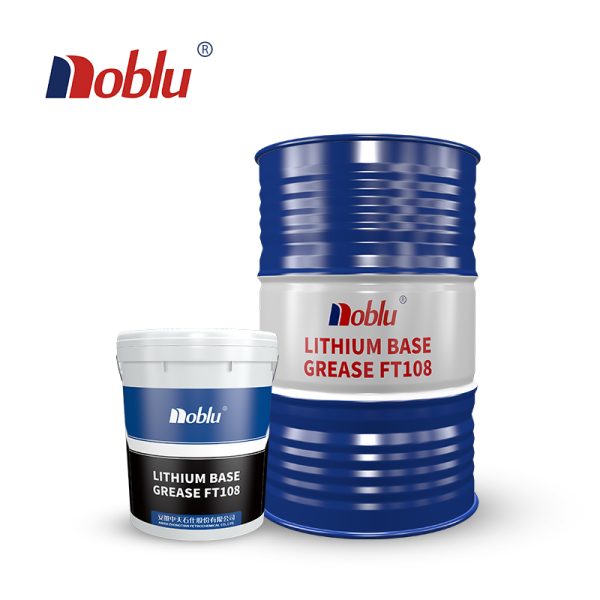
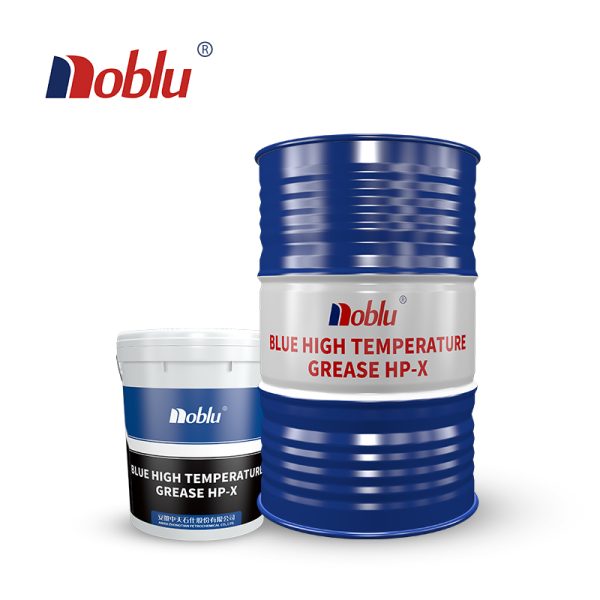
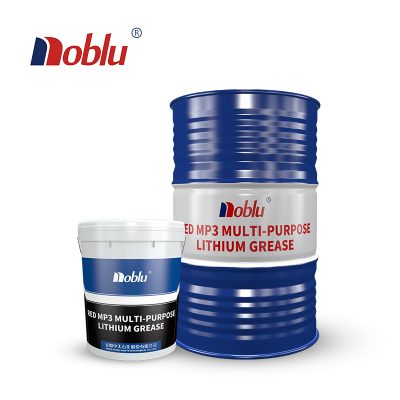

-
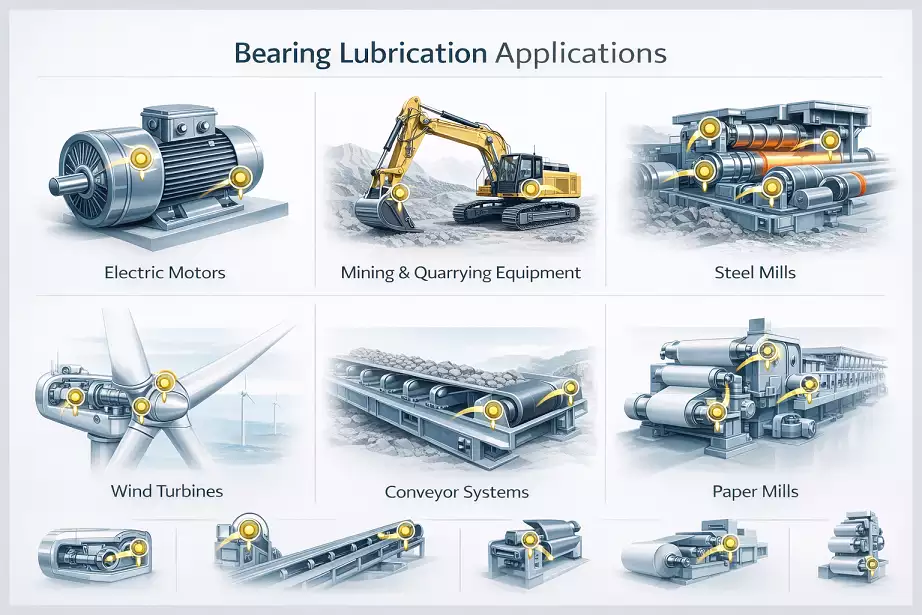
Electric Motor Bearing Grease: Why Too Much Is the Real Killer
The most dangerous person near an electric motor is the one with a grease gun and good intentions. Motor bearings are the rare application where too much grease kills faster than too little: excess grease churns in the light, fast, low-...
View details > -
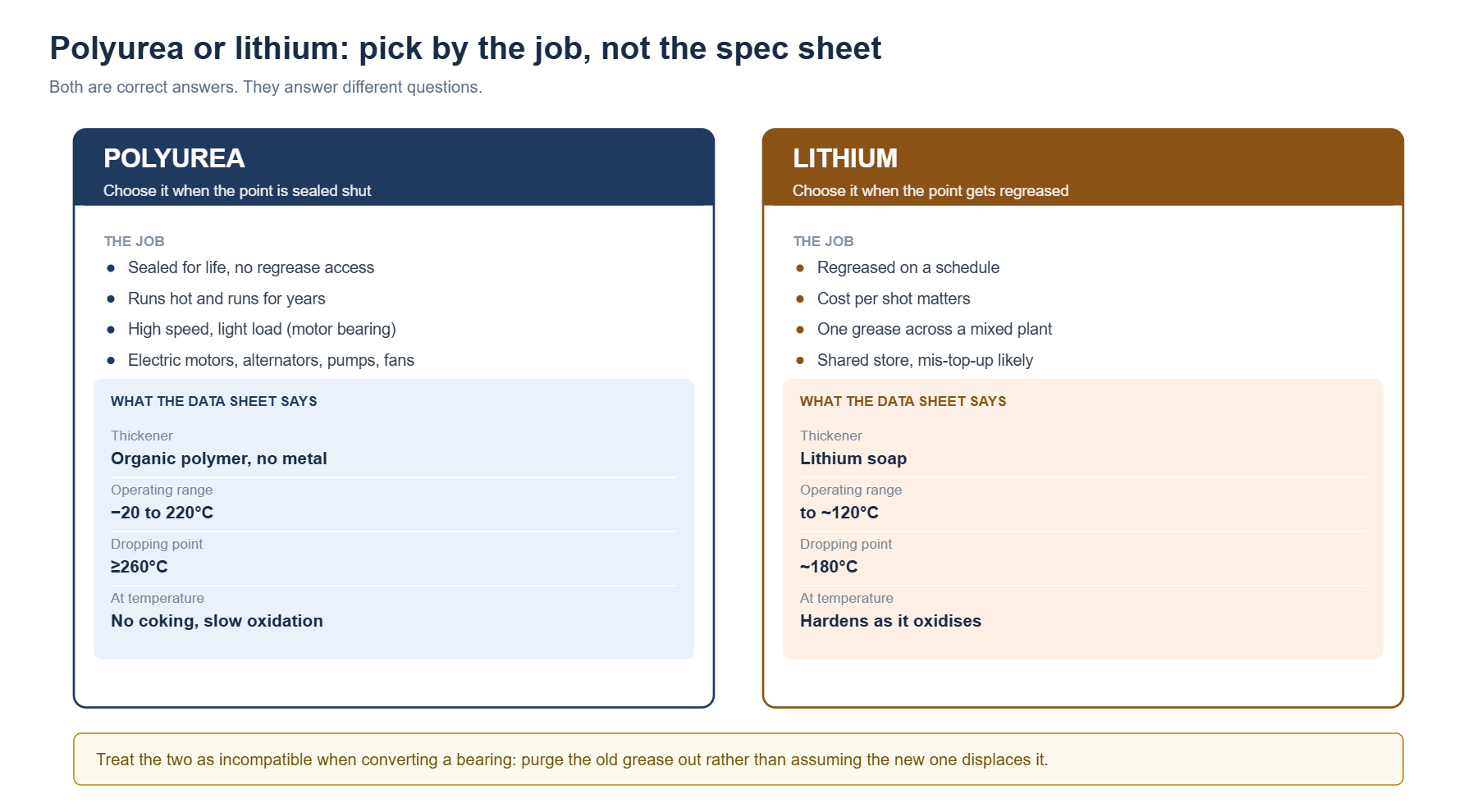
Polyurea Grease: The Thickener That Skips the Metal Soap
Most greases are oil held in a metallic soap: lithium, calcium, aluminum. Polyurea grease throws out the metal entirely. Its thickener is an organic polymer built from a reaction between isocyanates and amines, and that single structura...
View details > -
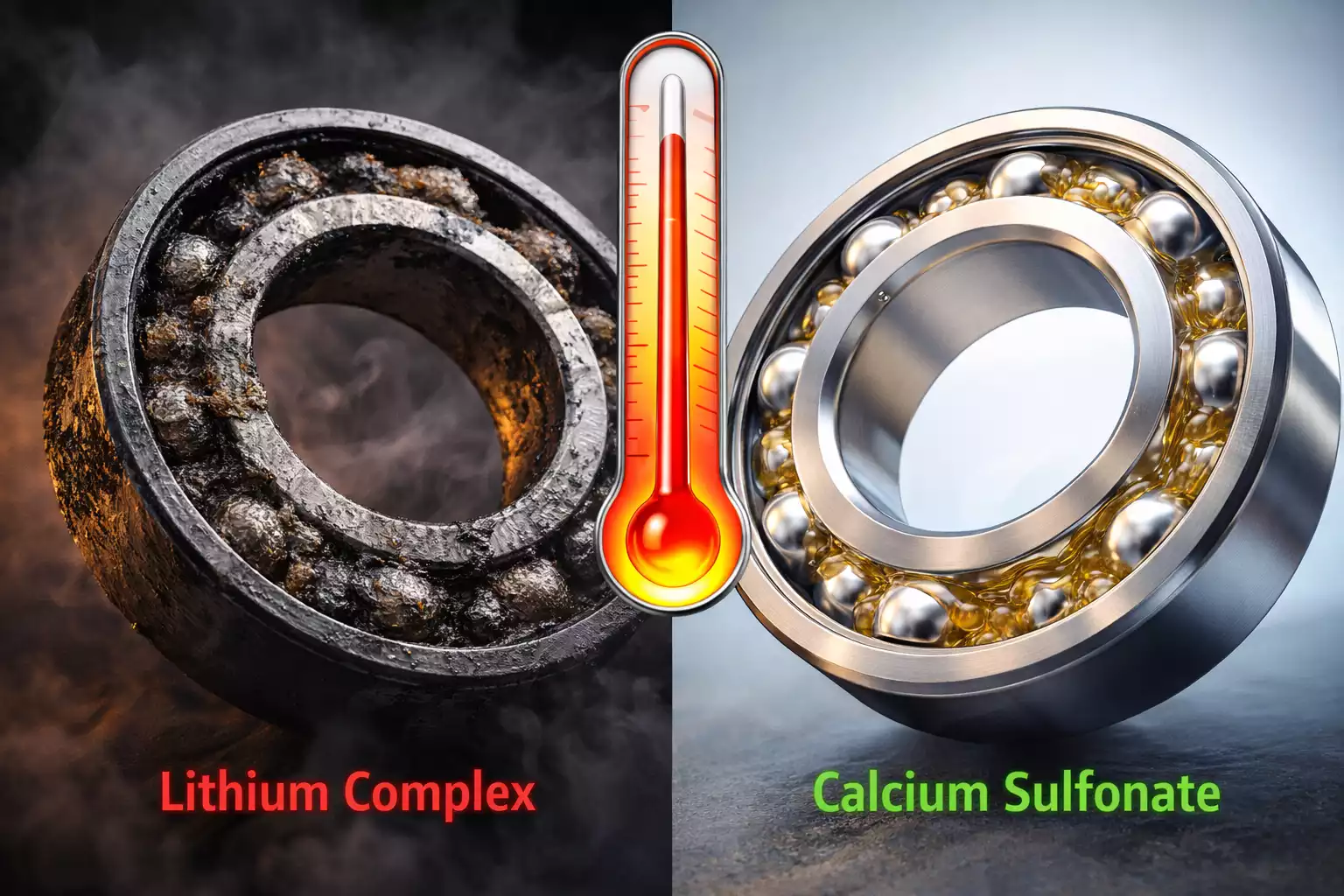
High Temperature Grease: Why Dropping Point Is Not the Answer
Read a grease label that boasts a 260°C dropping point and it is easy to assume the grease works at 260°C. It does not. Dropping point is the temperature at which grease gets soft enough to drip. It marks structural collapse, not a serv...
View details > -
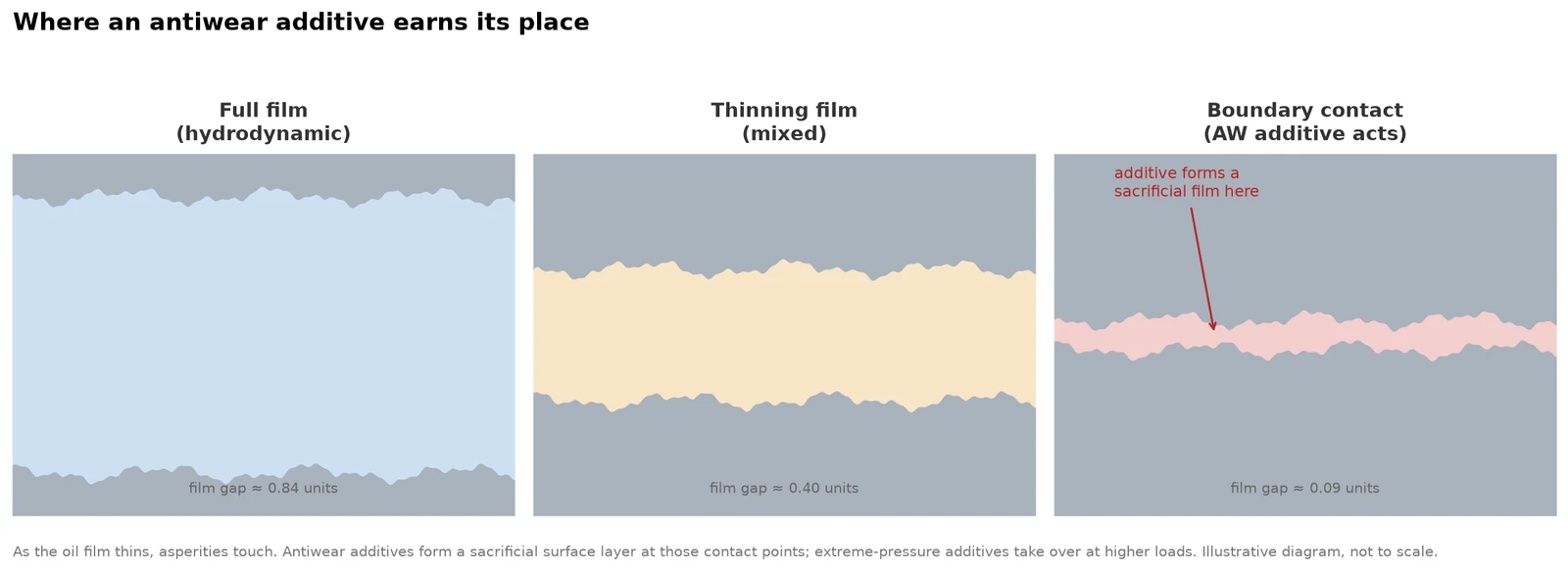
What Is Anti Wear Hydraulic Fluid? AW Additives Explained
Anti-wear hydraulic fluid is hydraulic oil carrying additives that chemically bond to metal surfaces and form a thin sacrificial layer at the points where the oil film gets too thin to keep parts apart. The additives wear away instead o...
View details > -
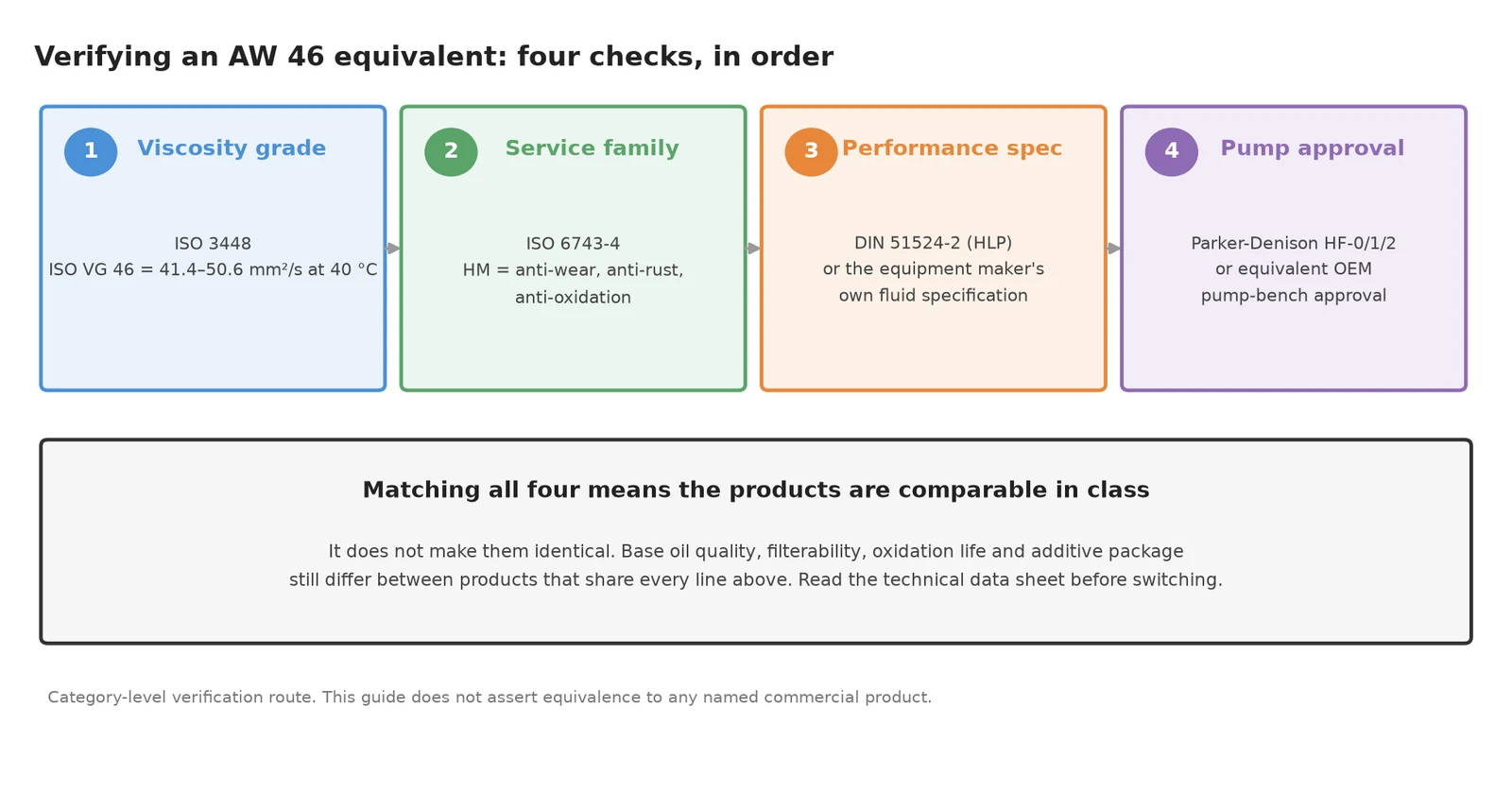
AW 46 Hydraulic Oil Equivalent: How to Verify One
An oil is a genuine AW 46 equivalent when it matches on four things: the ISO 3448 viscosity grade of 46, the anti-wear service family (HM under ISO 6743-4), the performance specification the equipment requires, and any pump-manufacturer...
View details > -
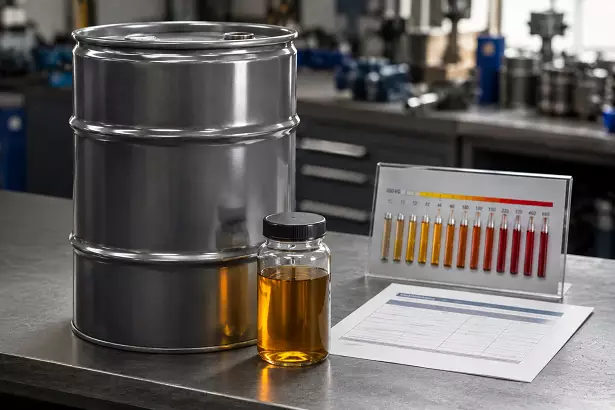
AW32 vs AW46 vs AW68 Hydraulic Oil: How to Choose the Grade
AW32, AW46 and AW68 are the same type of oil in three thicknesses. The number is the ISO viscosity grade measured at 40°C: AW32 sits in a window of 28.8–35.2 mm²/s, AW46 in 41.4–50.6 mm²/s, and AW68 in 61.2–74.8 mm²/s, per ISO 3448. Not...
View details > -
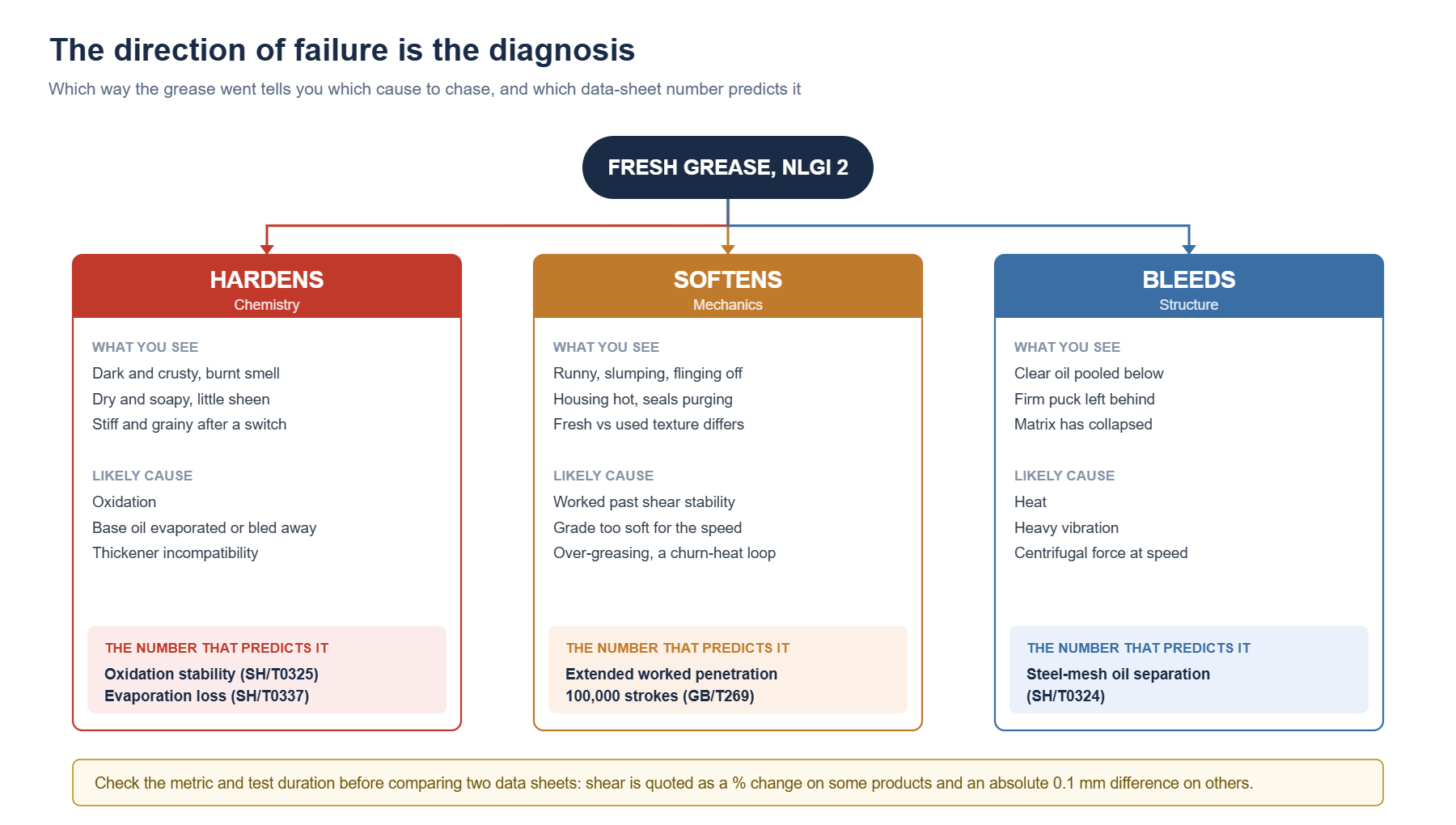
Why Grease Hardens, Softens or Bleeds: The Direction Is the Diagnosis
Open a bearing housing and what was NLGI 2 six months ago is now one of three things: a dark brittle crust, a runny mess sliding off the shaft, or a firm puck sitting in a pool of its own oil. Most troubleshooting guides list "causes of...
View details > -
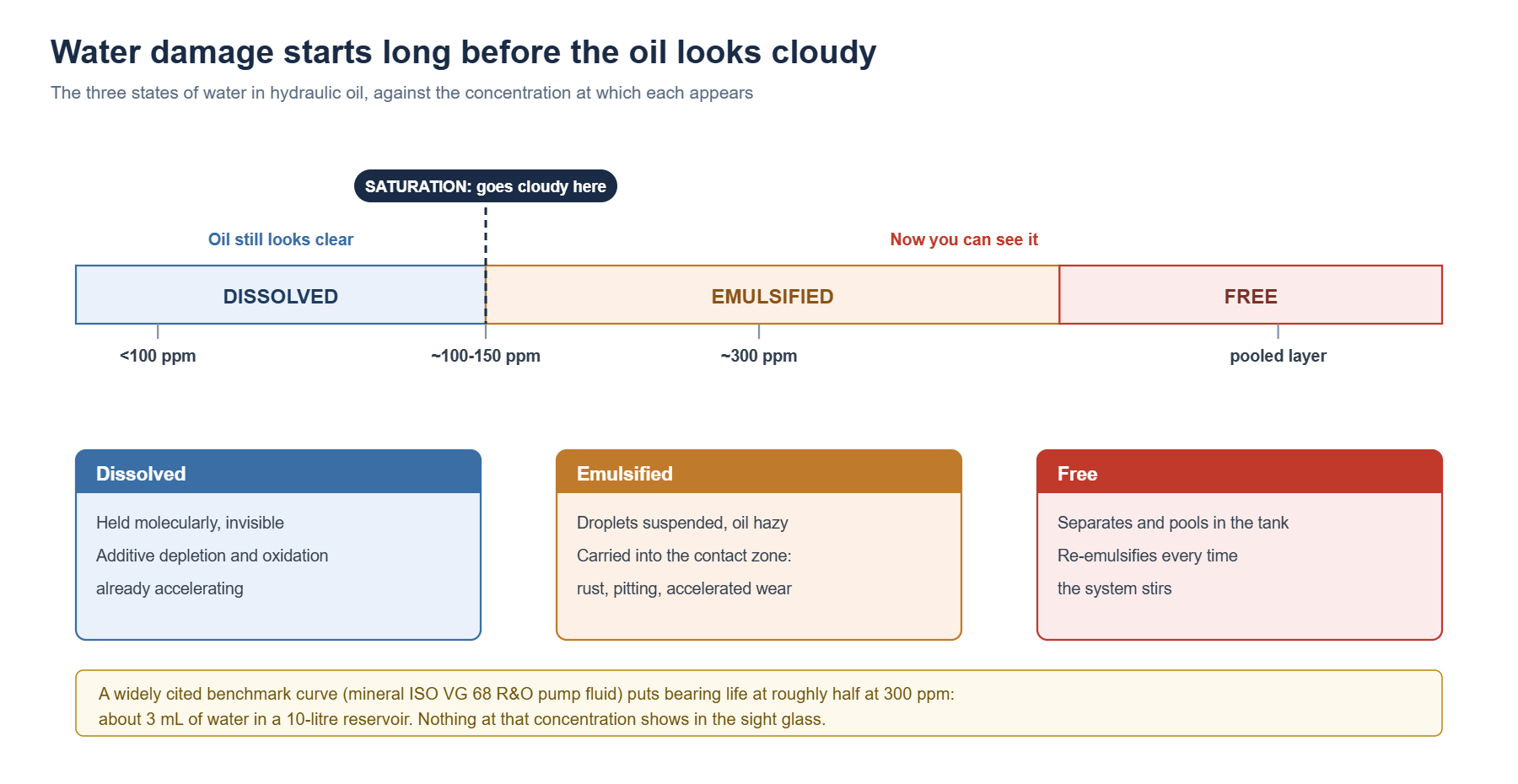
Water in Hydraulic Oil: The Contaminant You Can’t Always See
Oil turns cloudy and everyone notices. By then the water has been at work for a while, because the damage starts long before the milkiness appears, at concentrations you cannot see at all. Water is arguably the most underestimated conta...
View details > -
Hydraulic System Overheating: Find the Cause in the Right Order
Heat is the quiet killer of hydraulic systems, and it kills twice. It ages the oil. As a rule of thumb, oxidation roughly doubles for every 10°C above about 60°C, so an oil rated for thousands of hours can be spent in a fraction of that...
View details >