





Two hydraulic oils can both be labeled ISO VG 46 and still behave very differently in the same machine.
That is not a catalog problem. It is a field problem. A press in a climate-controlled plant may run acceptably on a standard anti-wear oil, while an outdoor excavator with cold starts and hot afternoon operation may need a high-viscosity-index fluid even though the nameplate viscosity grade is identical.
So the buying mistake is usually not “wrong VG.” It is stopping the review at VG.
The selection decision sits in temperature range, not on the drum label
ISO VG tells you the nominal kinematic viscosity at 40°C. It does not tell you how sharply the oil thickens in cold conditions or thins as operating temperature rises.
That second question is why buyers distinguish between L-HM and L-HV.
Under China’s GB 11118.1-2011 classification, L-HM refers to anti-wear hydraulic oil for general service, while L-HV refers to anti-wear hydraulic oil with a higher viscosity index for wider temperature variation. This category logic is consistent with the hydraulic fluid families described in ISO 6743-4, which classifies hydraulic fluids by service type, and with the market convention that links standard anti-wear oils to DIN 51524 Part 2 (HLP) and higher-VI anti-wear oils to DIN 51524 Part 3 (HVLP). Those equivalences should still be checked against the supplier’s current TDS for the exact product grade and claim set.
A short version that procurement teams can actually use:
First match the required viscosity grade. Then match the oil’s viscosity-temperature behavior to the machine’s real operating window.
What the published Zhongtian L-HM data already confirms
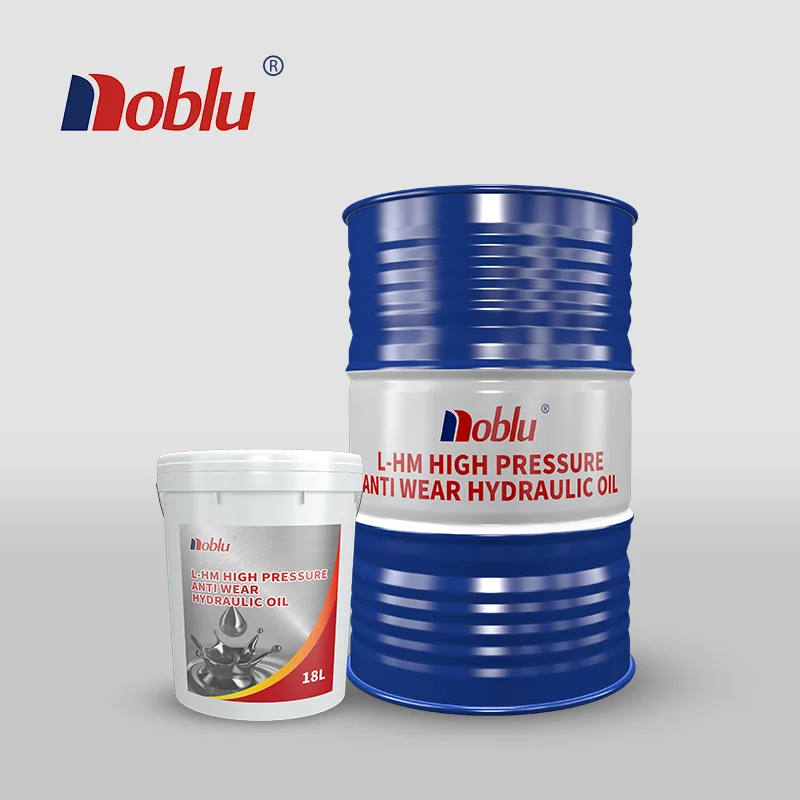
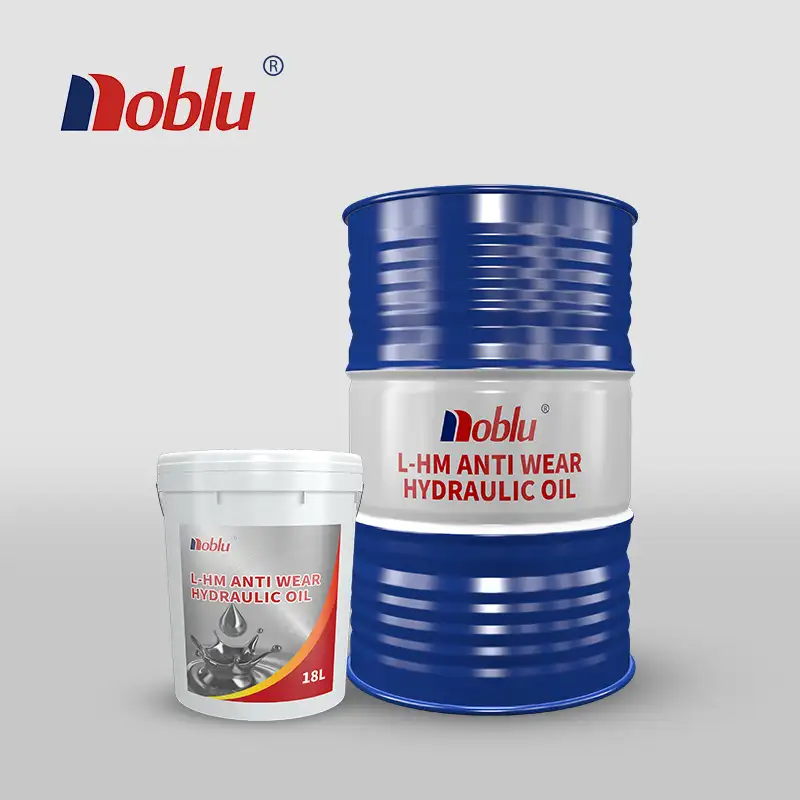
The current brand material supports a clear, document-based description of Zhongtian’s L-HM anti wear hydraulic oil line. In the available product manual, it is presented as suitable for low- and medium-pressure hydraulic systems used in industrial machinery, construction machinery, ships, and vehicles, and as conforming to GB11118.1-2011 (L-HM).
For Zhongtian L-HM 46, the published typical values are:
| Property | Zhongtian L-HM 46 | Why it matters |
|---|---|---|
| Kinematic viscosity at 40°C | 46.25 mm2/s | Confirms the nominal VG 46 range |
| Viscosity index | 99 | Indicates how much viscosity changes with temperature |
| Flash point (open) | 226°C | Useful supporting thermal property |
| Pour point | -21°C | Screens low-temperature flow limit |
| Moisture | Trace | Basic condition indicator |
| Standard claim | GB11118.1-2011 (L-HM) | Confirms category positioning |
Those numbers are enough to make one practical point: a same-VG comparison is incomplete unless VI and low-temperature behavior are also checked.
The earlier draft mentioned Parker-Denison HF-0 and specific L-HV product details. Because those claims are not closed-loop in the evidence provided here, they are removed rather than repeated without verification.
Where a standard HM oil usually fits
A standard L-HM oil is usually the sensible buy when the hydraulic system operates in a relatively stable temperature band and does not depend on strong cold-start pumpability.
That often includes machine tools, presses, injection molding equipment, and other plant hydraulics where ambient temperature, start-up conditions, and oil operating temperature stay reasonably controlled. In that environment, the machine may never need the broader viscosity-temperature window that justifies a higher-VI oil.
The key point is that “indoor” is only a rough clue. The real engineering question is whether the system sees a narrow or wide temperature swing from start-up to steady operation.
When HV becomes the better choice
L-HV becomes the better buy when temperature variation is large enough to change how the machine starts, responds, or protects components.
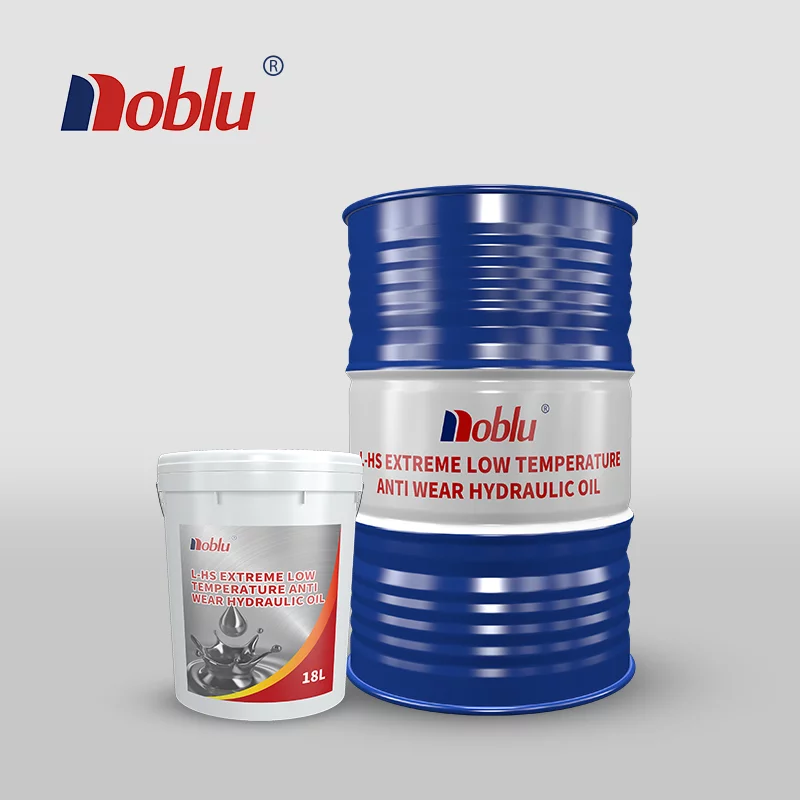
That is common in mobile hydraulics, outdoor equipment, construction machinery, mining applications, and installations that start in low ambient temperatures and continue running after oil temperature has climbed. For duty colder than a standard HV oil can cover, Zhongtian’s L-HS extreme-low-temperature hydraulic oil extends the pour point further, and the underlying behaviour is explained in our guide to low-temperature hydraulic fluids. In those cases, the oil has to do two jobs at once: avoid becoming excessively thick at start-up and avoid losing too much effective viscosity at elevated operating temperature. If reservoir temperature is already running past its design window, that is a separate fault to diagnose first, covered in our article on hydraulic system overheating.
This is the practical meaning of higher viscosity index. The oil’s viscosity changes less across temperature, which can widen the usable operating window for the machine.
What the standards and OEM literature actually support
A few reference points matter here because this topic is often oversimplified.
ISO 3448 defines industrial liquid lubricants by viscosity grade at 40°C, which is why two oils can both be VG 46 and still differ in service behavior. ISO 6743-4 separates hydraulic fluid types by service family rather than by VG alone. DIN 51524 Part 2 covers anti-wear hydraulic oils typically marketed as HLP, and DIN 51524 Part 3 covers high-VI anti-wear hydraulic oils typically marketed as HVLP.
OEM guidance also explains why low-temperature selection is not academic. Bosch Rexroth’s hydraulic fluid guidance states that if viscosity is too high at start-up, suction conditions worsen and the risk of cavitation increases; if viscosity is too low at operating temperature, wear protection can fall outside the preferred range. Parker Hannifin and other hydraulic component manufacturers publish similar guidance in their fluid recommendations, using viscosity-at-start and viscosity-at-operation windows rather than VG alone as the decision basis. Exact allowable viscosity ranges vary by pump design and series, so the equipment manual remains the controlling document.
That is the missing engineering detail behind the same-VG buying mistake.
A purchasing error that looks harmless on paper
The usual failure mode is simple: the buyer sees VG 46, sees “anti-wear hydraulic oil,” and chooses the lowest-price option that appears compliant.
In a stable factory system, that shortcut may not trigger an obvious problem. In a temperature-variable system, it can show up as slow actuator response on cold mornings, abnormal pump noise during start-up, difficult priming, or performance drift after the oil heats up.
Those symptoms are easy to blame on aging hardware. Sometimes the fluid choice is the quieter cause.
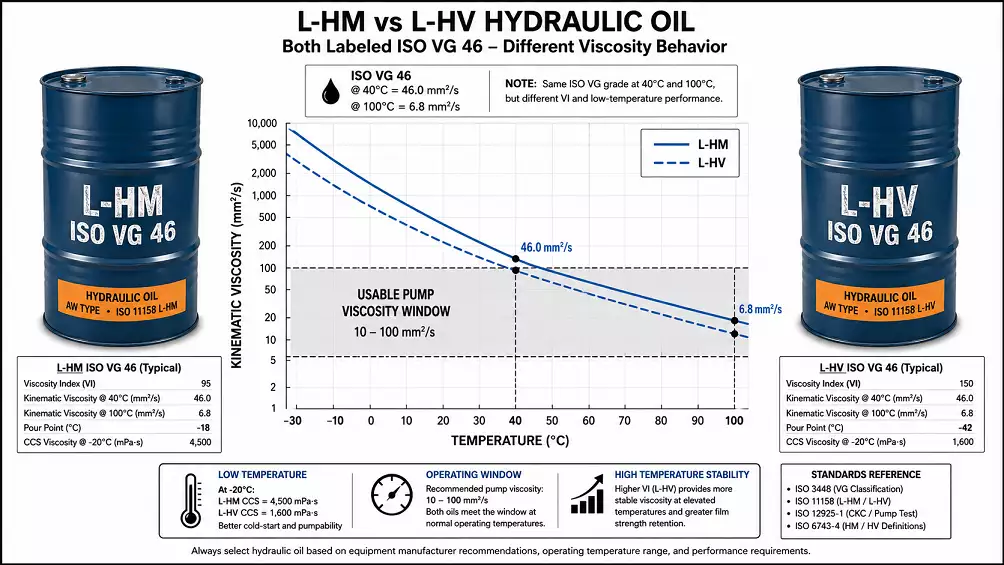
L-HM vs L-HV hydraulic oil viscosity-temperature comparison for the same ISO VGHow to make the decision without overcomplicating it
The cleanest buying process has three checks.
Lock the viscosity grade first
Start with the OEM manual, approved lubricant list, or pump requirement. If the machine calls for ISO VG 46, that remains the first gate.
Do not use the HM-versus-HV choice to override the required VG unless the equipment maker explicitly allows it.
Check the actual temperature window of the machine
This is the part many purchasing reviews skip.
Ask for the lowest ambient start-up temperature, the typical stabilized oil temperature, and whether the machine is exposed to strong daily or seasonal swings. A line-side hydraulic unit in a controlled workshop and an outdoor mobile unit can both call for VG 46, but they do not create the same fluid demand.
Bosch Rexroth’s guidance on hydraulic fluids is useful here because it frames fluid selection around viscosity in operation, not around label similarity. That is exactly why a same-VG oil can still be the wrong buy when the machine starts cold and runs hot.
Read the TDS like an approval document
Before issuing a purchase order, review the supplier’s current technical data sheet as if you were trying to reject the oil, not sell it.
| TDS checkpoint | What to confirm |
|---|---|
| ISO VG | Matches equipment requirement |
| Viscosity index | Supports the expected temperature range |
| Pour point | Screens low-temperature flow limit |
| Product category claim | Confirms HM or HV positioning |
| Applicable standard claim | Check against current TDS, not old brochures |
| Intended application | Industrial, mobile, marine, or mixed duty |
| TDS revision date | Reduces reliance on obsolete data |
| Packaging | Important for storage and plant handling |
For Zhongtian’s published L-HM range, the available packaging formats in the current manual include 18L, 5 Gallon, 200L, 208L, and 55 Gallon, which helps with stocking and supply planning as well as technical selection.
A more concrete engineering screen
When two oils share the same VG, the selection should move to operating behavior.
If the machine starts in mild ambient conditions, reaches a stable oil temperature quickly, and stays there, a standard L-HM oil may be entirely appropriate. If the machine starts near the lower edge of the site’s seasonal temperature range and then runs under sustained hydraulic load, a higher-VI oil deserves a closer look.
One useful way to frame the review is this:
L-HMis usually the default choice for stable thermal duty.L-HVis usually the corrective choice for wide thermal duty.
That is a rule of thumb, not a substitute for the OEM viscosity window.
Mixing and top-up decisions need caution
Maintenance teams often ask whether HM and HV can be mixed during top-up.
In many mineral-oil systems, physical compatibility may be possible, but that does not make the mixture performance-neutral. Once you dilute a higher-VI oil with a standard one, you may also dilute the property that justified the selection in the first place.
For critical equipment, warranty-covered assets, or machines with repeated cold starts, confirm compatibility and changeover procedure with the supplier and the equipment guidance before mixing. If no verification is available, treat the mixed fill conservatively.
Questions worth asking before approving an equivalent
A buyer comparing suppliers should push past the front label and ask for specifics that can be checked.
- Is the product classified and documented as
L-HMorL-HV? - What is the published viscosity index?
- What is the published pour point?
- Which current standards are claimed on the latest TDS?
- Is the oil intended for stable industrial duty or wider outdoor/mobile temperature variation?
- What is the TDS revision date?
Those questions remove a surprising amount of false equivalence from quote comparisons.
For broader supplier benchmarking, see top lubricant manufacturers.
The practical buying rule
If two hydraulic oils share the same ISO VG, do not assume they are interchangeable.
Use L-HM when the machine’s temperature conditions are stable and the TDS matches the duty. Use L-HV when wider temperature swings make viscosity stability part of the requirement. And when the documentation is incomplete, stop the purchase until the TDS and equipment viscosity guidance line up.
Zhongtian’s high-pressure anti-wear hydraulic oil carries Parker-Denison HF-0, HF-1 and HF-2 approvals, so the anti-wear claim is backed by an OEM pump-bench programme rather than a datasheet line alone.
For manufacturer-side support on hydraulic oil documentation, packaging, and application matching, send us the machine type, pump model and site temperature range and our technical team will match the specification to your duty cycle. Contact Zhongtian Petrochemical.
Sources
- ISO 3448, industrial liquid lubricants classification by viscosity grade at
40°C - ISO 6743-4, classification of hydraulic fluids by service family
DIN 51524 Part 2, anti-wear hydraulic oils commonly referenced asHLPDIN 51524 Part 3, high-VI anti-wear hydraulic oils commonly referenced asHVLP- Bosch Rexroth hydraulic fluid selection guidance and viscosity recommendations for hydraulic systems
- Zhongtian Petrochemical published product manual data for
L-HM anti wear hydraulic oilandL-HM 46typical values