




Противоизносная гидравлическая жидкость — это гидравлическое масло, содержащее присадки, которые химически связываются с металлическими поверхностями и образуют тонкий жертвенный слой в местах, где масляная пленка становится слишком тонкой, чтобы удерживать детали на расстоянии друг от друга. Присадки изнашиваются, а не насос. В международной системе классификации это называется Его Величество семья в ISO 6743-4; На североамериканском рынке тот же продукт обычно имеет другую маркировку. AW, за которым следует его ISO 3448 Класс вязкости: AW 32, AW 46, AW 68.
Практический вывод: жидкость AW является правильным вариантом по умолчанию практически для любой гидравлической системы с насосным приводом, и не содержащее присадок масло той же вязкости не может её заменить. Обозначение AW не означает уровень качества или допустимую нагрузку. Для более тяжелых, медленных и концентрированных нагрузок требуется жидкость с экстремальным химическим составом, и именно на границе между ними чаще всего возникают ошибки при определении характеристик.
Зачем вообще гидравлической системе нужна эта присадка?
Гидравлический насос предназначен для работы в условиях полного масляного слоя, когда движущиеся поверхности разделены жидкостью под давлением и никогда не соприкасаются. Это условие выполняется, пока скорость, нагрузка и вязкость остаются в пределах расчетного диапазона. Оно перестает выполняться при запуске, до того как давление начнет расти, при изменении направления вращения, когда относительная скорость проходит через ноль, при ударных нагрузках и в любых случаях, когда зазоры износились больше, чем предусмотрено расчетом.
В эти моменты пленка сжимается до размеров меньше высоты шероховатости поверхности, и пики на двух поверхностях соприкасаются. Контакт металла с металлом под давлением приводит к удалению материала.
Решением этой конкретной проблемы является противоизносная присадка. Под воздействием тепла и давления, возникающих в точках контакта, она вступает в реакцию с поверхностью металла, образуя мягкий слой, который разрушается на месте основного металла. Пленка разрушается и непрерывно образуется до тех пор, пока присадка остается в масле.
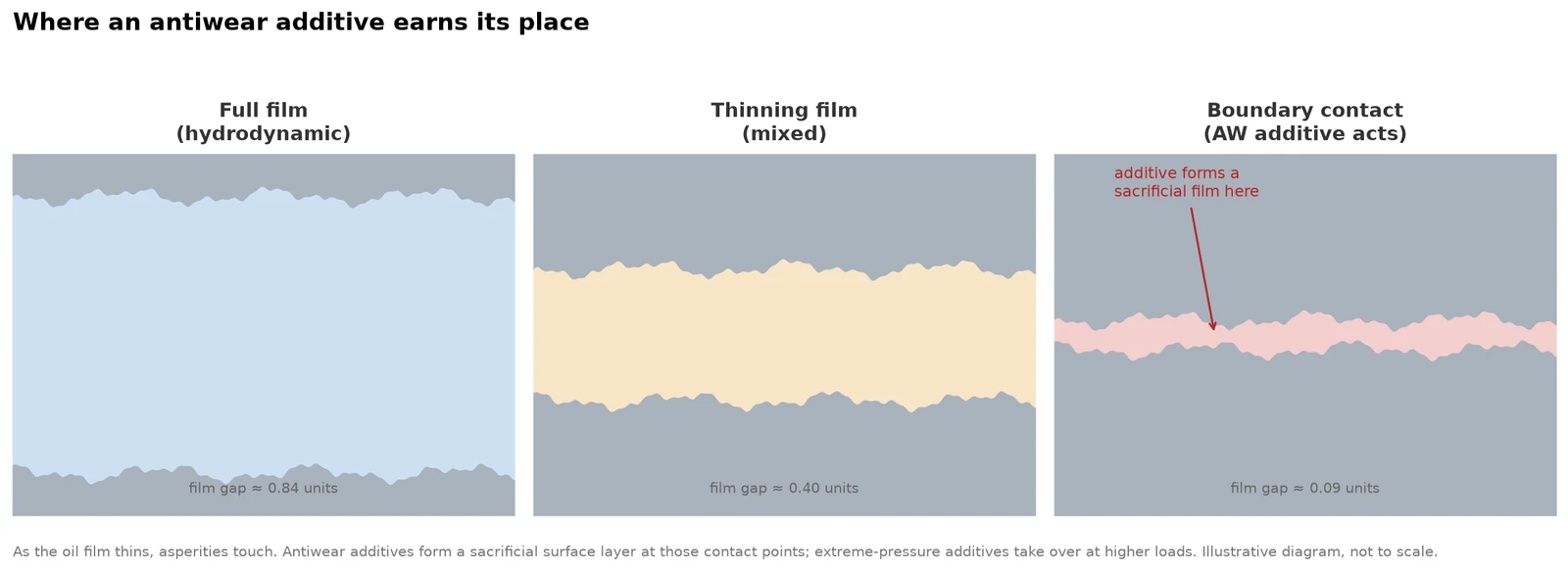
Этот механизм объясняет два свойства, которые часто удивляют покупателей. Присадка со временем расходуется, поэтому масло, вязкость которого соответствует норме, может находиться на грани исчерпания своих защитных свойств. Кроме того, присадка действует только в местах контакта, поэтому система, работающая должным образом в условиях полного контакта, практически не расходует её.
AW и EP — это не одно и то же.
Обе группы присадок предназначены для обеспечения контактного взаимодействия, и их часто путают, поскольку обе указываются в технических характеристиках как средства защиты от износа.
Разница заключается в нагрузке. Противоизносные присадки разработаны для более легкого, распределенного контакта, характерного для гидравлических насосов, втулок и лопастных узлов. Присадки для работы в условиях экстремального давления разработаны для концентрированного, высоконагруженного скользящего контакта в редукторах. В условиях экстремального давления эффективность противоизносных присадок становится недостаточной, и требуются специальные противозадирные присадки в соответствии с требованиями. классификация противоизносных присадок.
| Противоизносостойкое (AW) | Экстремальное давление (ЭД) | |
|---|---|---|
| Типичная обязанность | Гидравлические насосы, втулки, лопатки | Коробки передач, гипоидные оси, тяжелые скользящие оси |
| Режим нагрузки | Более лёгкий, распределённый контакт | Концентрированный контакт при высокой нагрузке |
| Активация | Реагирует при температуре и давлении в точке контакта. | Реагирует при более высоких температурах, создаваемых большей нагрузкой. |
| Общая химия | ZDDP, беззольные соединения фосфора | Серо-фосфорные соединения |
| Риск при неправильном применении. | Недостаточная защита при нагрузках на зубчатую передачу. | Обладает химической агрессией по отношению к желтым металлам. |
Эти два семейства частично совпадают. Многие противоизносные присадки действуют как противозадирные присадки, и органофосфаты и соединения серы присутствуют в обоих типах. Для оформления заказа на покупку важно различие, для каких целей была разработана жидкость, а не к какому химическому семейству относится присадка.
Применение неправильного масла имеет последствия в обе стороны. Заливка гидравлической жидкости AW в сильно нагруженный редуктор оставляет зубья шестерен недостаточно защищенными. Заливка высокоэффективного трансмиссионного масла в систему с латунными или бронзовыми компонентами чрезмерна может привести к их коррозии, что является тем же самым видом отказа, который описан в [ссылка на описание]. Трансмиссионное масло GL-4 против GL-5.
Цинк, беззольный, и почему в некоторых системах он необходим.
Наиболее широко используемой противоизносной присадкой является диалкилдитиофосфат цинка, Обычно обозначается как ZDDP. Это стандартное масло, используемое в моторных маслах специального назначения и стандартных противоизносных гидравлических маслах, и оно выполняет три функции вместо одной: защиту от износа, предотвращение коррозии и защиту от окисления.
Некоторые системы указывают без цинка или беззольный Вместо этого используйте противоизносное масло. Причины конкретны, и ни одна из них не сводится к тому, что беззольные масла обеспечивают лучшую защиту в целом.
- Возможность фильтрации. Соединения цинка могут вступать в реакцию с водой, присутствующей в системе, и образовывать отложения, которые забивают тонкие фильтры. В системах с плотной фильтрацией и известным риском попадания влаги предпочтительнее использовать беззольную химию, поэтому... вода в гидравлическом масле Это стоит контролировать независимо от того, какая добавка используется.
- Совместимость с желтыми металлами. В некоторых насосах и клапанах содержатся бронзовые или латунные компоненты, которые со временем подвергаются воздействию некоторых химических веществ, содержащих цинк.
- Экологические правила и правила утилизации. На некоторых предприятиях действуют ограничения на содержание тяжелых металлов в отработанном масле.
- Риск загрязнения катализатора или технологического процесса. В некоторых технологических процессах перенос цинка недопустим.
Оба типа существуют в одинаковых классах вязкости. Компания Zhongtian производит стандартный состав. противоизносное гидравлическое масло и отдельный беззольный вариант, оба в жидкостях ISO VG 32, 46, 68 и 100. Выбор между ними определяется требованиями производителя оборудования к рабочей жидкости и условиями эксплуатации, а не тем, какая из них кажется более совершенной.
Существуют и другие противоизносные составы для условий, непригодных для использования с ZDDP. Трикрезилфосфат применяется при высоких рабочих температурах, в том числе в смазочных материалах для турбинных двигателей и некоторых гидравлических жидкостях. Стеариновая кислота прилипает за счет обратимой адсорбции при температуре ниже 150 °C, что ограничивает ее применение условиями умеренного контакта.
Что “AW” вам не рассказывает
Маркировка AW отвечает на один вопрос: содержит ли это масло противоизносные присадки. На четыре вопроса она не дает ответа, и все они указаны в техническом паспорте:
- Вязкость в диапазоне температур от 40 °C и выше. Класс масла измеряется при одной температуре. Индекс вязкости и температура застывания определяют поведение при холодном пуске и работе на высоких температурах, и два масла с одинаковым классом AW могут резко отличаться по обоим параметрам. Сравнение проводится в [ссылка на источник]. AW32 против AW46 против AW68.
- Какое количество добавки и какого качества. “Содержит противоизносные присадки” — это не дозировка. Наиболее близким к независимому ответу являются результаты испытаний на стенде для откачки топлива.
- Чистота и возможность фильтрации. Высокий уровень чистоты определяется классом чистоты, а не обозначением AW.
- Срок службы при окислении. Срок действия присадки в процессе эксплуатации зависит от базового масла и рабочей температуры, поэтому в системе, работающей при высокой температуре, пакет присадок расходуется быстрее.
Как проверить заявление об отсутствии износа
Любой поставщик может напечатать AW на барабане. Вот проверки, которые имеют вес, в порядке убывания их достоверности:
- Разрешение производителя насоса. Серия Parker-Denison HF является широко известной, и для ее использования требуется прохождение программы испытаний на насосном стенде, а не бумажная декларация. Уточните, какой уровень HF имеет продукт, и запросите документ о соответствии; высокочистое противоизносное масло Zhongtian имеет уровень HF-0.
- Наименованная спецификация производительности. Серия DIN 51524 является общепринятым европейским стандартом для гидравлических масел, при этом часть 2 охватывает класс износостойкости HLP, а производители оборудования часто указывают свои собственные требования. В любом случае, уточните, к какому документу относится данное утверждение.
- Технический паспорт для точного сорта, Здесь отображаются измеренные значения вязкости, индекса вязкости, температуры застывания и температуры вспышки, а не описание категории.
- Протокол испытаний от аккредитованной лаборатории. Компания Zhongtian Group Testing аккредитована в рамках китайских схем CMA и CNAS, а CNAS является участником соответствующих соглашений. Соглашение о взаимном признании МАЛАК, Именно это делает его отчеты пригодными для использования за пределами Китая.
Если поставщик не может изготовить второй и третий из указанных образцов для предлагаемого сорта, претензия по AW основывается исключительно на этикетке. Более широкая проверка поставщика описана в нашем документе. руководство по поиску поставщиков смазочных материалов.
Часто задаваемые вопросы
Является ли противоизносная гидравлическая жидкость тем же самым, что и противоизносное гидравлическое масло? Да. AW — это рыночное обозначение противоизносного средства. Аналогичные продукты обозначаются как HM в соответствии со стандартом ISO 6743-4.
Можно ли использовать противоизносную гидравлическую жидкость в коробке передач? Не является заменой трансмиссионному маслу. Противоизносные присадки разработаны для более легкого контакта с гидравлическими компонентами; для редукторов, как правило, требуются противозадирные присадки, а зачастую и с более высоким классом вязкости.
Что означает «беззольное противоизносное гидравлическое масло»? Это означает, что противоизносная присадка не содержит цинка, поэтому не оставляет металлических зольных отложений. Она указывается в качестве присадки из-за возможности фильтрации, совместимости с желтым металлом или необходимости утилизации, а не потому, что обеспечивает лучшую защиту.
Есть ли у гидравлического масла AW срок годности? Присадки истощаются в процессе эксплуатации, а базовое масло окисляется, поэтому срок службы жидкости не зависит от ее вязкости. Масло может оставаться в пределах своей марки, но при этом перестать обеспечивать защиту.
Является ли AW 46 стандартом ISO? Нет. Стандарт ISO 3448 определяет класс вязкости 46. AW — это рыночное обозначение, а не категория ISO. Соответствующее семейство услуг ISO — HM согласно ISO 6743-4.
Нужна ли мне противоизносная жидкость, если в моей системе низкое давление? Обычно да. Даже в системах низкого давления происходит контакт на границе раздела при запуске и реверсировании. Руководство по эксплуатации оборудования является авторитетным источником; если в нем указаны HM или AW, то обычное минеральное масло той же вязкости не соответствует этим требованиям.
Источники
- ISO 6743-4 — Классификация гидравлических жидкостей по группам применения, определяющая семейство HM.
- ISO 3448 — Промышленные жидкие смазочные материалы, классификация вязкости по ISO.
- Противоизносная присадка — химические добавки и граничная нагрузка AW/EP, со ссылкой на Рудника, Присадки к смазочным материалам: химия и применение. (CRC Press) и ASTM Справочник по топливу и смазочным материалам.
Компания Zhongtian Petrochemical производит гидравлические масла с 1998 года. Наши системы управления качеством, охраной окружающей среды и охраной труда сертифицированы по стандартам ISO 9001:2015, ISO 14001:2015 и ISO 45001:2018 под регистрационными номерами 62825Q9372R0S, 62825E9373R0S и 62825S9374R0S, действительными до апреля 2028 года и подлежащими проверке в уполномоченном органе.
Если вы указываете противоизносную жидкость для конкретного насоса, пришлите нам марку оборудования, технические характеристики жидкости, указанные в руководстве, и диапазон температур на объекте, и наша техническая команда подберет соответствующую жидкость. Свяжитесь с компанией Zhongtian Petrochemical.