




TL;DR — Quick Answer
Becoming a lubricant distributor means purchasing lubricant products from a manufacturer or wholesaler and reselling them to end-users such as auto repair shops, factories, fleets, and industrial facilities.
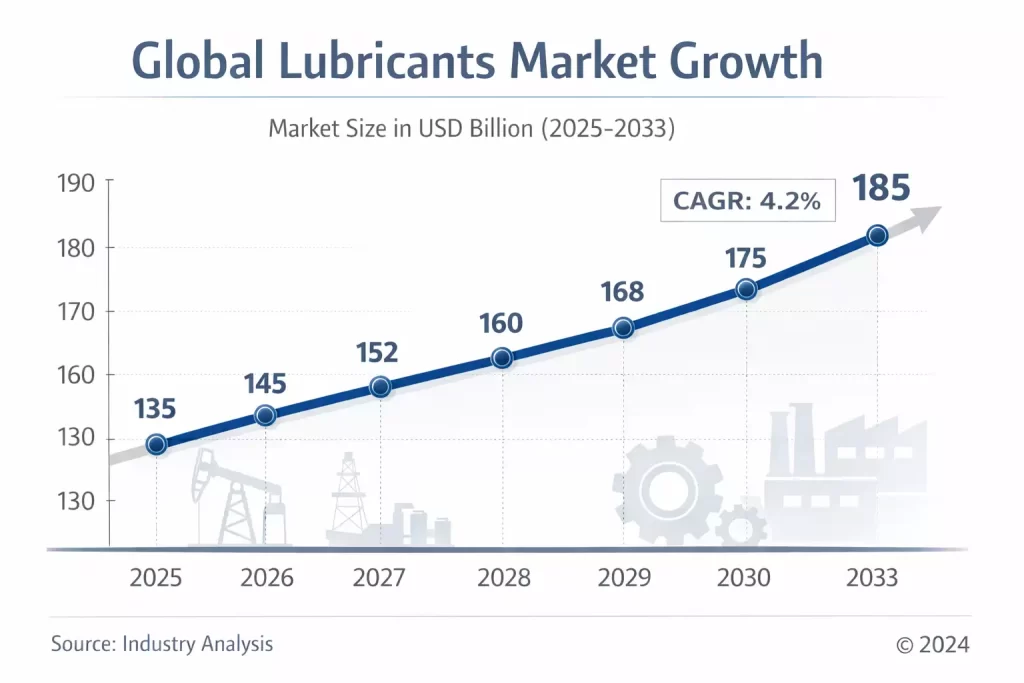
The global lubricants market is valued at approximately USD 150 billion in 2025 and is projected to reach USD 204 billion by 2033 — growing at a CAGR of ~4.0% (Grand View Research, 2025). It is one of the most stable, recession-resistant distribution businesses available.
The five steps to become a lubricant distributor:
- Choose your distributor model (brand partner / independent wholesaler / private label)
- Register your business and obtain required licenses
- Secure a reliable manufacturer or supplier
- Build your target customer base (auto shops, fleets, factories)
- Set up logistics, storage, and pricing strategy
Why the Lubricant Distribution Business?
The lubricant industry is not glamorous — but it is extraordinarily stable.
Every vehicle, every machine, every industrial facility needs lubricants on a recurring basis. Lubricants are a consumable product with built-in repeat demand. Once you secure a customer, reorder cycles are predictable and reliable.
Market size at a glance:
| Metric | Data | Source |
|---|---|---|
| Global lubricants market (2025) | ~USD 150 billion | Grand View Research |
| Projected market size (2033) | ~USD 204 billion | Grand View Research |
| CAGR (2025–2033) | ~4.0% | Grand View Research |
| U.S. lubricants market (2025) | ~USD 29 billion | Persistence Market Research |
| Asia Pacific market share (2025) | 45.4% of global | Grand View Research |
| Automotive segment share (2025) | 53.2% of lubricants | Grand View Research |
Why become a lubricant distributor specifically?
- Essential product — demand does not disappear in recessions; machines always need oil
- Recurring revenue — customers reorder every 3–12 months automatically
- Relatively low barrier to entry — no manufacturing required; start with stock and relationships
- Wide customer base — automotive, industrial, marine, agriculture, construction all need you
- Growing synthetic segment — premium synthetic lubricants offer significantly higher margins than conventional grades
What This Guide Does Differently
This article addresses every gap identified above:
- Real market size data with sources
- Specific startup cost ranges by business model
- Profit margin benchmarks
- Licensing requirements by business type
- A true step-by-step business setup framework
- Industrial, automotive, and international coverage
Three Distributor Models Compared
The first decision every prospective distributor must make is which model to adopt. This shapes everything: investment required, profit potential, risk, and speed to market.
Model 1: Brand Partnership / Authorized Dealer
You sell an established brand’s products (AMSOIL, Castrol, Shell, Mobil, or a regional brand) under their authorized dealer program.
Best for: Individuals starting part-time; mechanics or automotive professionals adding a revenue stream; low-capital entry into the industry.
How it works:
- Pay a registration or annual dealer fee (USD 100–500 typical)
- Receive access to wholesale pricing and marketing materials
- Sell to your own customers: individuals, shops, small fleets
- Earn margin between your cost and retail price
- Some programs offer residual income for customers you bring in
Key limitation: You are building the manufacturer’s brand, not your own.
Model 2: Independent Wholesaler / Import Distributor
You import or purchase lubricants in bulk (typically 20ft or 40ft container loads) from a manufacturer and distribute to retailers, workshops, and end-users in your region.
Best for: Entrepreneurs with capital seeking to build a regional distribution business; B2B-focused operators targeting industrial clients.
How it works:
- Identify a manufacturer (domestic or international)
- Negotiate EXW/FOB/CIF pricing and terms
- Import and clear customs (MSDS, COA, hazardous goods compliance)
- Distribute to auto shops, garages, factories, fleet operators
- Build your own brand in the local market
Key advantage: All customers belong to you. You build equity in your own distribution asset.
Model 3: Private Label / OEM Brand
You commission a manufacturer to produce lubricants under your own brand name and packaging.
Best for: Distributors who have already established a market presence and want to command higher margins and brand loyalty.
How it works:
- Partner with a blending/manufacturing facility
- Define your product specifications (API grade, viscosity, packaging)
- Design your own brand identity (label, drum, can design)
- Sell as a branded product at premium positioning
- Build long-term customer loyalty to your brand
Key advantage: Highest margins; full pricing control; no competition from the same brand.
Key challenge: Requires regulatory compliance (API licensing is not required but recommended); reputation must be built from zero.
Step-by-Step: How to Become a Lubricant Distributor
Step 1: Research Your Local Market
Before spending a dollar, understand your territory.
Questions to answer:
- Who are the existing lubricant distributors in your area?
- What brands do local workshops, fleets, and factories currently use?
- Is the market price-driven or quality-driven?
- What product segments are underserved? (industrial? agricultural? marine?)
- What is the average workshop or fleet’s monthly lubricant spend?
How to research:
- Visit 10–20 local auto workshops and ask what brands they use and who supplies them
- Contact local fleet operators (trucking, construction, agriculture) about their lubricant suppliers
- Check your region’s import/trade data for lubricant volumes
Step 2: Choose Your Business Model
Based on your market research and available capital, select one of the three models above.
Quick decision guide:
| Situation | Recommended Model |
|---|---|
| < USD 1,000 capital, part-time start | Brand partnership (AMSOIL-style) |
| USD 10,000–50,000, B2B focus | Independent wholesaler |
| Existing distribution network | Private label |
| No industry experience yet | Brand partnership first, then upgrade |
Step 3: Register Your Business
Register a legal business entity in your jurisdiction. Common structures:
- Sole proprietorship — simplest; suitable for starting small
- LLC / Limited company — recommended; separates personal and business liability
- Corporation — for larger operations with investors or multiple owners
Documents typically required:
- Business registration certificate
- Tax ID / VAT registration
- Business bank account
- Hazardous goods license (required in many jurisdictions for lubricant storage and transport)
Step 4: Obtain Required Licenses
See the Licenses & Compliance section below for full detail.
At minimum, most jurisdictions require:
- Business operating license
- Chemical/hazardous materials handling permit
- Import permit (if importing)
- Storage/warehouse compliance certification
Step 5: Secure Your Supplier
This is the most critical step in the entire process. Your supplier determines your product quality, pricing, lead times, and ultimately — your customer retention.
See the How to Find and Evaluate a Lubricant Supplier section below.
Step 6: Set Up Storage and Logistics
Minimum storage requirements:
| Scale | Storage Setup | Estimated Cost |
|---|---|---|
| Small (startup) | Rented dry warehouse, 100–300 m² | USD 500–2,000/month |
| Medium | Owned or long-term lease, 500–1,000 m² | USD 2,000–8,000/month |
| Large | Full distribution center with racking | USD 8,000+/month |
Logistics requirements:
- Forklift (own or rent)
- Delivery vehicle (van or light truck minimum; tanker for bulk oil)
- Drum handling equipment
- Secondary containment for spill control (regulatory requirement)
Step 7: Build Your Customer Base
Your first 10 customers will define your business trajectory.
Priority customer segments (fastest to convert):
- Independent auto repair workshops — high lubricant consumption; monthly reorder cycle; price-sensitive but loyal to reliable suppliers
- Small fleets (trucking, delivery, construction) — predictable volume; may require multiple viscosity grades; value technical support
- Agricultural dealers and farm cooperatives — seasonal demand; value reliable supply over price
- Industrial maintenance departments — high-value industrial lubricants; longer sales cycle but higher order value
First sales approach:
- Offer a free sample package (2L test quantities of your key products)
- Provide technical data sheets showing API/ACEA certifications
- Quote against their current supplier price with a 5–10% saving offer
- Commit to a reliable delivery schedule — reliability beats price for repeat customers
Step 8: Manage Finances and Scale
Key financial metrics to track from Day 1:
- Gross margin per product line
- Inventory turnover rate (target: 6–12x per year)
- Days Sales Outstanding (DSO) — how quickly customers pay
- Customer acquisition cost vs. lifetime value
- Working capital required per container of stock
Licenses, Certifications & Compliance
Lubricants are classified as hazardous chemicals in most jurisdictions. This triggers specific licensing requirements that vary by country.
Minimum Requirements (Most Countries)
| Requirement | Description |
|---|---|
| Business license | Standard commercial registration |
| Chemical handling permit | Required for storage of petroleum-based products |
| Fire safety compliance | Flammable liquid storage regulations |
| Environmental permit | Waste oil/spill containment compliance |
| Import license | Required for cross-border lubricant trade |
| MSDS documentation | Required for all products sold commercially |
Product Certifications to Understand
As a distributor, you do not need to hold these certifications yourself — but you must be able to verify that the products you sell carry them:
| Certification | Meaning | Who Issues |
|---|---|---|
| API SN/SP/SN Plus | Engine oil quality grade for gasoline engines | American Petroleum Institute |
| API CK-4/FA-4 | Diesel engine oil quality grade | American Petroleum Institute |
| ACEA A3/B4/C3/E9 | European engine oil performance categories | ACEA (European) |
| ISO VG (32, 46, 68…) | Industrial lubricant viscosity classification | ISO |
| NSF H1 | Food-grade lubricant safety certification | NSF International |
| NLGI Grade | Grease consistency classification | National Lubricating Grease Institute |
Critical rule: Never sell lubricants with falsified API or ACEA certifications. This is fraud and exposes your business to significant legal liability.
How to Find and Evaluate a Lubricant Supplier
Your supplier is your most important business relationship. A poor supplier will destroy your customer relationships through inconsistent quality and delayed delivery.
Where to Find Suppliers
- Direct from manufacturers (China, Middle East, Southeast Asia) — via Alibaba, trade shows (API+ACEA Expo, China International Lubricants Exhibition), industry directories
- Regional blending facilities — local/regional blenders who can produce to your specification
- Established international brands — apply for authorized distributor status with brands such as Shell, Castrol, Mobil, Total, or regional alternatives
Supplier Evaluation Checklist
Startup Costs & Investment Guide
One of the most common questions — and one that competing articles almost universally fail to answer — is: how much does it cost to start a lubricant distribution business?
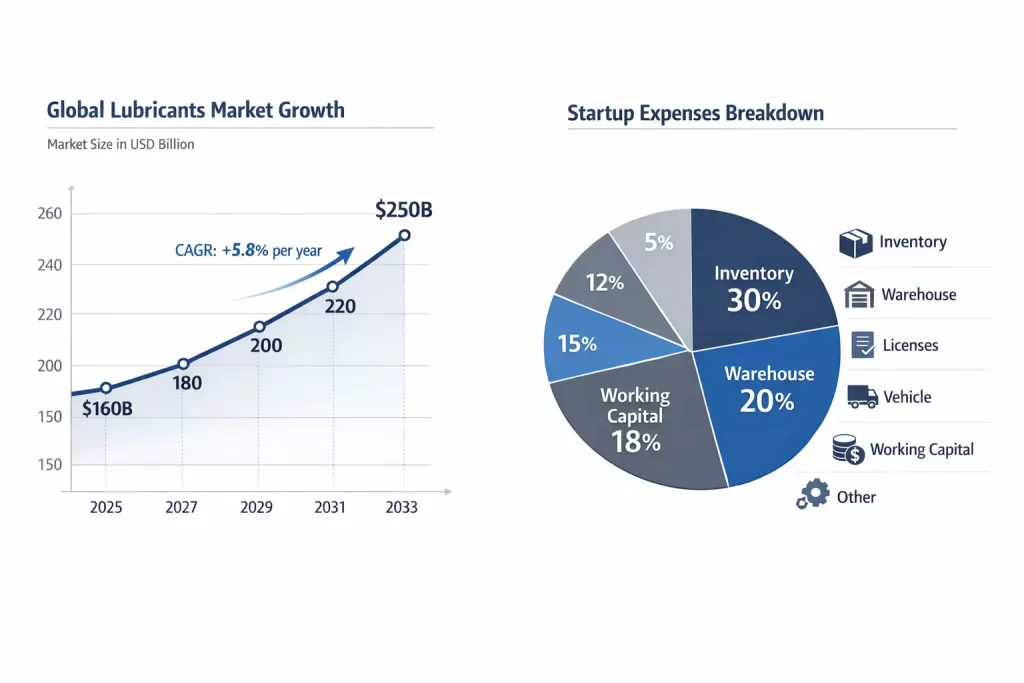
The honest answer: it depends on your model and scale. Here are realistic estimates:
Brand Partnership Model
| Item | Cost |
|---|---|
| Dealer registration fee | USD 100–500/year |
| Initial sample stock (optional) | USD 500–2,000 |
| Basic marketing materials | USD 200–500 |
| Vehicle (if not already owned) | USD 0–15,000 |
| Total minimum startup | USD 300–5,000 |
Independent Wholesaler / Import Distributor
| Item | Estimated Cost |
|---|---|
| Business registration & licenses | USD 500–3,000 |
| Initial inventory (1 x 20ft container) | USD 15,000–40,000 |
| Warehouse (first 3 months rent) | USD 1,500–6,000 |
| Forklift (rental) | USD 500–1,500/month |
| Delivery vehicle | USD 8,000–25,000 |
| Insurance (product liability + warehouse) | USD 1,000–5,000/year |
| Website & marketing | USD 1,000–5,000 |
| Working capital reserve | USD 10,000–20,000 |
| Total minimum startup | USD 35,000–100,000+ |
Private Label Brand
| Item | Estimated Cost |
|---|---|
| All costs of Independent Wholesaler | USD 35,000–100,000 |
| Brand design (logo, labels, packaging) | USD 2,000–10,000 |
| API/quality certification (if pursued) | USD 5,000–20,000 |
| Marketing launch budget | USD 5,000–20,000 |
| Total minimum startup | USD 50,000–150,000+ |
Profit Margins: What to Expect
Profit margin in lubricant distribution varies significantly by product type, customer segment, and business model.
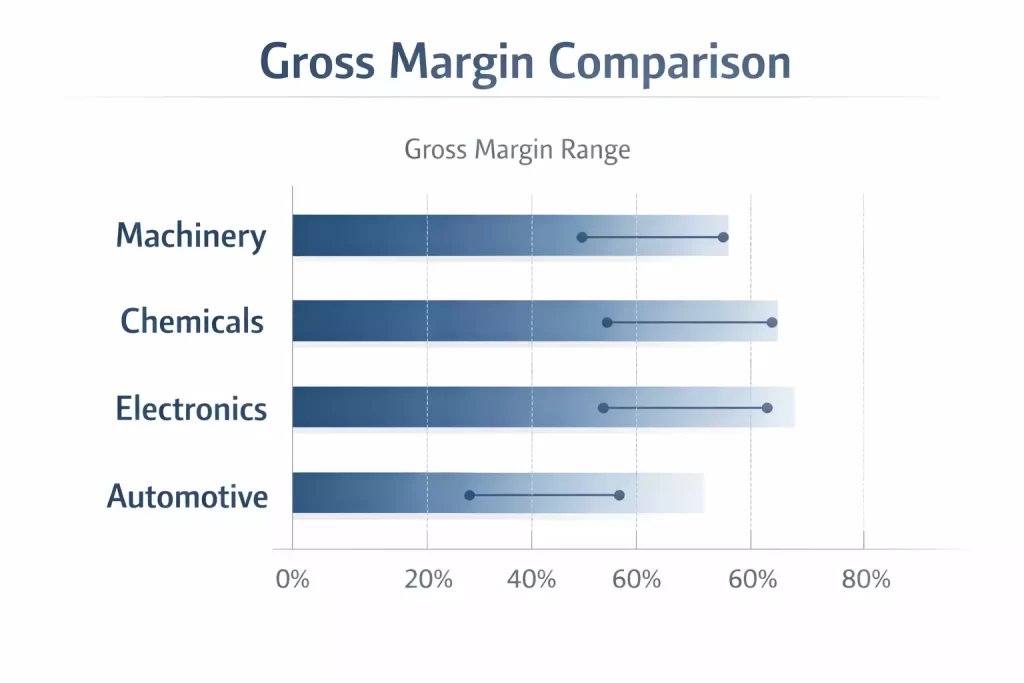
Typical gross margin benchmarks:
| Product Category | Typical Distributor Gross Margin |
|---|---|
| Commodity mineral engine oil | 8–15% |
| Semi-synthetic engine oil | 12–20% |
| Fully synthetic engine oil | 18–30% |
| Industrial lubricants (hydraulic, gear) | 15–25% |
| Specialty greases | 20–35% |
| Private label products | 25–45% |
Key insight: The lubricant market is experiencing a structural shift toward premium synthetic and specialty grades. Synthetic lubricant penetration in growth markets such as India is still only ~20% (Shell India, 2025), representing enormous upgrade opportunity for distributors who position on quality rather than price.
Your Target Customers
Understanding your customers is as important as understanding your products.
Customer Segment Overview
Most profitable customer type: Industrial facilities — they prioritize reliability and technical support over price, have high monthly volume, and rarely change suppliers once satisfied.
Fastest customer type to acquire: Independent auto workshops — quick decision-making, immediate need, willing to switch suppliers for a better deal.
Product Knowledge You Must Have
You do not need to be a chemist. But you must understand enough to advise customers correctly — because wrong lubricant recommendations will cost you accounts.
Minimum Product Knowledge Checklist
Engine Oils:
- Viscosity grades: 0W-20, 5W-30, 10W-40, 15W-40, etc.
- API service categories: SP (gasoline), CK-4 (diesel)
- Mineral vs semi-synthetic vs fully synthetic — performance and price differences
- When to use each grade (modern downsized engines vs older high-mileage engines)
- Hydraulic oil: ISO VG grades (32, 46, 68) and anti-wear (AW) vs zinc-free (ZF) types
- Gear oil: ISO VG grades and EP (Extreme Pressure) requirements
- Compressor oil: air-cooled vs water-cooled; rotary screw vs reciprocating
- Grease: NLGI grades and thickener types (lithium, polyurea, calcium sulfonate)
Key technical terms every distributor must understand:
- Viscosity index (VI)
- Pour point
- Flash point
- TBN (Total Base Number) — for diesel engine oils
- Dropping point — for greases
- API, ACEA, OEM approvals
Building Your Distribution Territory
The 50-Account Rule
Most successful independent lubricant distributors reach profitability with 50 active accounts generating regular monthly orders.
Target: 50 accounts within 12 months of launch.
Structure your territory development in phases:
Phase 1 (Month 1–3): Core accounts — 10 anchor customers
- Target: 3–5 auto workshops + 2–3 small fleets + 1–2 industrial accounts
- Focus: product quality, reliable delivery, competitive pricing
- Goal: establish reorder pattern and case studies
Phase 2 (Month 4–6): Territory expansion — reach 25 accounts
- Use first 10 customers as references
- Expand to adjacent product lines (e.g., add grease to workshops already buying engine oil)
- Attend local trade associations, fleet manager events
Phase 3 (Month 7–12): Consolidation — reach 50 accounts
- Focus on industrial accounts (higher value)
- Introduce premium synthetic grades to existing accounts (margin upgrade)
- Consider second vehicle / additional delivery capacity
Common Mistakes & How to Avoid Them
Mistake 1: Choosing Price Over Quality
The problem: Buying the cheapest lubricant to maximize margin. One batch of substandard product can destroy years of customer relationships.
The fix: Always verify API certifications. Request COAs from multiple batches before committing to a supplier. A slightly lower margin on a quality-verified product is always worth more than a higher margin on an uncertain one.
Mistake 2: Ignoring Technical Standards
The problem: Selling a “10W-40” engine oil without knowing if it meets API SP, SN, or SL — and recommending it to a modern European vehicle that requires ACEA C3.
The fix: Build a simple product-to-application matrix. Know which products are appropriate for which vehicles and machines in your market.
Mistake 3: Under-capitalizing on Working Capital
The problem: Using 100% of startup capital on inventory, leaving nothing for operating expenses. Customers pay on Net 30–60 terms; your supplier wants payment upfront.
The fix: Reserve at least 30–40% of your startup capital as working capital. Factor financing can help bridge cash flow gaps for established businesses.
Mistake 4: Trying to Serve Everyone at Once
The problem: Stocking 50+ SKUs for automotive, industrial, marine, and agricultural applications from Day 1. Inventory capital is wasted; focus is lost.
The fix: Launch with 8–12 core SKUs that serve your primary customer segment. Add SKUs only when a customer specifically needs them.
Mistake 5: Neglecting Compliance
The problem: Operating without proper hazardous goods storage permits, or importing without MSDS documentation. Fines, license revocation, or liability for a spill can end a business.
The fix: Spend the time and money to get compliance right before your first delivery. Consult a local chemical products compliance specialist.
FAQ
How do I become an oil and lubricant distributor? Register a business entity, obtain necessary hazardous goods handling licenses, secure a reliable manufacturer or supplier, and begin building a customer base among auto workshops, fleets, and industrial facilities. The minimum investment ranges from USD 300 for a brand partnership to USD 35,000+ for independent wholesale distribution.
How much money do I need to start a lubricant distribution business? Startup costs depend on your model: a brand dealer partnership (e.g. AMSOIL) can be started for under USD 500. An independent wholesale operation typically requires USD 35,000–100,000 in capital for inventory, licensing, storage, and working capital. A private-label brand requires USD 50,000–150,000+.
What licenses do I need to sell lubricants? Requirements vary by country, but typically include: a business license, chemical/hazardous materials handling permit, fire safety compliance certificate, and import license if importing. In most jurisdictions, lubricants are classified as hazardous petroleum products and require specific storage and transport permits.
What is the profit margin for lubricant distributors? Gross margins typically range from 8–15% for commodity mineral engine oil up to 25–45% for private-label and specialty products. Synthetic and industrial lubricants generally command 15–30% margins at the distributor level.
Who are the best customers for a lubricant distributor? Industrial facilities offer the highest value and lowest price sensitivity — they prioritize reliability and technical support. Independent auto workshops are the fastest to acquire. Fleet operators (trucking, construction, agriculture) provide predictable monthly volume. Building a mix of all three segments creates the most resilient distribution business.
Do I need to manufacture lubricants to be a distributor? No. A distributor purchases finished lubricant products from a manufacturer or wholesaler and resells them to end-users. Manufacturing is not required. Most successful distributors start by representing one or two brands before potentially developing their own private label.
What is the difference between a lubricant distributor and a dealer? A dealer typically represents a single brand and sells from a defined program with set pricing and territory. A distributor is more independent — purchasing from manufacturers and building their own customer base across multiple brands and product lines. Distributors typically have higher capital requirements but also higher margin potential and ownership of their customer relationships.
What products should I stock as a new lubricant distributor? Start with a focused core range: one or two grades of gasoline engine oil (e.g. 5W-30, 10W-40), one diesel engine oil grade (e.g. 15W-40 CI-4 or CK-4), one hydraulic oil (ISO VG 46), one gear oil (SAE 80W-90), and one multipurpose grease (NLGI Grade 2). This covers 80% of workshop and light industrial needs with minimal SKU complexity.
Is lubricant distribution a good business in 2025? Yes. The global lubricants market is projected to grow from approximately USD 150 billion in 2025 to USD 204 billion by 2033. Synthetic lubricant penetration remains below 20% in many emerging markets, representing substantial upgrade opportunity. The business combines recurring demand, defensible customer relationships, and accessible entry requirements — making it one of the more attractive distribution businesses available.
Can I import lubricants from China and sell them? Yes — this is a common independent distributor model, particularly in developing markets. Key requirements: verify API/ACEA certifications from accredited labs, obtain MSDS/SDS documentation, comply with local import regulations (customs, tariffs, hazardous goods), and ensure packaging meets local labeling laws. Due diligence on the manufacturer is critical.
Conclusion
Becoming an oil and lubricant distributor is a serious, viable business opportunity backed by a USD 150 billion global market growing at ~4% annually.
The path is straightforward:
- Choose your model — brand partnership, independent wholesale, or private label
- Register properly — business entity, hazardous goods permits, import license if needed
- Secure a quality-verified supplier — certifications, COA, references
- Build 50 core accounts — workshops, fleets, industrial facilities
- Upgrade margins over time — move customers from mineral to synthetic; from single products to full lubricant programs
The distributors who succeed long-term are not the ones with the cheapest prices. They are the ones with the most reliable supply, the best product knowledge, and the most consistent service.
Zhongtian Petrochemical supports distributors and partners across industrial, automotive, and specialty lubricant segments. If you are evaluating partnership opportunities or looking for a quality-verified lubricant supply source, our team is available to discuss your specific market needs.
👉 Contact Zhongtian Petrochemical for distributor partnership enquiries → ztshoil.com
References & About the Author
Written by: Zhongtian Petrochemical Lubrication Engineering & Commercial Team — with over 15 years of experience in industrial lubricant manufacturing, distribution strategy, and technical market development across Asia Pacific, the Middle East, and emerging markets.
Data Sources:
- Grand View Research — Global Lubricants Market Size & Share, 2025
- Persistence Market Research — U.S. Lubricants Market Outlook, 2025
- AMSOIL Inc. — Dealer Program Terms & Compensation Structure
- API (American Petroleum Institute) — Engine Oil Licensing & Certification Program
- NLGI (National Lubricating Grease Institute) — Grease Classification Standards
- Future Market Insights — Industrial Lubricants Market Report, 2026
© 2025 Zhongtian Petrochemical | ztshoil.com | All rights reserved. This article is intended for entrepreneurs, business owners, and industry professionals evaluating lubricant distribution as a business opportunity. For country-specific regulatory advice, consult a licensed local business advisor.
Distributors are buyers too. Before signing any supply agreement, work through the lubricants sourcing checklist from the manufacturer-evaluation side.