





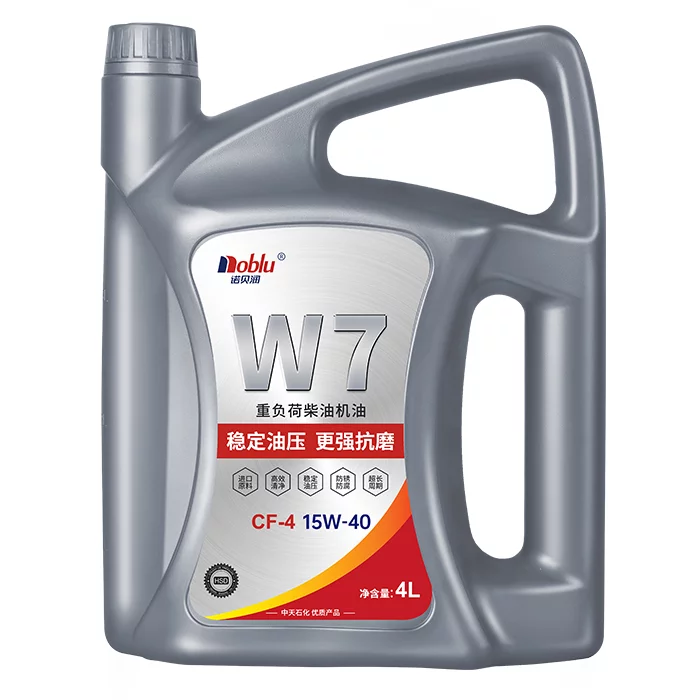
CF-4 oil is a diesel engine oil that meets the API CF-4 service category, a classification introduced in 1991 for high-speed four-stroke on-highway diesels, before ultra-low-sulfur fuel. The American Petroleum Institute now lists CF-4 as obsolete and cautions that it is not suitable for most diesel engines built after 2009. It still matters because the engines it was written for are still working: pre-emission trucks, generator sets, construction and mining machines, and fleets in countries where high-sulfur diesel is what the pump sells. This page sets out what the category covers, which newer categories can replace it, which one never can, and what to check before you buy.
Zhongtian Petrochemical technical sales. First published 14 March 2025, rewritten 7 October 2026 against the current API service-category definitions and our own product pages.
What is CF-4 oil and when should you use it?
API service categories for diesel engines carry a C prefix and move up the alphabet as emission rules tighten. On API’s category table, CF-4 and CG-4 are marked obsolete with the same caution, “not suitable for use in most diesel-powered automotive engines built after 2009”; CH-4 (introduced 1998), CI-4 (2002), CJ-4 (2010 model year and Tier 4 non-road engines) and CK-4 (2017 model year) are current. CF-4 oil is the right choice when the engine maker’s manual names CF-4 or an older category, the engine has no diesel particulate filter or selective catalytic reduction system, and the fuel is high in sulfur. It is the wrong choice for any engine with after-treatment hardware: API gives no reason in its table, but the CF-4 tests predate diesel particulate filters and selective catalytic reduction, and the manual for such an engine will name a later category.
Why CF-4 still matters
The reason is the installed base, not the chemistry. Engines built before the 2007 to 2010 emission steps are still the backbone of many fleets we supply: container trucks, mine haulage, farm machinery and standby generators across the South Asian, Southeast Asian, African and Latin American markets our catalogue lists. Three practical facts keep CF-4 in those fleets.
First, fuel. API’s CH-4 and CI-4 definitions, the categories that replace CF-4, are written for diesel “ranging in sulfur content up to 0.5% weight”. Where the local supply is still 500 ppm or higher, an oil built for ultra-low-sulfur fuel and after-treatment systems brings no benefit the engine can use, and the manual still says CF-4.
Second, backward compatibility runs upward only. API states that CH-4 oils can replace CD, CE, CF-4 and CG-4 oils; CI-4 can be used in place of CD, CE, CF-4, CG-4 and CH-4; CJ-4 exceeds the performance criteria of CI-4, CH-4, CG-4 and CF-4; and CK-4 exceeds CJ-4, CI-4 and CH-4. So an operator can standardise on one newer oil and still cover CF-4 engines, which many fleets do to hold one stock. The reverse is never true: CF-4 cannot stand in for any category above it.
Third, availability. CF-4 is still produced by many blenders, including ourselves. Where the manual permits it, ask for a quote by grade and pack size and compare it with CH-4 or CI-4 in the same grade; we do not publish price ratios between categories on this page.
Where CF-4 fits and where it does not
| Situation | CF-4 fits? | What to use instead |
|---|---|---|
| Engine manual names CF-4, CF or CD; no DPF or SCR; high-sulfur fuel | Yes | CF-4, or CH-4 / CI-4 / CK-4 if you want one oil for the whole fleet |
| Pre-2007 engine, but the fleet also has 2010-plus trucks | Yes for the old engines only | CK-4 for everything, which API rates as backward compatible with CJ-4, CI-4 and CH-4 |
| Engine with a diesel particulate filter | No | CJ-4 or CK-4, which API formulates for after-treatment systems and for fuel up to 500 ppm, with a 15 ppm threshold for full durability |
| 2017-plus engine whose manual specifies an XW-30 FA-4 oil | No, and CK-4 may not fit either | FA-4 only; API says FA-4 is not interchangeable with CK-4, CJ-4, CI-4 or CH-4 |
| Stationary generator sets on high-sulfur diesel | Check the maker’s list | Follow the category and viscosity grade the maker specifies; CH-4 or CI-4 cover a CF-4 requirement |
CF-4 vs CK-4, and the rest of the ladder: CH-4, CI-4, CJ-4, FA-4
CF-4 vs CK-4 in one line: the same engine type, 26 years apart; CK-4 adds the after-treatment, oxidation and shear tests that CF-4 never had, and CK-4 can replace CF-4 but not the reverse. The table condenses API’s own definitions. Read the fuel column with the engine column: the later categories assume ultra-low-sulfur fuel and emission hardware, and that is what separates them, not viscosity.
| Category | API status | Written for | Fuel sulfur in the definition | Can replace |
|---|---|---|---|---|
| CF-4 | Obsolete (licensing ended 30 June 2008) | High-speed four-stroke on-highway diesels, introduced 1991 | not stated by API | CD, CE |
| CH-4 | Current (1998) | Engines meeting 1998 exhaust standards | up to 0.5 percent | CD, CE, CF-4, CG-4 |
| CI-4 | Current (2002) | Engines meeting 2004 exhaust standards | up to 0.5 percent | CD, CE, CF-4, CG-4, CH-4 |
| CJ-4 | Current | 2010 model-year on-highway and Tier 4 non-road engines | up to 500 ppm; above 15 ppm may affect durability | exceeds CI-4, CH-4, CG-4, CF-4 |
| CK-4 | Current | 2017 model-year on-highway and Tier 4 non-road engines | up to 500 ppm; above 15 ppm may affect durability | exceeds CJ-4, CI-4, CH-4 |
| FA-4 | Current | Select 2017 model-year engines, XW-30 only, for greenhouse-gas limits | up to 15 ppm | none of the above; not backward compatible |
The rows buyers get wrong are the last two. CK-4 and FA-4 were first licensed together on 1 December 2016, and API gave the fuel-economy oils a separate letter: FA-4 is blended to a high-temperature high-shear viscosity of 2.9 to 3.2 cP, below the CK-4 floor, and API states it is not backward compatible, so an FA-4 drum is not “the newest CK-4”. And “obsolete” in API’s table describes the licensing status of the category, not the engines: API stopped licensing CF-4 on 30 June 2008, but the specification still exists and blenders still make oil to it. The CF-4 row’s replacement list also comes from DieselNet, since API’s table no longer carries the CF-4 description.
Can I use CK-4 in an engine that calls for CF-4?
Yes, as far as the API definitions go: a CK-4 oil exceeds the performance criteria of CJ-4, CI-4 and CH-4, and CH-4 in turn covers CF-4, so CK-4 oil in the viscosity grade the manual lists meets the requirement. Use the engine maker’s own approval list if one exists, because some older engines carry grade or additive notes that the API ladder does not capture. Keep the viscosity grade the manual specifies; a 15W-40 CF-4 engine gets a 15W-40 CK-4, not a 10W-30. And do not reach for FA-4 under any circumstances in an older engine; API lists it as not interchangeable with CK-4 or anything below it.
Do not mix categories at an oil change. Drain, fill with the oil you have chosen, and record the category and grade on the service sheet so the next change is not a guess.
How to check which category your engine needs
- The engine or vehicle manual: look for the API service category and the SAE viscosity grade, usually on the same line.
- The API donut on the drum or pail, where the oil is API-licensed: the top shows the category, the centre the viscosity grade. A CF-4 drum made today cannot carry it, since the category is no longer licensed, so rely on the data sheet.
- The oil’s technical data sheet: it should state the API category, the viscosity grade, and any OEM approvals; ask the supplier for the certificate of the batch you receive.
- Your fuel: if the sulfur content is above 500 ppm, CJ-4 and CK-4 oils lose part of their advantage, and a CH-4 or CI-4 oil may be the better match for the service interval.
Buying CF-4 oil from a factory
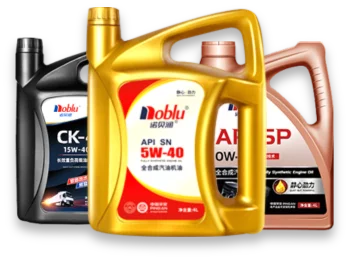
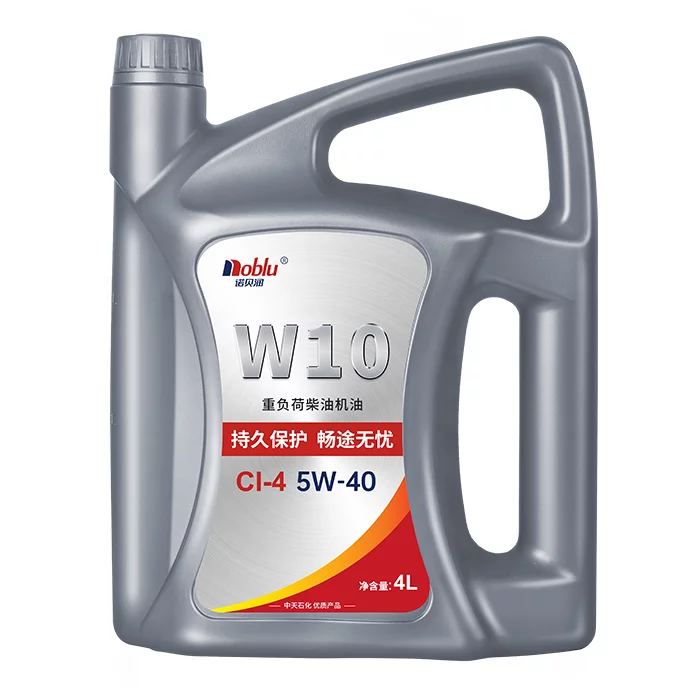
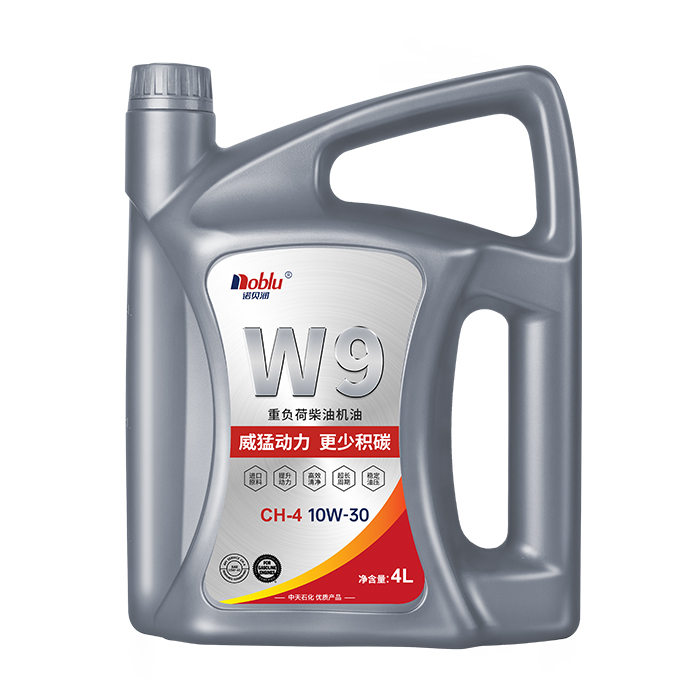
We make diesel engine oils across the ladder, each with its own product page and technical data sheet: CF-4, CH-4, CI-4 and CK-4, the last in 10W-40 and 15W-40 with its OEM specifications listed on the page (the 10W-30 on that page is an FA-4 formulation, the wrong oil for a CF-4 engine). Our minimum order is 20 packaging units, trial orders below that are negotiable, and standard packs are 1 L, 1 QT, 4 L, 1 Gal, 18 L, 5 Gal and 200 L. Technical data sheets, safety data sheets and certificates are issued by grade and batch. Our quality, environmental and occupational health systems are certified to ISO 9001, ISO 14001 and ISO 45001; the registration numbers are on our lubricants sourcing page so that a buyer can check them with the registrar. Send the engine model, the fuel sulfur level and the pack size and we will say which category and grade to quote.
FAQ: your CF-4 questions answered
Can CF-4 damage newer engines? It is not designed for them. API’s caution is that CF-4 is “not suitable for use in most diesel-powered automotive engines built after 2009”; engines of that era carry after-treatment hardware, and the CF-4 tests predate it. Follow the manual.
How often should CF-4 oil be changed? At the interval in the engine manual for the fuel you are using; the manual’s interval assumes the fuel sulfur level it was written for, and high-sulfur fuel shortens it. We do not publish a universal interval because it depends on the engine, the fuel and the duty.
Is CF-4 the same as CF? No. CF (1994) is a separate category for off-road, indirect-injection and other diesels, including those on fuel above 0.5 percent sulfur, per the API Motor Oil Guide; CF-4 (1991) is the four-stroke on-highway category. Both are listed as obsolete by API.
Where can I buy CF-4 oil? From blenders that still produce it, including ourselves. Ask for the data sheet showing the API category and the viscosity grade, and the certificate for the batch on order.
Myth buster: “CF-4 is obsolete, so nobody should use it”
For a pre-2007 engine on high-sulfur fuel, a CF-4 oil, or a CH-4, CI-4 or CK-4 oil in the same grade, remains the correct choice; a current-category oil is only better if the engine and the fuel can use what it adds.
Conclusion: right oil, right era
Write down three things from the engine manual and the fuel receipt: the API category line, the viscosity grade, and the fuel sulfur level. Those three decide whether the answer is CF-4, a CH-4 or CI-4 in the same grade, or one CK-4 for the whole fleet, and they are all we need to quote.