





October 2026. Written from the visit notes of Zhongtian’s sales team.
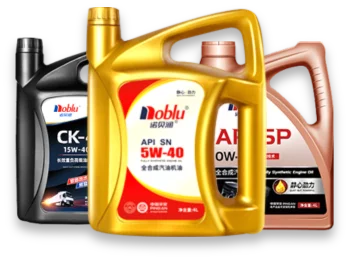
A lubricant brand owner from Nigeria is planning a private label engine oil range with Anhui Zhongtian Petrochemical. A senior executive of the company visited our R&D centre on 10 October 2026 and our plant on 12 October. Our quotation covers API SP and API SN gasoline engine oils in 0W-20, 5W-20 and 5W-30. He chose 1 L and 5 L packs with the brand logo on the cap and picked a reference shape for the bottle.

What the brand wants from a private label engine oil
The visiting company sells lubricants under its own brand in Nigeria. The engine oil project would add gasoline engine oils made by Zhongtian and sold under that brand.
The brief came down to two things: quality that stays the same from one shipment to the next, and a price that works in the Nigerian market. Supply is planned in regular 20 ft container loads. On that basis the same grade list and the same bottle go into every container. The grade list went into our quotation, and a reference bottle was chosen at the plant.
API SP and API SN in three viscosity grades
The quotation covers two API service categories, SP and SN, each in 0W-20, 5W-20 and 5W-30. The American Petroleum Institute describes API SP as introduced in May 2020, with protection against low-speed pre-ignition and timing chain wear, and lists API SN as the category for 2020 and older automotive engines. The same page states that an API SP oil gives full protection where an owner’s manual calls for API SN. A range can carry both, with SP at the top; an SN oil belongs only in engines whose manual calls for API SN or an earlier category, not in newer engines that call for SP.
Each grade is defined by SAE J300. A “20” grade must fall between 6.9 and 9.3 mm²/s at 100 °C, a “30” grade between 9.3 and 12.5 mm²/s. Our own product pages show how much room that leaves inside one grade name:
| Oil on our product pages | Grade | Viscosity at 100 °C, typical | SAE J300 band at 100 °C |
|---|---|---|---|
| SP fully synthetic gasoline engine oil, GF-6A | 0W-20 | 8.9 mm²/s | 6.9 to under 9.3 |
| Same page | 5W-20 | 8.9 mm²/s | 6.9 to under 9.3 |
| Same page | 5W-30 | 10.9 mm²/s | 9.3 to under 12.5 |
| SN synthetic gasoline engine oil, GF-5 | 0W-20 | 6.92 mm²/s | 6.9 to under 9.3 |
| Same page | 5W-30 | 11.19 mm²/s | 9.3 to under 12.5 |
The two 0W-20 oils differ by about 2 mm²/s at 100 °C, and both typical values sit inside the SAE 20 band. So the grade name on a label does not pin down the oil in the bottle. For each private label product, write the target viscosity at 100 °C and its accepted range into the purchase specification, so that every batch certificate is checked against numbers rather than a grade name. Viscosity at 100 °C is only one of a grade’s limits: SAE J300 also sets a minimum high-temperature high-shear viscosity at 150 °C, and the “W” number carries the cold limits, as explained in what 5W-30 means. The SN page has no 5W-20 column, so that grade’s figure has to come from its technical data sheet.
Six private label decisions, and where this brand stands on each
Six decisions shape a private label engine oil range. By 12 October the brand owner had settled two of them, picked a reference for a third, had two in quotation and had planned the sixth. The table records each one as it stood when he left the plant.
| Decision | The brand’s choice | Status on 12 October | What it fixes for the brand |
|---|---|---|---|
| Service category | API SP and API SN | In quotation | Which engines the label can promise to protect |
| Viscosity grades | 0W-20, 5W-20, 5W-30 | In quotation | How many products, labels and stock lines the brand carries |
| Pack sizes | 1 L and 5 L | Chosen | Bottles per carton, cartons per container, shelf price points |
| Bottle | Shape based on a reference bottle | Reference chosen; mould terms under discussion | How the range looks on a shelf, and a one-off tooling cost |
| Logo position | Brand logo on the cap | Chosen | Cap tooling or printing, plus the label artwork |
| Shipment unit | 20 ft container loads on a regular cycle | Planned | Order rhythm, stock cover and how the first container is split |
The bottle is the decision with a one-off cost attached. A bottle in its own shape needs a mould, and how that cost is shared, and how much bottle volume offsets it, is being agreed between the customer and our purchasing team. Grades can be changed from one container to the next; pack sizes and the bottle shape are tied to moulds, so once a mould is cut that shape is fixed for every bottle that follows.

Still open are the product mix of the first container and the final price per grade and pack size. Both wait on our quotation, which is being prepared.
What our visitor saw in Hefei and at the plant
The first day was spent at our R&D centre in Hefei, built on an investment of close to 200 million yuan. The visit took in the petroleum industry chain display, which traces crude oil processing through base oil refining to finished lubricants, and the glass-walled laboratory corridor. The group’s testing company holds CMA and CNAS accreditation. The grades and the quotation were then discussed in the centre’s meeting room.

On 12 October the visit moved to the production plant, where the warehouse racking drew his interest. The plant runs under ISO 9001, ISO 14001 and ISO 45001 certified management systems; the ISO 9001 certificate is listed with the batch documents below.

A brand owner choosing where its oil is blended should ask, for every figure on a certificate of analysis, which laboratory measured it and by which test method.
Before the first 20 ft container is loaded
The next three steps are costing, the quotation and the product mix for the first load. Once prices are agreed, the brand owner decides how the first 20 ft container is split between 0W-20, 5W-20 and 5W-30, and between 1 L and 5 L bottles. For a sense of scale, a 40 ft high-cube of 1 L bottles that we loaded for a retailer in Colombia carried 1,700 cartons of twelve bottles, 20,400 litres in all.
Each batch for this brand can be checked with the same documents we provide on request for any grade:
| Document | What the brand owner reads it for |
|---|---|
| Technical data sheet, per grade | The typical values for that grade, including viscosity at 100 °C |
| Certificate of analysis, per batch | The measured values of the oil actually filled, checked against the purchase specification |
| Safety data sheet, per grade | Hazards, safe handling, storage and transport information |
| Quality management certificate | ISO 9001:2015, registration 62825Q9372R0S, valid to 24 April 2028 |
For oil in our standard packs, grades in stock are ready in 3 to 7 days and grades made to order in 10 to 20 days, depending on quantity. Custom packaging is agreed separately for each OEM project, and a new bottle mould has its own lead time, so ask for the packaging date alongside the oil lead time. Check every certificate against the specification before the cartons reach an outlet.
Frequently asked questions
What is private label engine oil?
Private label engine oil is oil blended by a manufacturer and sold under the buyer’s own brand. The buyer chooses the service category, the viscosity grades, the pack sizes, the bottle and the label; the manufacturer blends to the agreed specification, fills and labels the bottles, and supplies the data sheets and batch certificates. The Nigerian project in this report is one example: if it goes ahead, Zhongtian would blend and fill the oil, and the customer would own and sell the brand.
Who may put the API symbol on a private label bottle?
API’s Engine Oil Licensing and Certification System is a voluntary programme that authorises engine oil marketers who meet its requirements to use the API Engine Oil Quality Marks. The API service category, such as SP or SN, is the performance level an oil is blended to; displaying the API marks on a bottle needs an EOLCS licence that covers that brand. A private label brand owner should settle with its supplier, before artwork is drawn, who will hold that licence and what the label will and will not show.
What is the minimum order for a private label engine oil?
Zhongtian’s minimum order is 20 units, and trial orders can be negotiated. Confirm in writing what a unit is, because 20 one-litre bottles and 20 drums are very different orders. Custom packaging for a private label run is quoted separately, and a new formulation carries its own batch minimum, as set out in our guide to negotiating a lower MOQ.
The bottle outlasts the grade list
A private label range can add a grade or drop one in any later container. The bottle is harder to change. Once the customer and our purchasing team agree the mould terms and the mould is cut, that shape and the logo on the cap go into every container that follows. Choosing the reference bottle and the cap logo at the plant, while the grades were still being priced, started the one decision that becomes hard to reverse. An oil specification can be revised from batch to batch; the bottle is what buyers in Nigeria would see on the shelf.
If you are planning your own engine oil brand, tell us the grades your market asks for, the pack sizes you want on the shelf and how often you expect to fill a container. We reply with a quotation per grade and the data sheets behind it: send your grade list to our export team.