


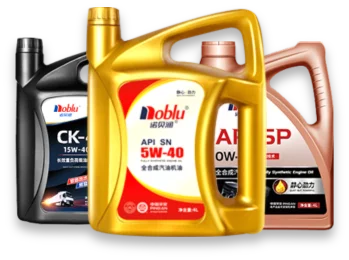


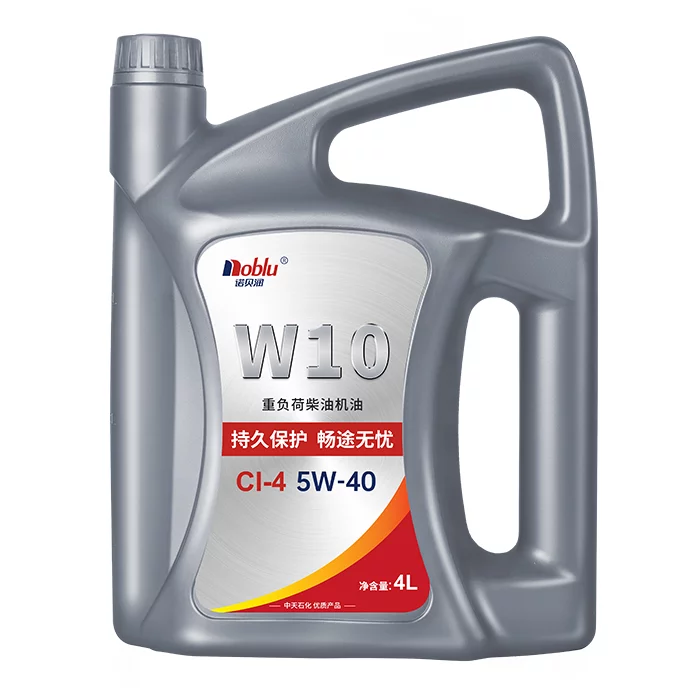
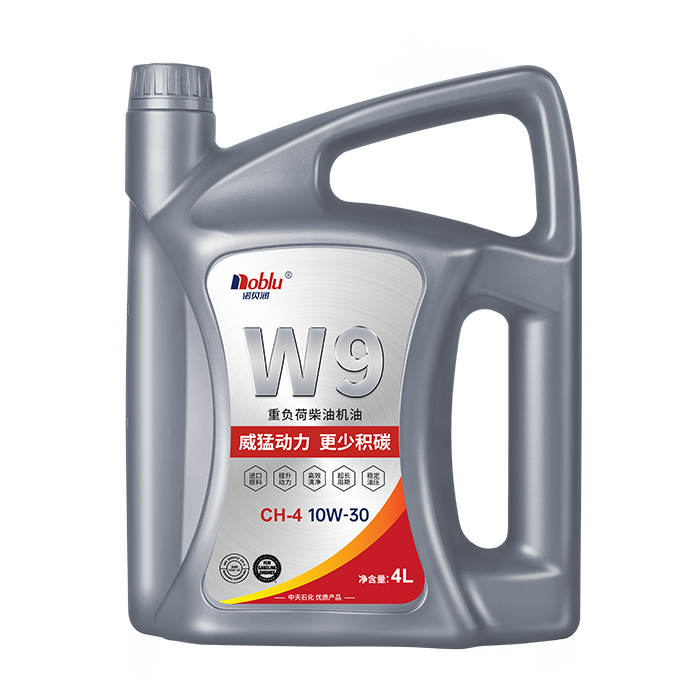
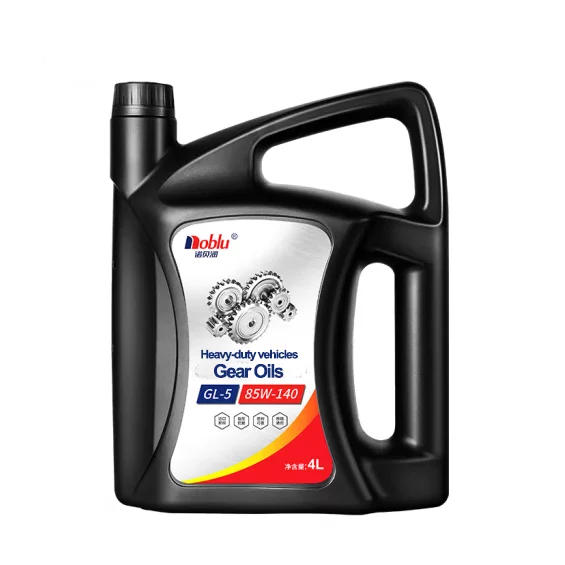
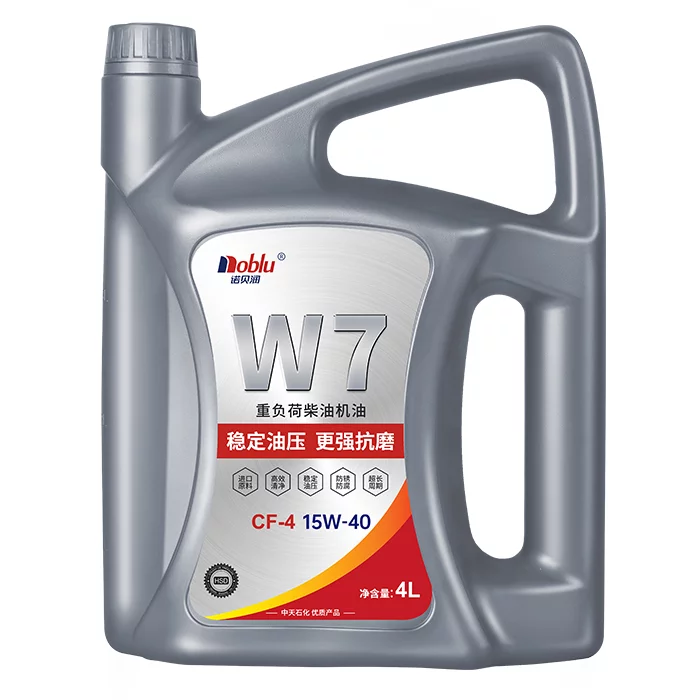
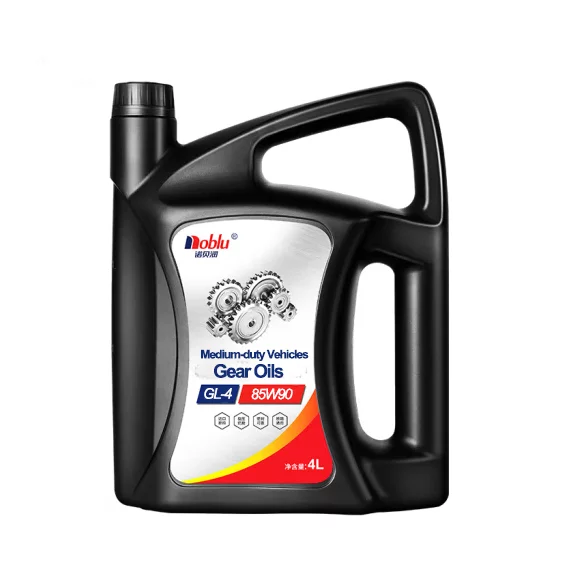
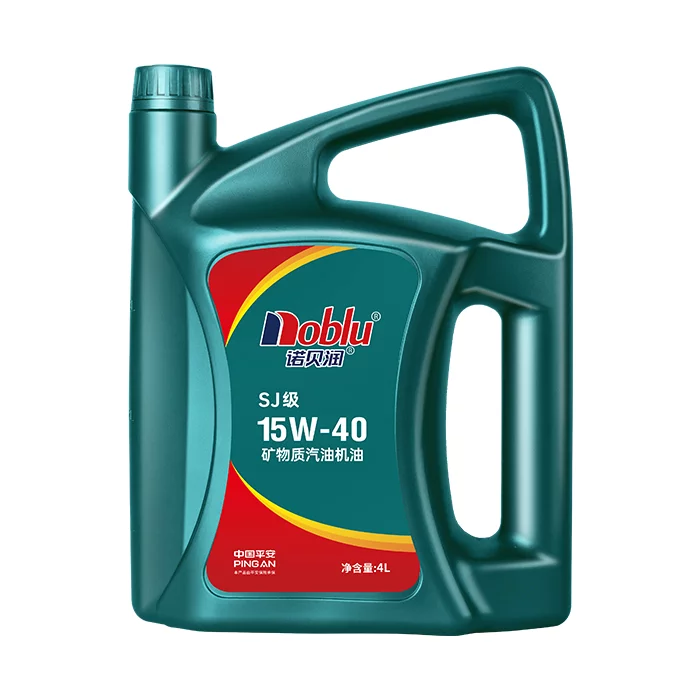
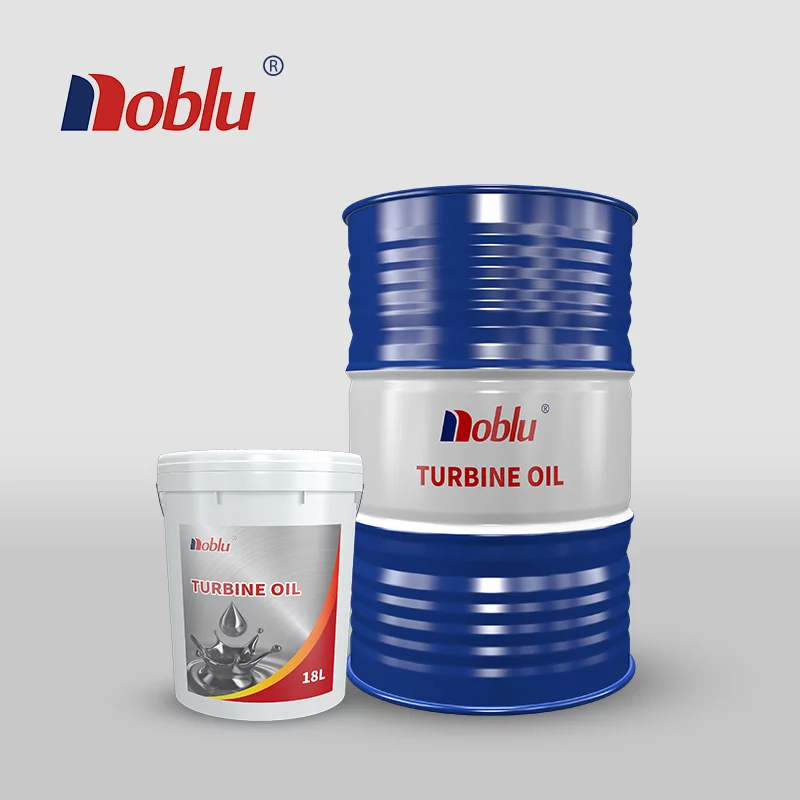
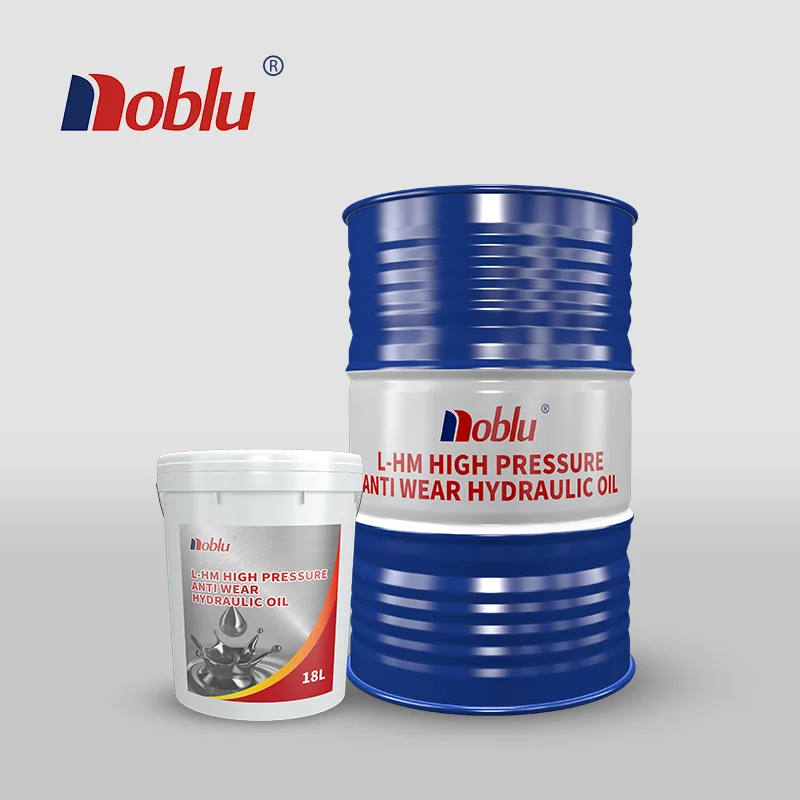
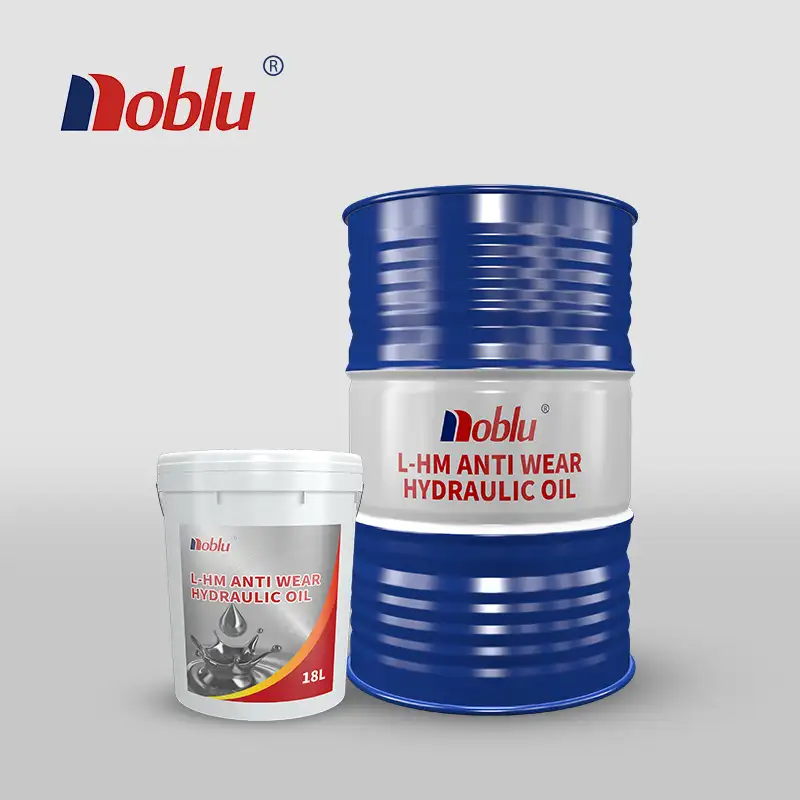
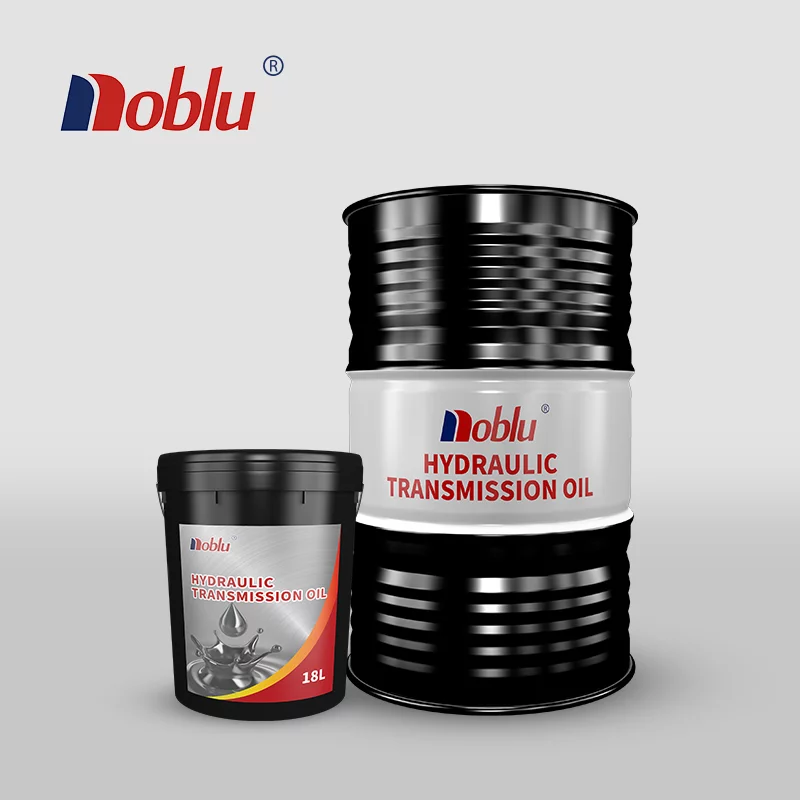
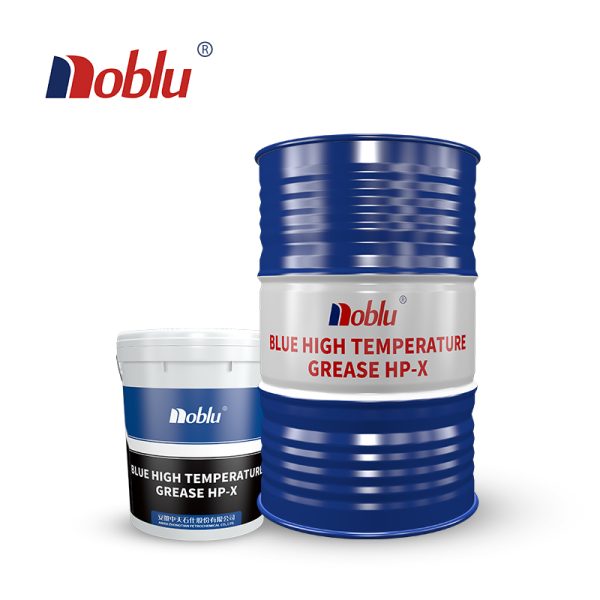
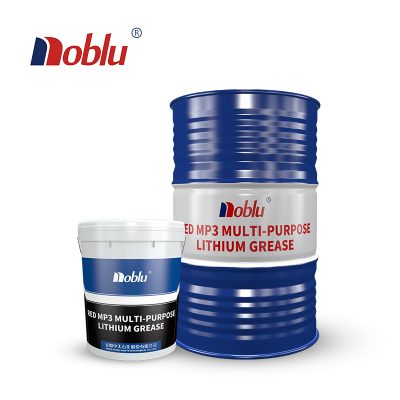

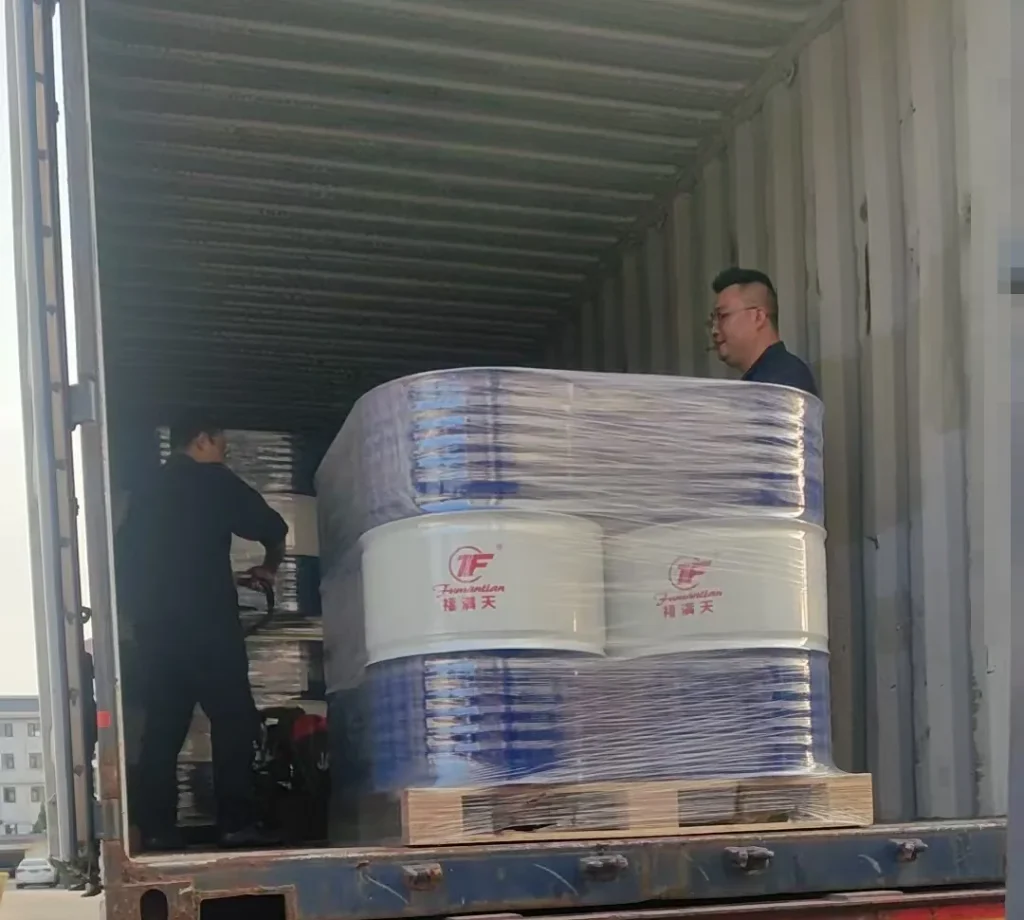
A trucking and logistics company in El Salvador has placed its second order with Anhui Zhongtian Petrochemical: one 40 ft high-cube container of 130 steel drums, loaded at our plant in Anhui in late September 2026 and bound for the port of Acajutla. The order covers nine products in five families: diesel engine oil, axle gear oil, hydraulic oil, transmission oil and grease. Below are the truck fleet lubricants on this El Salvador order, line by line, with the figures a fleet can check on each product when the drums arrive.
Fumantian, the brand on these drums, is Zhongtian’s own and a China Well-known Trademark. We have made lubricants since 1998, have an annual capacity of 200,000 tonnes of lubricating oil and export to more than 100 countries and regions. Our quality, environmental and occupational health systems are certified to ISO 9001, ISO 14001 and ISO 45001, and the group’s testing company holds CMA and CNAS accreditation.
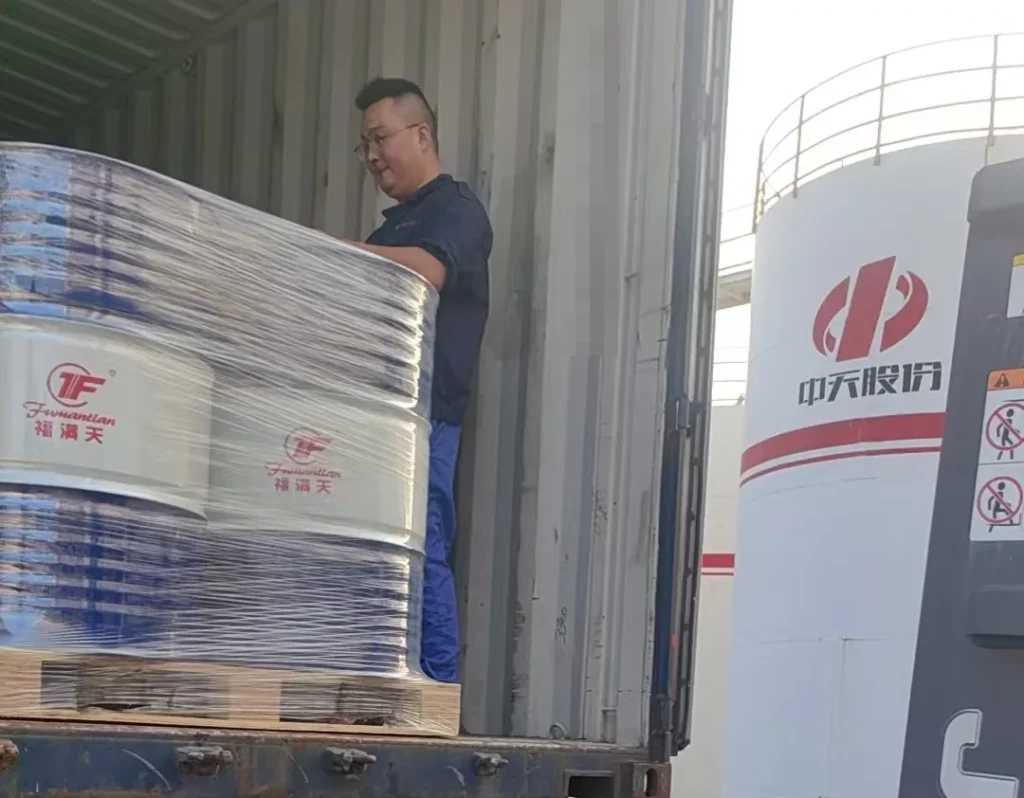
Nine products, five families: what is in the container
| Family | Order line | Typical job in a fleet |
|---|---|---|
| Diesel engine oil | CK-4 5W30, CK-4 10W30, CK-4 15W40 and CK-4 25W50 DIESEL ENGINE OIL | Engine crankcases; each engine maker’s manual sets the grade |
| Axle gear oil | GL-5 85W140 GEAR OIL | Hypoid drive axles and differentials on heavy vehicles |
| Hydraulic oil | L-HM 46# HYDRAULIC OIL (HIGH PRESSURE) | Hydraulic systems that specify an ISO VG 46 anti-wear oil |
| Transmission oil | ATF-9 Transmission Oil | Automatic transmissions and torque converters |
| Transmission oil | IS-430 Construction Machinery transmission oil, listed as “30” | Transmissions of construction machinery |
| Grease | Multi-purpose Grease 3# | Wheel hubs, chassis points, water pumps |
All 130 drums travel in one container to Acajutla. When one container carries several products, size each line’s drum count to what the fleet uses between two shipments.
One CK-4, four viscosity grades
CK-4 is an API service category, a performance level for high-speed four-stroke diesel engines. The SAE grade, defined in SAE J300, is about thickness: how thick the oil may be at a cold start and at running temperature. A fleet with engines from several makers and model years ends up with several grades inside one category, because each engine manual names its own.
| SAE grade | Viscosity at 100 °C | Cold-cranking limit | Minimum HTHS viscosity at 150 °C |
|---|---|---|---|
| 5W-30 | 9.3 to under 12.5 mm²/s | 6,600 mPa·s at −30 °C | 2.9 mPa·s |
| 10W-30 | 9.3 to under 12.5 mm²/s | 7,000 mPa·s at −25 °C | 2.9 mPa·s |
| 15W-40 | 12.5 to under 16.3 mm²/s | 7,000 mPa·s at −20 °C | 3.7 mPa·s |
| 25W-50 | 16.3 to under 21.9 mm²/s | 13,000 mPa·s at −10 °C | 3.7 mPa·s |
The warmest cold-cranking test in that table runs at −10 °C, a temperature a truck in a tropical market such as El Salvador does not start in. What separates the four oils here is the hot half of the grade: the 100 °C band, and the high-temperature high-shear (HTHS) viscosity, which is how thick the oil stays in hot, heavily sheared bearings. How to read both halves of a grade is set out in 5W-30 meaning.
A worked check on one of the four grades: the typical values on our CK-4 15W-40 product page are 14.87 mm²/s at 100 °C, inside the 12.5 to 16.3 band, and 6,478 mPa·s in the cold-cranking test at −20 °C, under the 7,000 limit. The product page does not list HTHS, and it has no 5W-30 or 25W-50 column; ask us for those figures for each grade on this order.
On the 30-grade drums, the category on the label matters most
API describes FA-4 as certain XW-30 oils blended to an HTHS viscosity of 2.9 to 3.2 cP (1 cP = 1 mPa·s) and states that FA-4 oils are not interchangeable or backward compatible with CK-4, CJ-4, CI-4 and CH-4 oils. CK-4, by the same source, can lubricate engines that call for those older categories. CK-4 oils in XW-30 grades are blended at 3.5 cP HTHS or above, so the HTHS figure is the quickest way to tell a CK-4 30-grade from an FA-4 one. Our CK-4 product page also lists a 10W-30 made to API FA-4; the 5W-30 and 10W-30 on this order were ordered as CK-4, and their labels and batch certificates should say so.
API adds that CK-4 is formulated for diesel with up to 500 ppm sulfur, and that fuel above 15 ppm may affect after-treatment durability and oil drain intervals. Where the fleet’s fuel is above 15 ppm, the engine maker’s drain interval advice applies.
GL-5 85W-140 for the axles, checked against SAE J306
Gear oil grades come from a different standard, SAE J306, revised in February 2025. Two of its limits for an 85W-140 can be read straight from a typical-values table.
| Limit | SAE J306 requirement | Our GL-5 85W-140, typical value |
|---|---|---|
| Kinematic viscosity at 100 °C | 24.0 to under 32.5 mm²/s (grade 140) | 28.26 mm²/s |
| Low-temperature viscosity | 150,000 mPa·s maximum at −12 °C (85W) | 130,122 mPa·s at −12 °C |
| Pour point | not a grade limit | −18 °C |
| Flash point, open cup | not a grade limit | 246 °C |
The typical values come from our GL-5 heavy-duty vehicle gear oil product page. J306 also sets a limit on the viscosity after a 20-hour shear test, which our product page does not list; for the drums delivered, ask for the batch certificate and the grade’s technical data sheet. GL-5 is written for hypoid rear axles under heavy load. It does not belong in a gearbox whose maker specifies a GL-4 oil or a transmission fluid, because the extreme-pressure chemistry in a GL-5 can attack yellow-metal synchronisers, as explained in GL-4 vs GL-5 gear oil.
Transmission oil, hydraulic oil and grease
- ATF-9 is a thin, high viscosity-index fluid for automatic transmissions and torque converters. The typical values on our ATF product page are 5.84 mm²/s at 100 °C, 28.44 mm²/s at 40 °C, a viscosity index of 151 and 15,735 cP Brookfield viscosity at −40 °C. A transmission that specifies ATF is not designed to shift on gear oil.
- The IS-430 construction machinery transmission oil has no typical-values page on our site. Its technical data sheet is available on request for this order, and its batch certificate should be read against that sheet.
- The L-HM 46 high-pressure anti-wear hydraulic oil has a typical viscosity of 46.25 mm²/s at 40 °C, inside the 41.4 to 50.6 window that ISO 3448 sets for VG 46, with a viscosity index of 99 and an open-cup flash point of 226 °C.
- Our multi-purpose lithium grease in grade 3 has a typical worked penetration of 236 (0.1 mm), inside the 220 to 250 range of NLGI grade 3, a dropping point of 180 °C and a stated operating range of −20 °C to 120 °C. Grade 3 is stiffer than the more common grade 2; what that means at a hub or a chassis nipple is covered in NLGI grease grades.
What the container plate says about a drum load
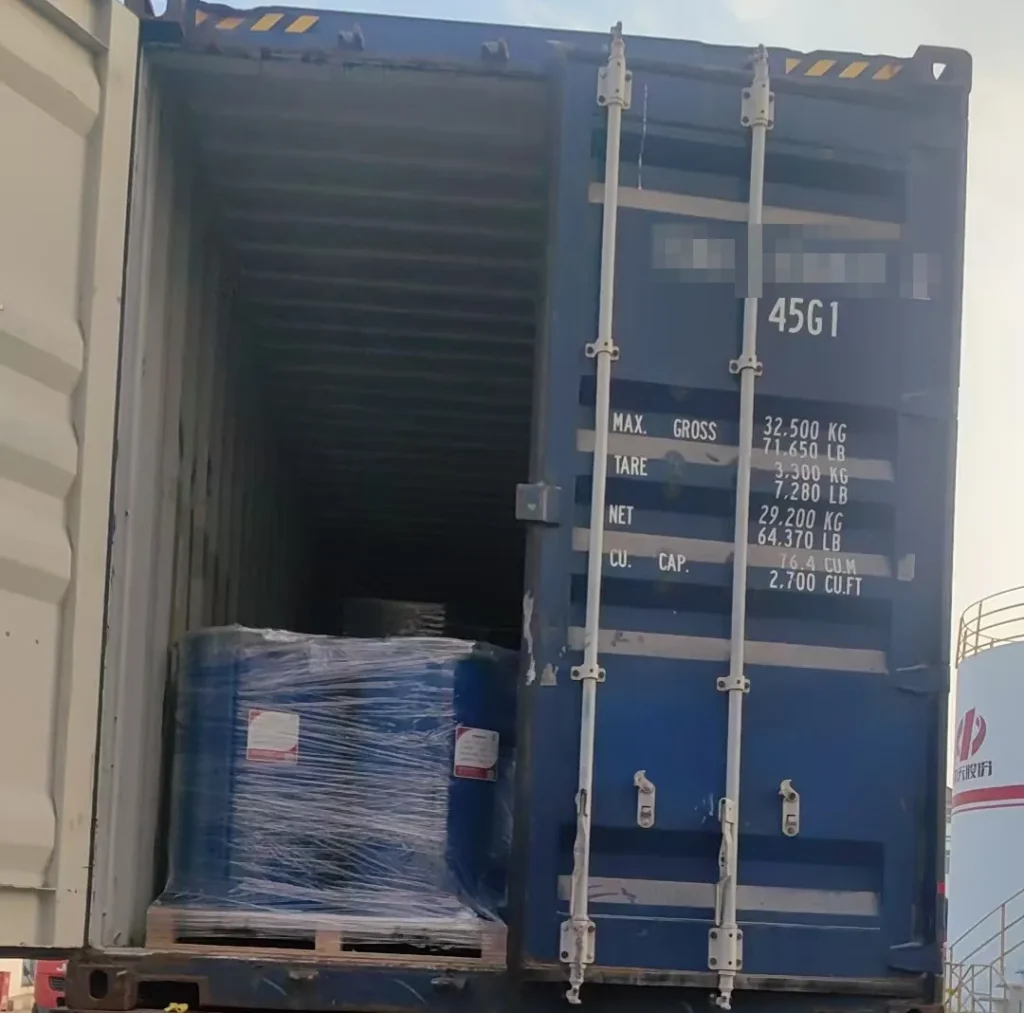
| Read from the door plate | Value |
|---|---|
| Size-type code | 45G1: 40 ft long, 9 ft 6 in high, general purpose |
| Maximum gross mass | 32,500 kg |
| Tare | 3,300 kg |
| Net, the maximum cargo | 29,200 kg |
| Internal capacity | 76.4 m³ |
Spread over 130 drums, the 29,200 kg rating averages about 225 kg per drum, pallets included. The packing-list gross weight, set against that figure, tells you whether a drum count fits the box; the gross weight the truck collecting the container at the port may carry sets the limit on the road. A fleet planning its own container should ask its supplier for the packing-list weight before the drum count is fixed.
What to check when the drums arrive
Where a product repeats from an earlier delivery, keep that delivery’s labels and certificates as a reference. Each check below takes a few minutes.
| Check | Where to look | What should match |
|---|---|---|
| Category and grade on each drum | Drum label against the order line | “CK-4” on all four engine oils, including the 5W-30 and 10W-30 |
| Hot viscosity of each engine oil | Batch certificate of analysis | Inside the SAE J300 band for the grade |
| HTHS of each engine oil | Figures we supply for this order, or the certificate | 3.5 mPa·s or higher on the CK-4 30-grades; at least 3.7 on the 15W-40 and 25W-50 |
| Gear oil grade | Batch certificate | 24.0 to under 32.5 mm²/s at 100 °C |
| Hydraulic oil grade | Batch certificate | 41.4 to 50.6 mm²/s at 40 °C |
| Grease consistency | Batch certificate | Worked penetration 220 to 250 for grade 3 |
| Supplier’s quality system | ISO 9001:2015 certificate | Registration 62825Q9372R0S, valid to 24 April 2028 |
Hold back any line whose certificate falls outside its grade band and send us its batch number.
Frequently asked questions
Does it matter whether a 10W-30 is CK-4 or FA-4?
Yes. API states that FA-4 oils are not backward compatible with CK-4, CJ-4, CI-4 and CH-4 oils, while CK-4 can serve engines that call for those categories. Where an older engine’s manual asks for a CI-4 10W-30, a CK-4 10W-30 can go in; an FA-4 10W-30 cannot. More on the category itself: CK-4 explained.
Can GL-5 85W-140 be used in a truck gearbox?
Only where the gearbox maker allows GL-5. It is made for hypoid axles. Many manual gearboxes specify GL-4 or a transmission fluid instead, because GL-5 chemistry can harm yellow-metal synchronisers.
How many drums fit in a 40 ft high-cube container?
This one carried 130. The door plate allows 29,200 kg of cargo, about 225 kg per drum at that count. A different count depends on the packing-list gross weight, on how the pallets are stacked and on the road weight the collecting truck may carry.
Can one container mix engine oil, gear oil, hydraulic oil and grease?
Yes, this one carried nine products. Grades in stock are ready in 3 to 7 days and grades made to order in 10 to 20 days, depending on quantity, so the slowest line sets the loading date.
Start from this container’s list
Copy the nine order lines above, strike out what your trucks do not use, add the grades your engine manuals name and a quarterly litre figure for each line. Send it to us and it comes back as a drum plan for one 40HQ, with the technical data sheet for every grade and the lead time to shipment. Contact Zhongtian Petrochemical.